
Decision Guide • 2026
Kandla Grey Sandstone or Porcelain: A UK Contractor's Decision Guide
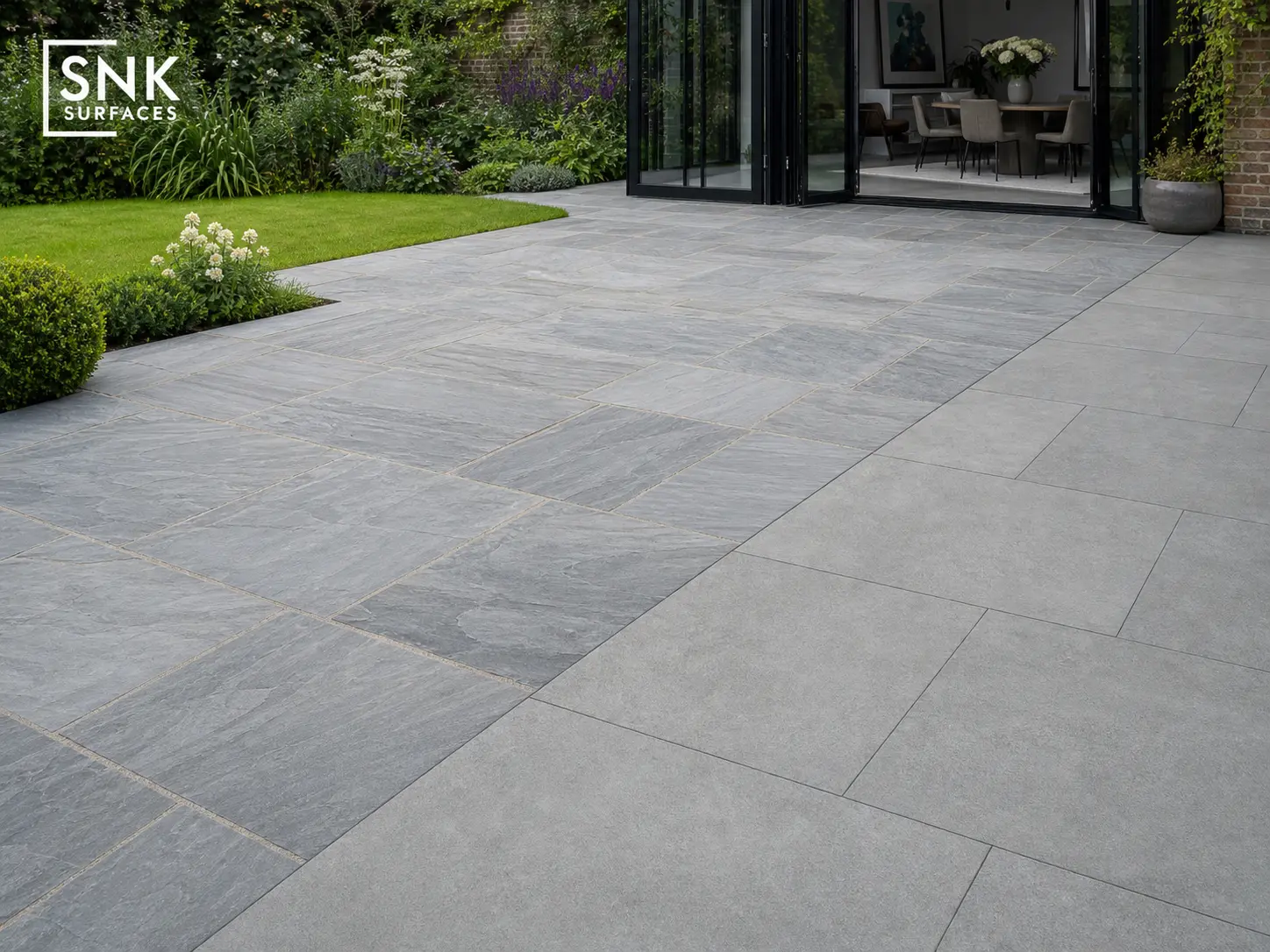
Every UK landscape contractor knows this conversation well. Your client wants a silver-grey patio. They have seen the colour online and they love it. But then comes the question that stops the project in its tracks: should they go with natural stone or porcelain?
Ten years ago, natural Indian sandstone was the only real option. Today, high-definition vitrified porcelain gives you a second choice that looks almost identical to the real thing but performs very differently on site.
Both materials share the same cool silver-grey colour palette. Both are durable. Both comply with BS 7533 British paving standards when installed correctly. So the decision is not about which material is better. It is about which material fits the specific property, garden conditions, and lifestyle of your client.
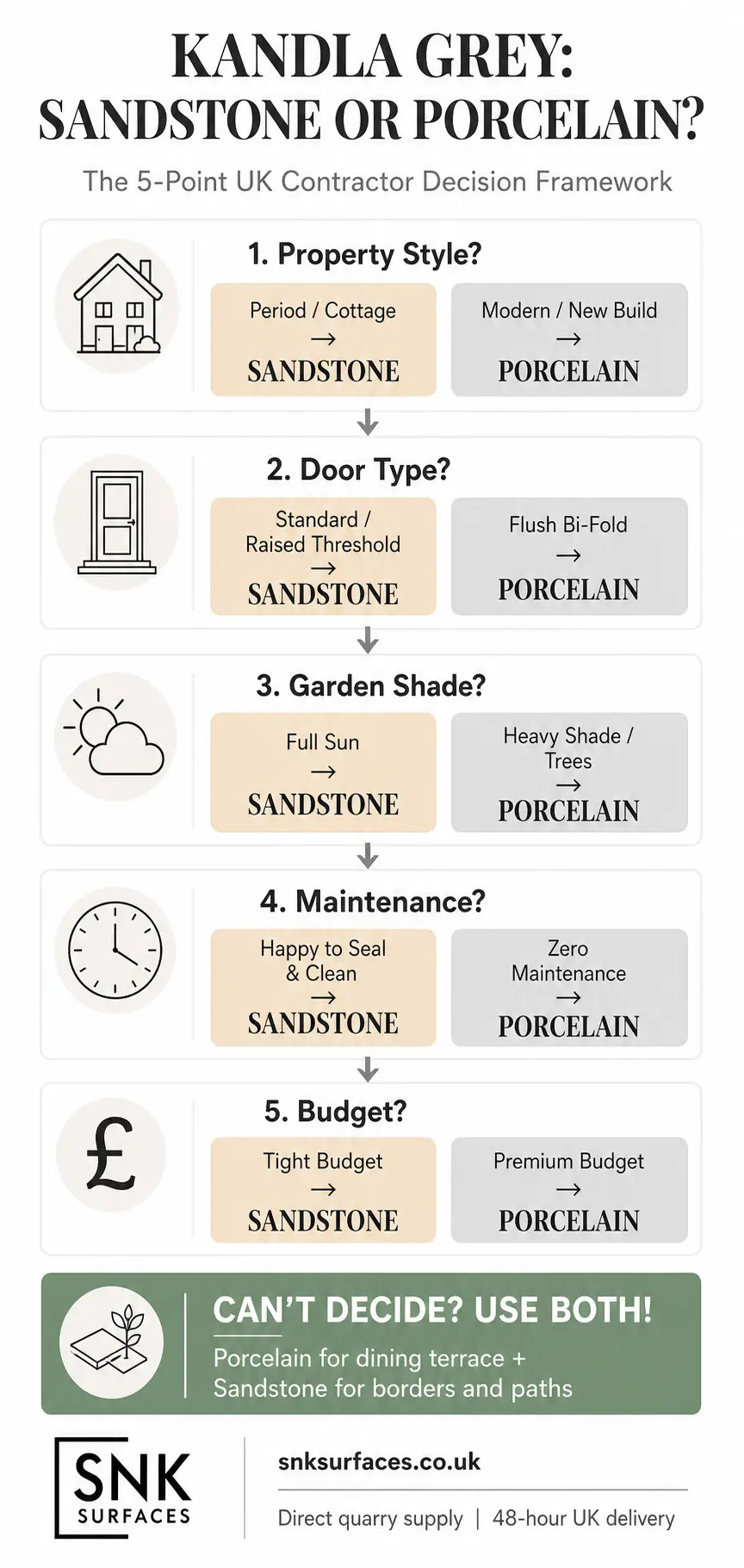
This guide gives you a clear, practical framework to make that call confidently on every project.
Quick Answer
- Choose natural Kandla Grey sandstone if the property is a period home or cottage, the garden design is traditional, and the client is happy with periodic sealing and cleaning.
- Choose Kandla Grey porcelain if the property is a modern new build with bi-fold doors, the garden is heavily shaded, or the client demands zero maintenance.
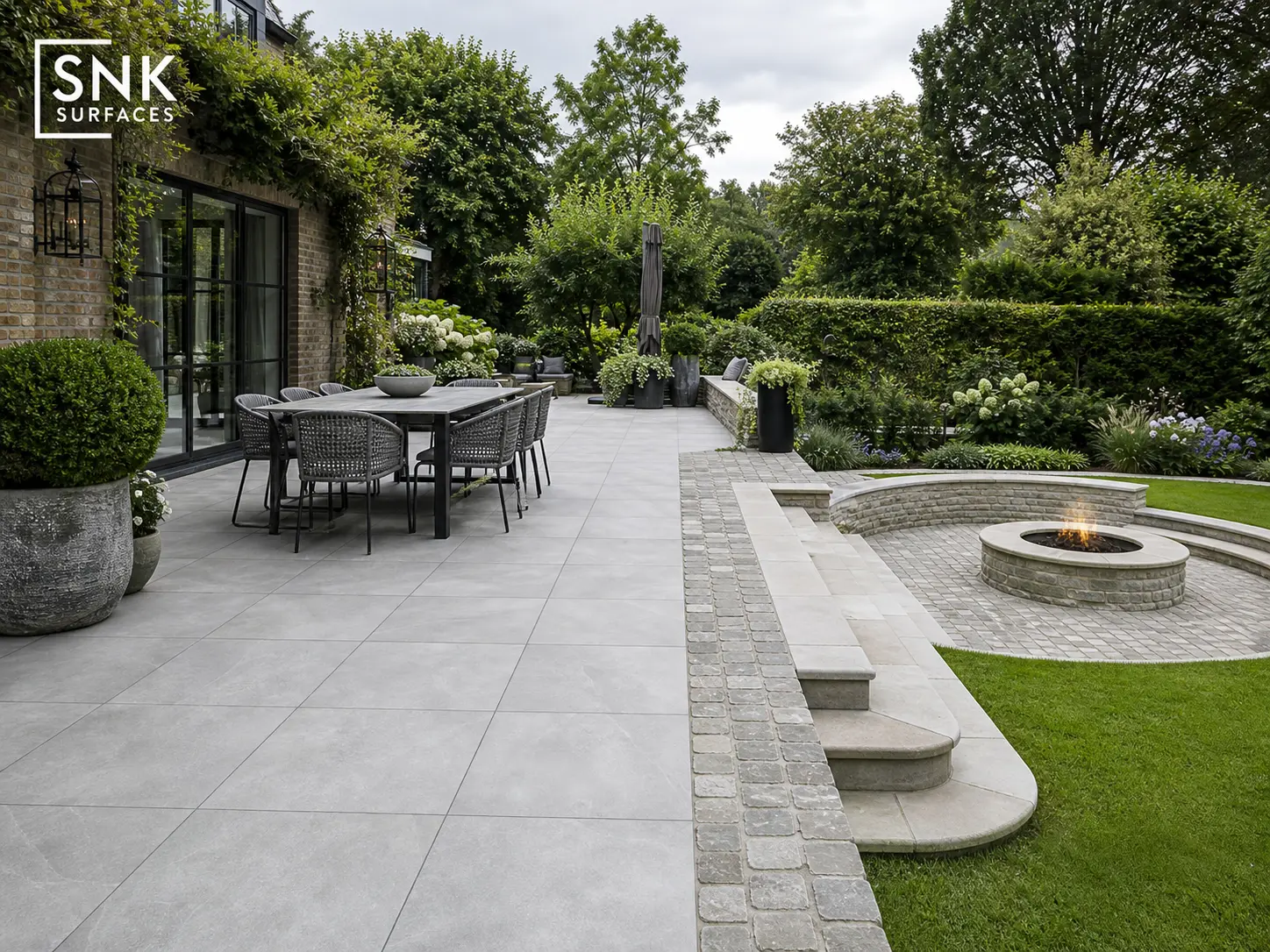
- Choose both if the project has distinct zones. Many UK designers now use porcelain for the main dining terrace and natural sandstone for outer pathways and borders.
For a deeper technical breakdown across eight performance factors, read our complete porcelain vs sandstone paving UK guide.
Understanding the Two Materials
Before walking through the decision framework, it helps to understand what you are actually comparing.
Natural Kandla Grey sandstone is a sedimentary rock quarried in Rajasthan, India. It is hand-split along natural seams, which means every slab is unique. The surface features natural riven textures, quartz veins, and subtle colour shifts from pale silver to deep charcoal. It is porous, absorbing between 1.5 and 2.5 percent of its weight in water.
Kandla Grey porcelain is a manufactured vitrified ceramic tile. Manufacturers take ultra-high-resolution 3D scans of the best natural sandstone blocks and print that image onto a clay body before firing it at 1,200 degrees Celsius. The result is a tile that looks like natural stone but absorbs less than 0.5 percent water, making it 100 percent frost-proof and stain-resistant.
Both materials are calibrated to consistent thicknesses (22mm for sandstone, 20mm for porcelain) and both require a full wet mortar bed with SBR slurry primer for installation. The difference is entirely in the surface character and long-term maintenance.
Decision 1: Property Age and Architectural Style
The building your patio sits next to is the single biggest factor in this decision. Paving should complement the architecture, not fight against it.
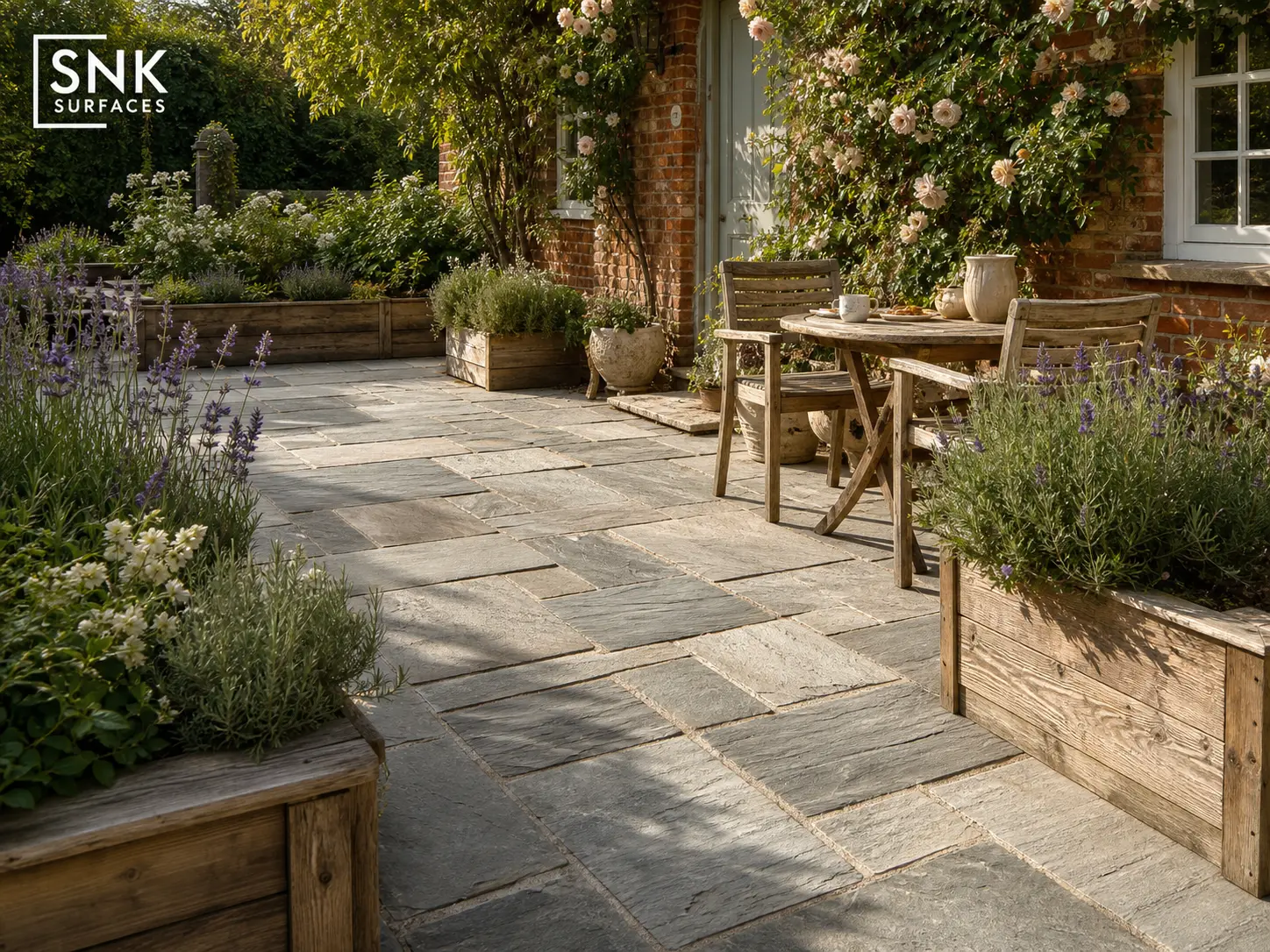
Period properties and traditional homes suit natural sandstone.
If you are working on a Victorian terrace, a barn conversion, or a country cottage with red brick walls and timber windows, natural riven sandstone is the right call. The hand-split texture, irregular edges, and wide 10mm to 15mm mortar joints give the patio an established, authentic character that looks like it has been there for decades.
Modern new builds suit porcelain.
If the property has clean white render, anthracite aluminium windows, and sharp geometric lines, porcelain is the better fit. The rectified machine-cut edges allow ultra-tight 3mm grout joints that create a crisp, minimalist surface matching the contemporary architecture.
Explore our natural Kandla Grey Sandstone Paving range for traditional projects.
View our Kandla Grey Porcelain Paving specifications for modern schemes.
Decision 2: The Indoor-Outdoor Connection
The type of doors connecting the house to the garden strongly influences which material will work best.
Standard doors and raised thresholds suit sandstone.
If the house has traditional French doors or sliding doors with a visible step down to the patio, the outdoor space is clearly a separate zone. Natural stone works beautifully here because you do not need to match indoor floor levels precisely. The organic variation of the stone creates a distinct outdoor room.
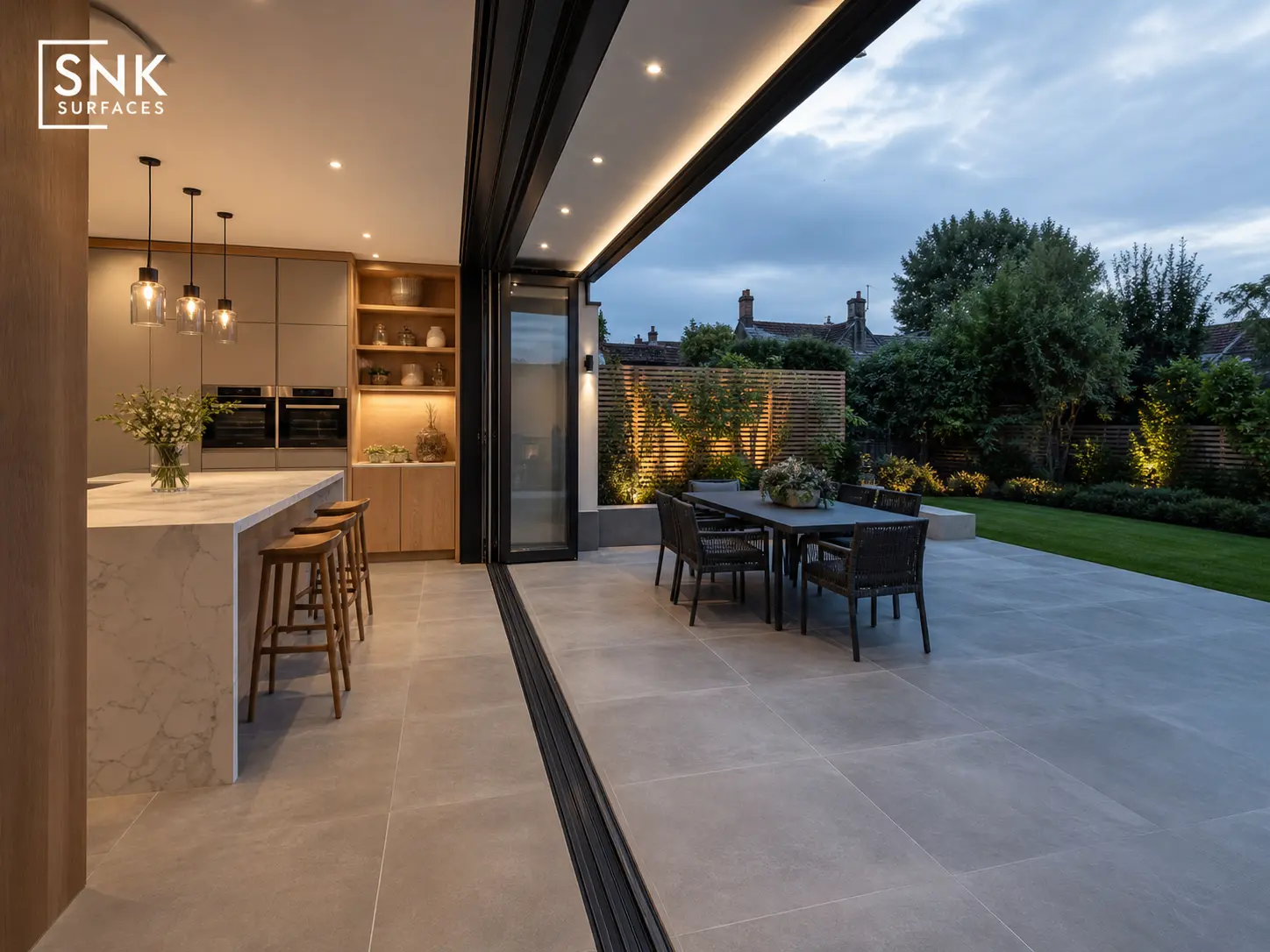
Flush bi-fold doors suit porcelain.
Bi-fold doors are designed to erase the boundary between inside and outside. Homeowners want their kitchen floor to flow seamlessly into the garden when the doors are open. Because porcelain tiles are machine-calibrated to an exact 20mm thickness, you can align the outdoor patio height perfectly with the interior floor. The tight 3mm grout joints mimic interior tiling, creating a true continuous surface from kitchen to garden.
Decision 3: Garden Shade and Damp Conditions
The specific microclimate of your client's garden is a major factor that many contractors overlook.
Full sun gardens suit sandstone.
Natural stone is porous, which means it absorbs a small amount of rainwater. In a south-facing garden that gets plenty of direct sunlight, this is not a problem. The sun dries the stone quickly, preventing algae spores from taking root. Under bright sunlight, the subtle blue and lavender undertones of natural Kandla Grey look at their best.
Heavily shaded gardens suit porcelain.
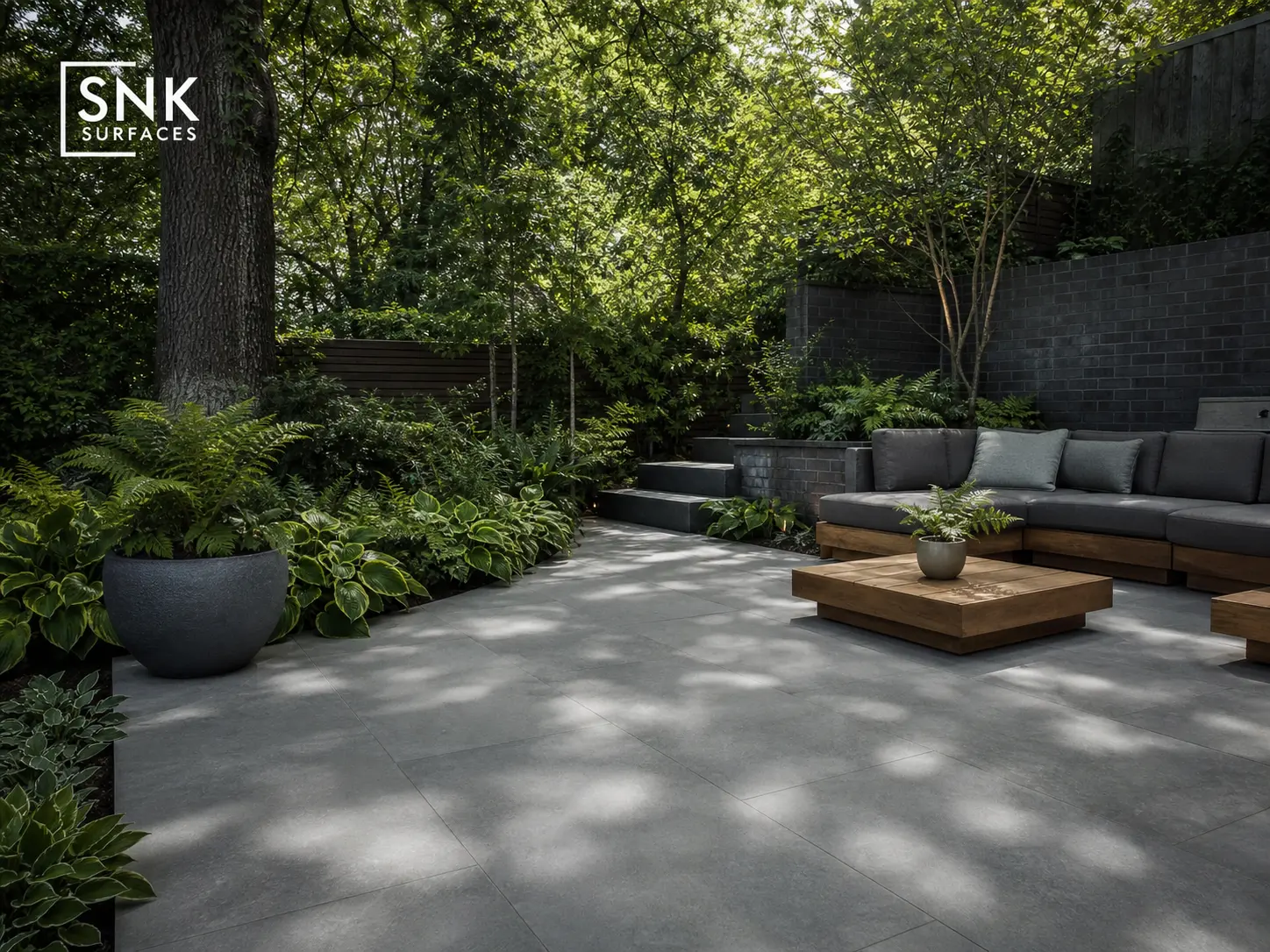
If the patio sits under large oak trees or faces north in permanent shadow, natural stone will struggle. Damp, shaded stone is a breeding ground for green algae and black lichen. The patio will turn green every winter and require aggressive cleaning each spring. Porcelain solves this problem completely. With a water absorption rate below 0.5 percent, algae has nothing to grip onto. Even in the darkest corner of a British garden, porcelain stays clean and silver with nothing more than an occasional sweep.
Decision 4: Maintenance Expectations
Have an honest conversation with your client about how much time they want to spend looking after their patio.
Clients who enjoy garden upkeep suit sandstone.
Natural stone requires a maintenance routine. It needs a breathable impregnating sealer applied shortly after installation and reapplied every 18 to 24 months. It needs an annual wash with a stiff brush and soapy water to keep the colours fresh. Many homeowners actually enjoy this seasonal ritual of preparing their garden for summer.
Clients who want zero maintenance suit porcelain.
Many modern homeowners simply do not have the time or inclination to maintain a patio. They want a surface they can ignore for months and then use immediately when the weather improves. Porcelain requires no sealing, no chemical treatments, and no pressure washing. Spill red wine, barbecue grease, or coffee on it and the stain wipes away with a damp cloth. For busy clients, porcelain is the practical choice.
Decision 5: Installation Complexity and Budget
The two materials require different handling on site, which affects your labour costs and project timeline.
Tighter budgets suit sandstone.
The upfront material cost of natural sandstone is generally lower than high-definition porcelain. It is also faster to install. Natural stone bonds directly to a wet 4:1 sand-and-cement mortar bed without any special preparation. A skilled contractor can lay a large area of natural sandstone in a single day. The rustic edges also make cutting around drains and inspection covers more forgiving.
Premium budgets suit porcelain.
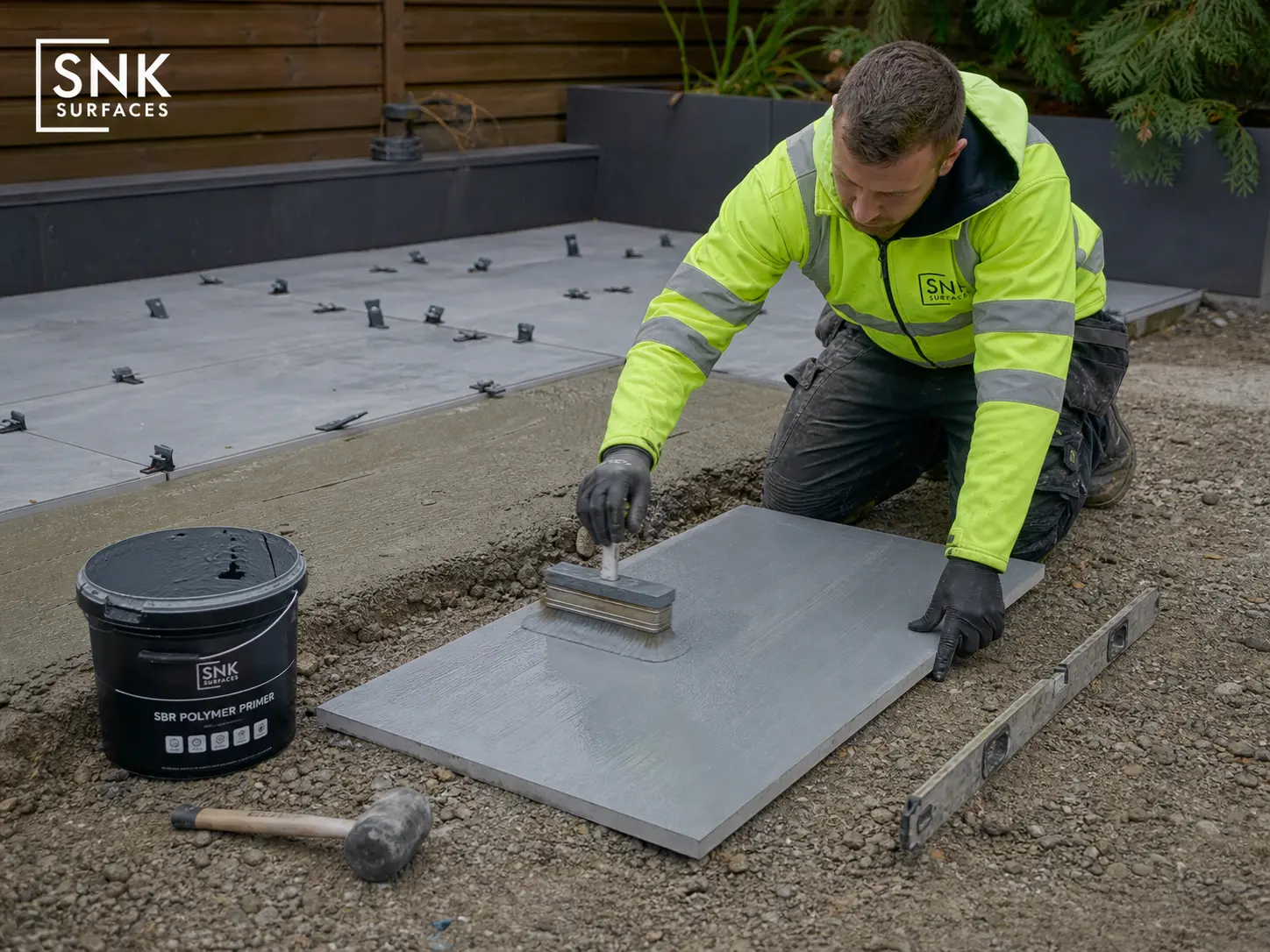
Porcelain paving is denser and heavier than natural stone. Because it absorbs zero water, it will not bond to standard mortar on its own. You must paint the underside of every slab with a polymer-modified SBR slurry primer before placing it on the wet mortar bed. This extra step adds time and cost. Cutting porcelain also requires specialist continuous-rim diamond blades and a wet saw to prevent edge chipping. The installation is slower and more methodical, which will be reflected in your labour quote.
For detailed installation guidance compliant with BS 7533 paving standards, refer to our technical specification guides.
The Hybrid Approach: Using Both Materials
Sometimes the best answer is to use both. This is a growing trend among high-end UK landscape architects, and it gives clients the practical benefits of porcelain alongside the warmth of natural stone.
How it works in practice:
Specify Kandla Grey porcelain for the primary dining and cooking terrace near the house. This gives you a wipe-clean, stain-proof surface directly under the barbecue and dining table where spills happen most often. The tight 3mm joints and flush threshold create a seamless extension of the indoor kitchen.
Then specify natural Kandla Grey sandstone for the outer garden pathways, retaining wall borders, and secondary seating areas under the trees. The natural stone blends softly into the lawns and planting beds, providing the organic warmth that porcelain cannot replicate.
Because both materials share the same silver-grey colour palette, the garden feels cohesive and deliberately designed rather than mismatched. The key is to source both from a single supplier like SNK Surfaces so the colour tones align as closely as possible.
Slip Resistance and Safety
Both materials are safe underfoot in wet UK conditions, but they achieve their grip in different ways.
Natural riven sandstone has a textured cleft surface that provides excellent natural traction. The ridges and undulations created by hand-splitting give your feet something to grip, even when the stone is wet.
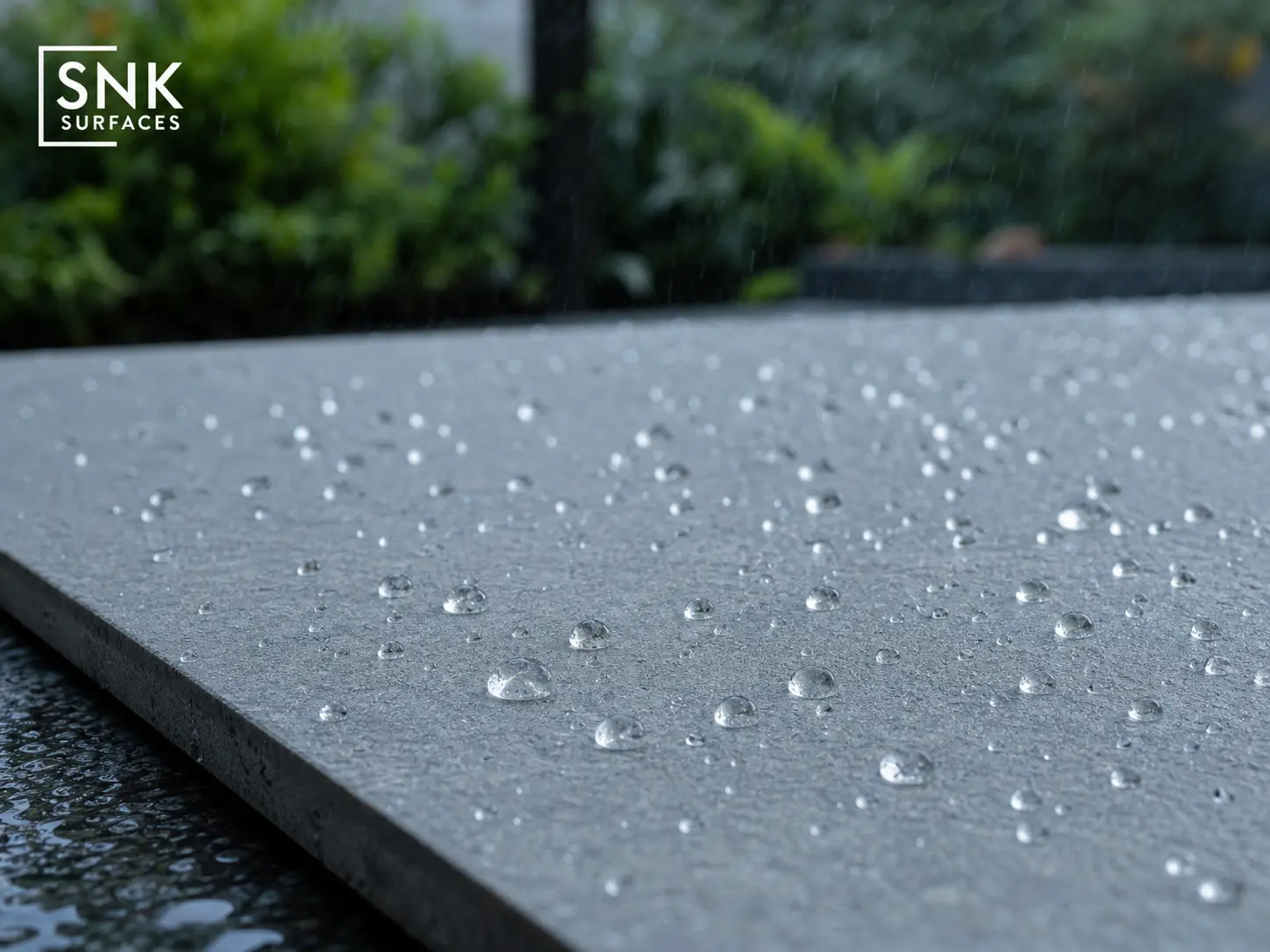
Kandla Grey porcelain achieves its slip resistance through an engineered micro-texture pressed into the surface during manufacturing. It carries a certified R11 anti-slip rating under the DIN 51130 European standard and achieves a PTV of 36+ under the HSE wet pendulum test, which is the threshold for low slip potential in public areas.
You can confidently specify either material around swimming pools, hot tubs, ramped access areas, and exposed commercial terraces.
Frequently Asked Questions
1. Which is more slippery in the rain, natural sandstone or porcelain?
Neither. Both materials are safe in wet conditions. Natural riven sandstone provides excellent grip through its textured cleft surface. Porcelain achieves a certified R11 rating through its engineered micro-texture. Both meet HSE slip resistance guidelines for outdoor pedestrian areas.
2. Which material will last longer in a UK garden?
Both will easily outlast the homeowner when installed correctly on a proper sub-base. Natural stone has proven it can last for centuries. Vitrified porcelain is immune to freeze-thaw weathering and will not degrade. The lifespan of either patio depends on the quality of the groundwork beneath it, not the surface material.
3. Does porcelain look fake compared to natural stone?
Modern porcelain uses high-definition 3D digital printing to replicate every detail of real stone, including fossil marks, quartz veins, and colour variations. Premium batches include 20 or more unique pattern faces, making it almost impossible for the human eye to spot repetition on a standard-sized patio.
4. Can I pressure wash both materials?
Yes, but with different precautions. Porcelain can handle high-pressure washing without damage. Natural sandstone should be washed on a low-fan setting with the nozzle held at least 30cm from the surface to avoid damaging the stone face or blowing out the pointing joints.
5. Are both materials suitable for driveways?
No. Standard 20mm porcelain and 22mm sandstone are designed for pedestrian traffic only. Vehicle point loads will crack them. For a silver-grey driveway, specify 50mm thick natural sandstone setts laid on a reinforced concrete sub-base. Browse our Mint Sandstone Setts for driveway applications.
The Bottom Line
The choice between Kandla Grey sandstone and porcelain is not about finding a winner. Both are excellent hard landscaping materials that will perform well in British weather when installed correctly.
The goal is to match the material to the specific site conditions and the client's lifestyle. Walk your clients through the five decisions in this guide: property style, door type, garden shade, maintenance tolerance, and budget. By the end of that conversation, the right choice will be obvious to both of you.
Ready to secure materials for your next project?
Browse our Kandla Grey Sandstone Paving for traditional schemes or our Kandla Grey Porcelain Paving for modern designs. SNK Surfaces provides direct trade supply, UK-stocked materials, and 48-hour nationwide delivery.
SNK Surfaces is a direct manufacturer and UK supplier of premium natural sandstone and outdoor porcelain paving. Quarry-direct pricing, UK-stocked, and delivered nationwide to trade and retail.