
Buyer's Guide • 2026
Fossil Mint Sandstone Paving: The Complete UK Buyer's Guide
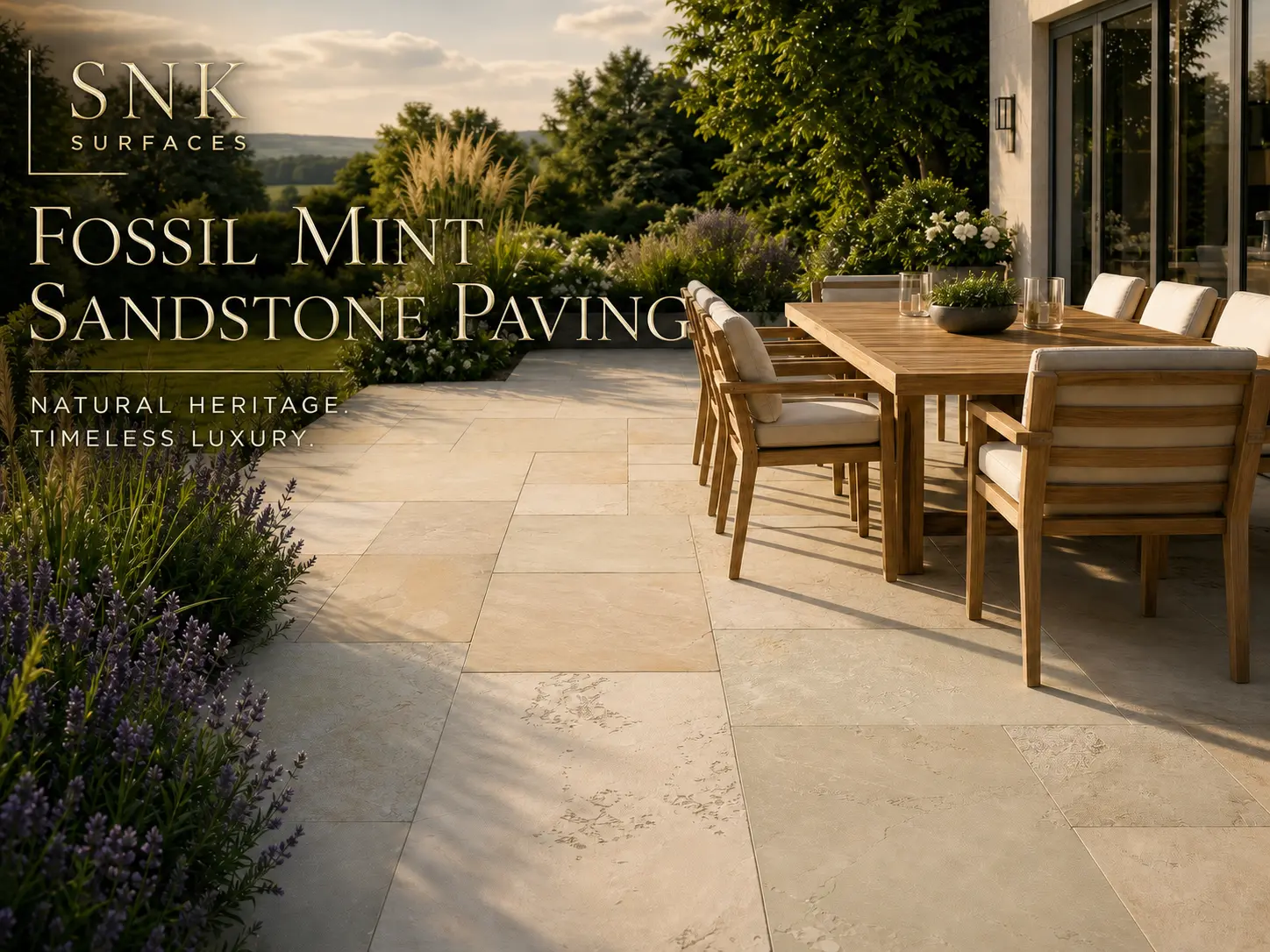
Here is a scenario that plays out on landscaping projects across the UK every single week. A homeowner visits a builders' merchant, falls in love with a display of pale cream sandstone, and orders 40 square metres for their new patio. The slabs arrive, they get laid, and the garden looks beautiful.
Then the homeowner decides to add some steps. They order "Mint Sandstone" steps from a different supplier because the original merchant is out of stock. The steps arrive, and they are noticeably pinker than the patio. A few months later, they add a retaining wall using "Mint" walling blocks from a third yard, and those look yellower still.
The result? What was supposed to be a premium, cohesive garden now looks like a patchwork quilt. And the frustrating part is that every single product was sold under the same name: "Fossil Mint Sandstone."
If you are a landscape contractor, garden designer, or homeowner planning a project, this guide will help you avoid that exact mistake. We will walk you through everything you need to know about fossil mint sandstone paving from what those strange fern like markings actually are, to which finish suits your garden, to the one maintenance step you absolutely cannot skip.
What Exactly Is Fossil Mint Sandstone?
Fossil mint sandstone is a natural paving stone quarried primarily in the Rajasthan region of northern India. It has been one of the most popular choices for UK patios and gardens for over 20 years, and for good reason.
Unlike concrete paving (which is poured into moulds) or porcelain (which is fired in a kiln), fossil mint sandstone is a genuinely natural material. It was formed over millions of years as layers of sand, silt, and minerals were compressed deep underground. When you lay a slab of mint sandstone paving in your garden, you are literally laying a piece of geological history.
The stone gets its name from two things:
- "Mint" refers to the soft, pale green undertones that run through the stone alongside the dominant cream and ivory colours.
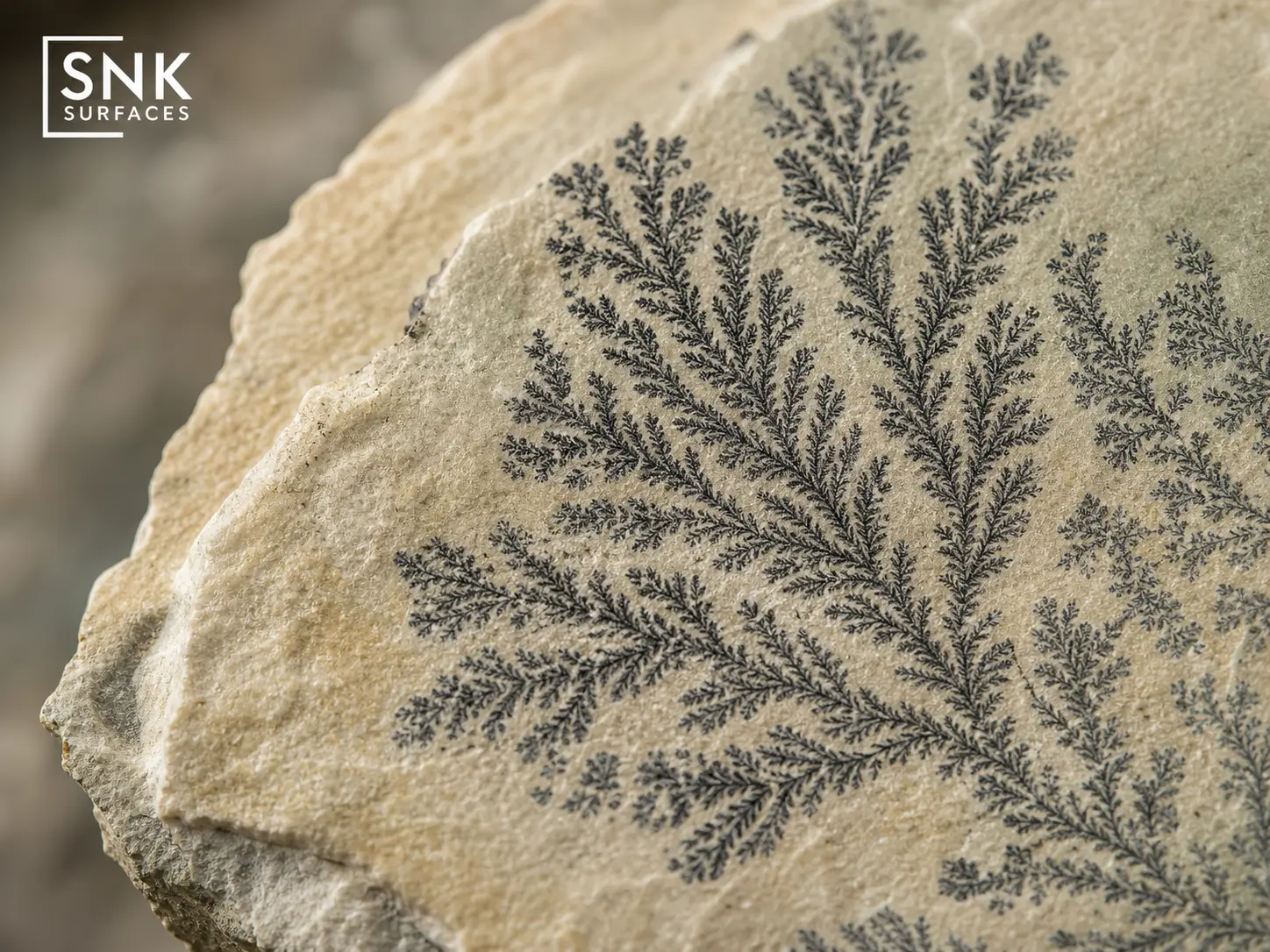
- "Fossil" refers to the dark, fern-like markings (called dendrites) that appear on many of the slabs. More on those in a moment.
The Colour Profile: What to Actually Expect
One of the most common complaints we hear from contractors is: "The client saw a photo online and expected every slab to look identical."
That will never happen with natural stone, and that is actually the point. Here is the realistic colour breakdown of fossil mint sandstone paving:
- The dominant tones (70-80% of each slab): Pale cream, soft ivory, and warm buff. These light, neutral colours are what make mint sandstone paving UK gardens look bright and airy, even on overcast days.
- The accent tones (15–25% of each slab): Warm apricot, soft golden-brown, and occasional hints of pale sage green. These appear as gentle veins and patches across the surface, giving each slab its individual character.
- The fossil markings (5–10% of slabs): Dark brown or black fern like patterns that look exactly like pressed leaves. These are called manganese dendrites.
Why this matters for your project: Because the colour varies naturally from slab to slab, your contractor should always "shuffle" the crates during installation, blending slabs from multiple packs across the patio area. This prevents obvious light and dark patches and creates a natural, even spread of colour.
Why Fossil Mint Sandstone Is the UK's Most Popular Premium Paving
Walk through any high-end residential garden in Surrey, Cheshire, or the Cotswolds, and there is a very good chance the patio is laid in fossil mint sandstone. Here is why it has held the top spot for two decades:
1. It Brightens Up the British Grey
The UK averages 133 rainy days and over 1,100 hours of cloud cover per year. If you install dark grey or black paving, your garden can feel heavy and gloomy for half the year. Fossil mint sandstone paving acts like a natural light reflector. Those pale cream and ivory tones bounce whatever daylight is available around the garden, making even small, shaded patios feel open and inviting.
2. It Handles British Winters
When calibrated to a consistent 22mm thickness, fossil mint sandstone is dense enough to withstand repeated freeze-thaw cycles without cracking or spalling. The key word here is "calibrated." Uncalibrated sandstone that varies between 15mm and 25mm in thickness will have weak spots that crack under frost pressure. Always specify calibrated stone for UK installations following BS 7533 standards.
3. It Adds Real Property Value
Estate agents and property developers consistently report that a well-laid natural stone patio adds more perceived value to a UK property than concrete, composite decking, or artificial grass. Fossil mint sandstone paving, with its premium appearance and timeless colour, is one of the strongest performers in this category.
Sawn-and-Honed vs Riven: Which Finish Should You Choose?
This is the single biggest design decision you will make when buying fossil mint sandstone paving. The stone is available in two main finishes, and they create completely different looks.
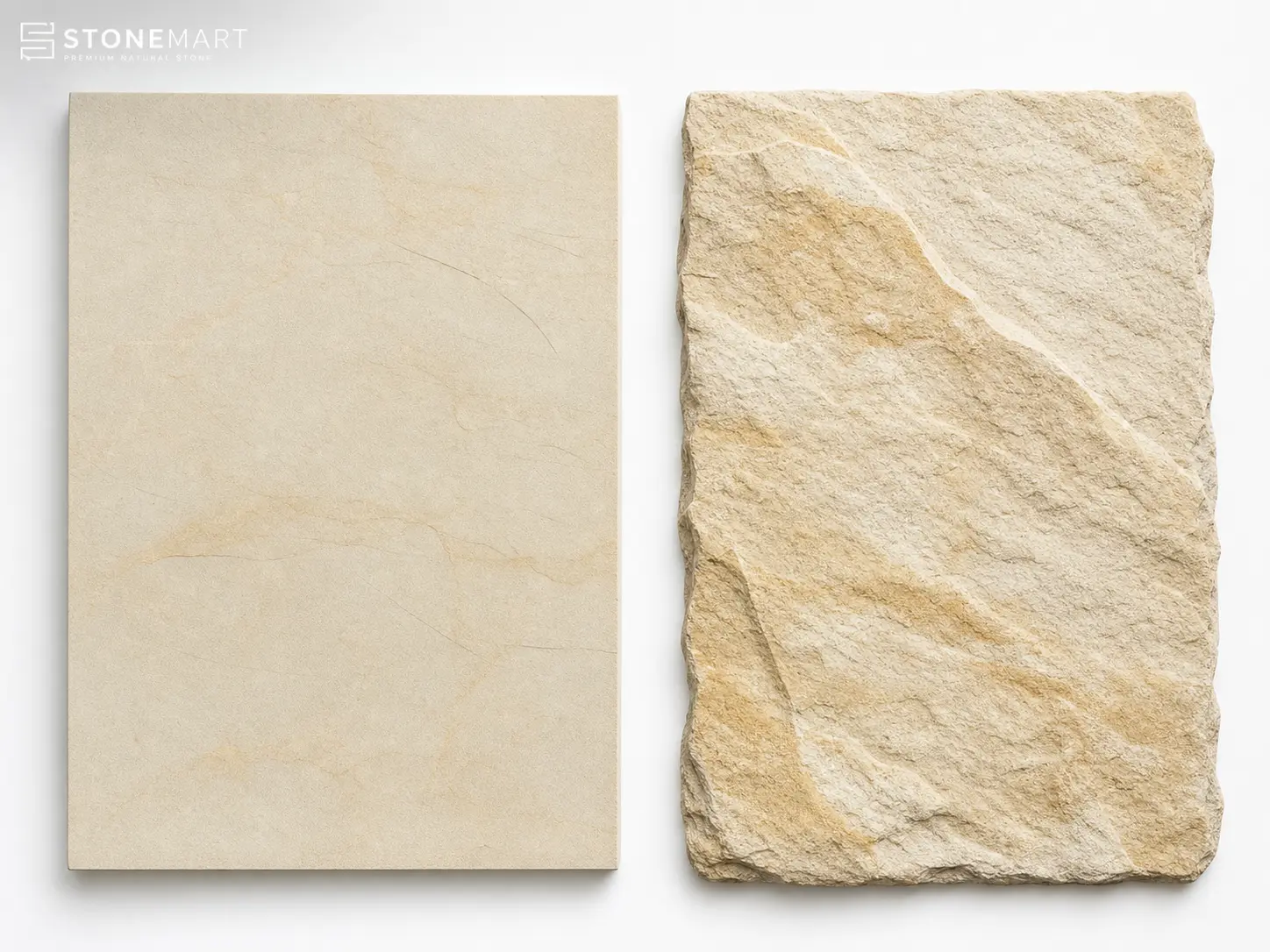
| Factor | Sawn-and-Honed Mint Sandstone | Riven Mint Sandstone |
|---|---|---|
| How it is made | Machine cut on all six sides, then ground smooth (honed). | Hand split along the stone's natural layers. |
| Surface feel | Flat, smooth, and matte. Like a fine grained limestone. | Textured and gently undulating. You can feel the natural ridges. |
| Edge profile | Crisp, straight, and precise. | Hand dressed, slightly irregular, rustic. |
| Joint width | Tight 3–5mm contemporary joints. | Wider 10–15mm traditional pointing. |
| Slip resistance | Good when dry; requires micro texture for wet use. | Excellent grip in all weather due to natural surface texture. |
| Best suited for | Modern homes, sleek patios, indoor outdoor extensions. | Traditional cottages, heritage properties, country gardens. |
The honest verdict: If your client has a contemporary new-build with clean lines and glass doors, go with sawn and honed fossil mint sandstone paving. If the property is a period home or a country cottage, the riven finish will look far more authentic.
The "Five Products, One Stone" System
This is where most UK landscaping projects go wrong, and it is the exact problem we built SNK Surfaces to solve.
As we described at the start of this guide, buying "Mint Sandstone" from three different suppliers almost guarantees a colour mismatch. The paving might be pale cream, the steps might lean pink, and the walling might look yellow. All sold under the same name, all technically "Fossil Mint," but visually completely different.
Because SNK Surfaces is a direct manufacturer with our own quarry, we cut our complete Mint Sandstone range from the same block of stone. This means the colour, grain, and texture are consistent across every single product. We call it "Five Products, One Stone."
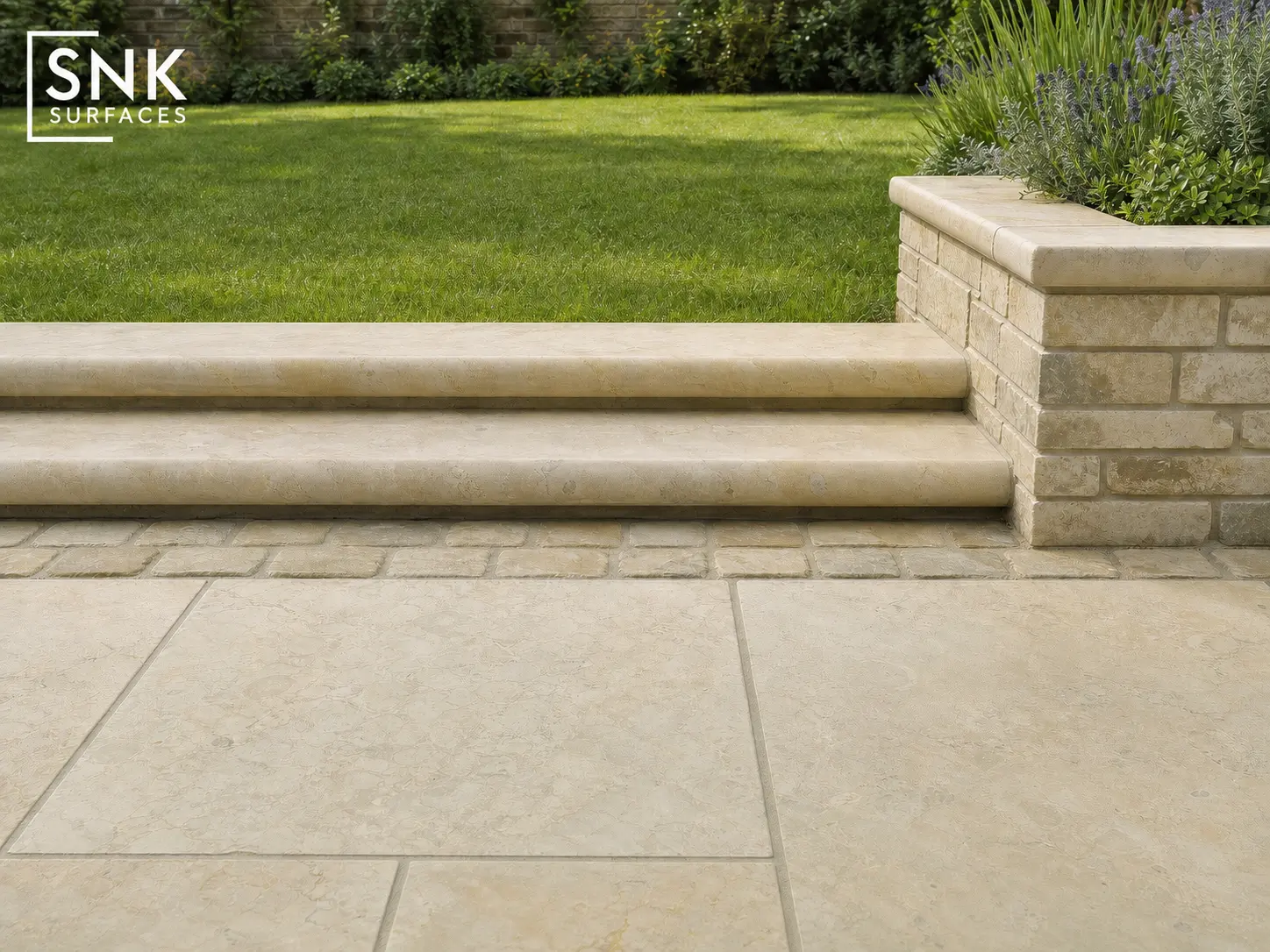
Here is how the complete system works on a real project:
- 1. Mint Sandstone Paving: The main patio surface. Large-format calibrated slabs in sawn and honed or riven finish. This is the foundation of the design.
- 2. Mint Sandstone Steps: Smooth, rounded step treads for level changes. Cut from the same stone density as the paving, so the colour transition from patio to lawn is seamless.
- 3. Mint Sandstone Setts: 40mm thick, tumbled blocks for driveway aprons, path borders, and patio edging. The tumbled finish adds grip and an antique character.
- 4. Mint Sandstone Cobbles: Slim 200x50mm elongated stones for decorative herringbone borders, garden fans, tree circles, and courtyard inlays.
- 5. Mint Sandstone Walling Bricks: Custom-cut to your project dimensions for retaining walls, raised planter beds, outdoor kitchen surrounds, and boundary walls.
The result: One order, one batch, one colour story from the front gate to the back fence. Your garden looks designed, not assembled.
Design Ideas: How to Style Fossil Mint Sandstone
Because of its warm, neutral colour palette, fossil mint sandstone paving works with almost any garden style. Here are two proven approaches:
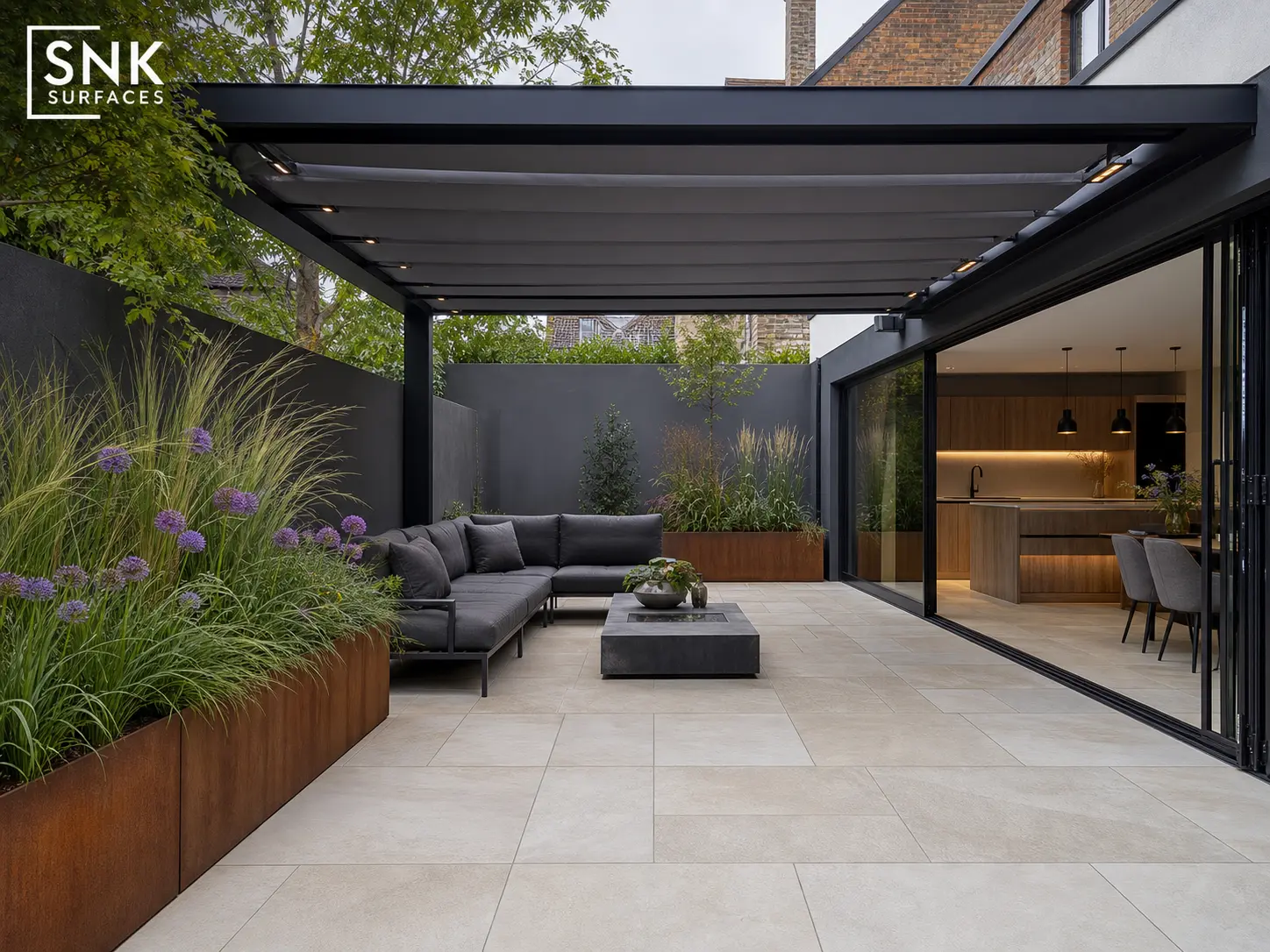
The Modern Look
Pair smooth, sawn-and-honed mint sandstone paving with high-contrast elements:
- Matte black aluminium pergolas and fencing
- Dark charcoal rendered walls
- Corten steel planters with ornamental grasses
- Minimalist outdoor furniture in dark grey or navy
- Tight 3mm grout joints for a seamless, contemporary surface
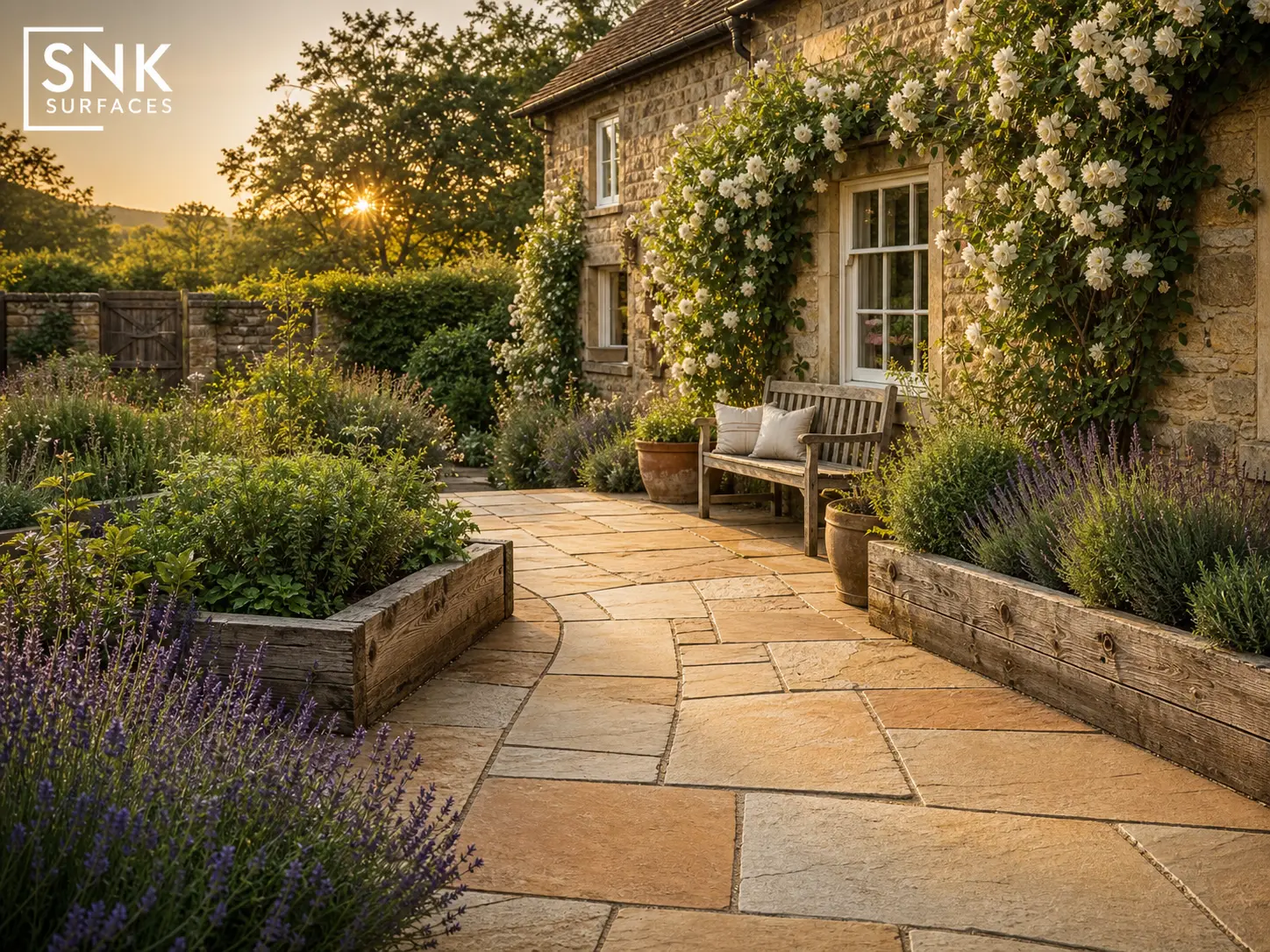
The Traditional Look
Pair textured, riven fossil mint sandstone with classic English garden elements:
- Climbing white roses and lavender borders
- Aged oak timber sleepers and pergolas
- Traditional brick or flint boundary walls
- Wider 10–15mm pointing in a buff or cream mortar
- Matching riven mint sandstone setts as a border or edging detail
How to Keep Fossil Mint Sandstone Looking Its Best
Because mint sandstone paving UK installations are light-coloured, many homeowners worry about stains and discolouration. The good news is that maintenance is straightforward if you follow three simple rules.
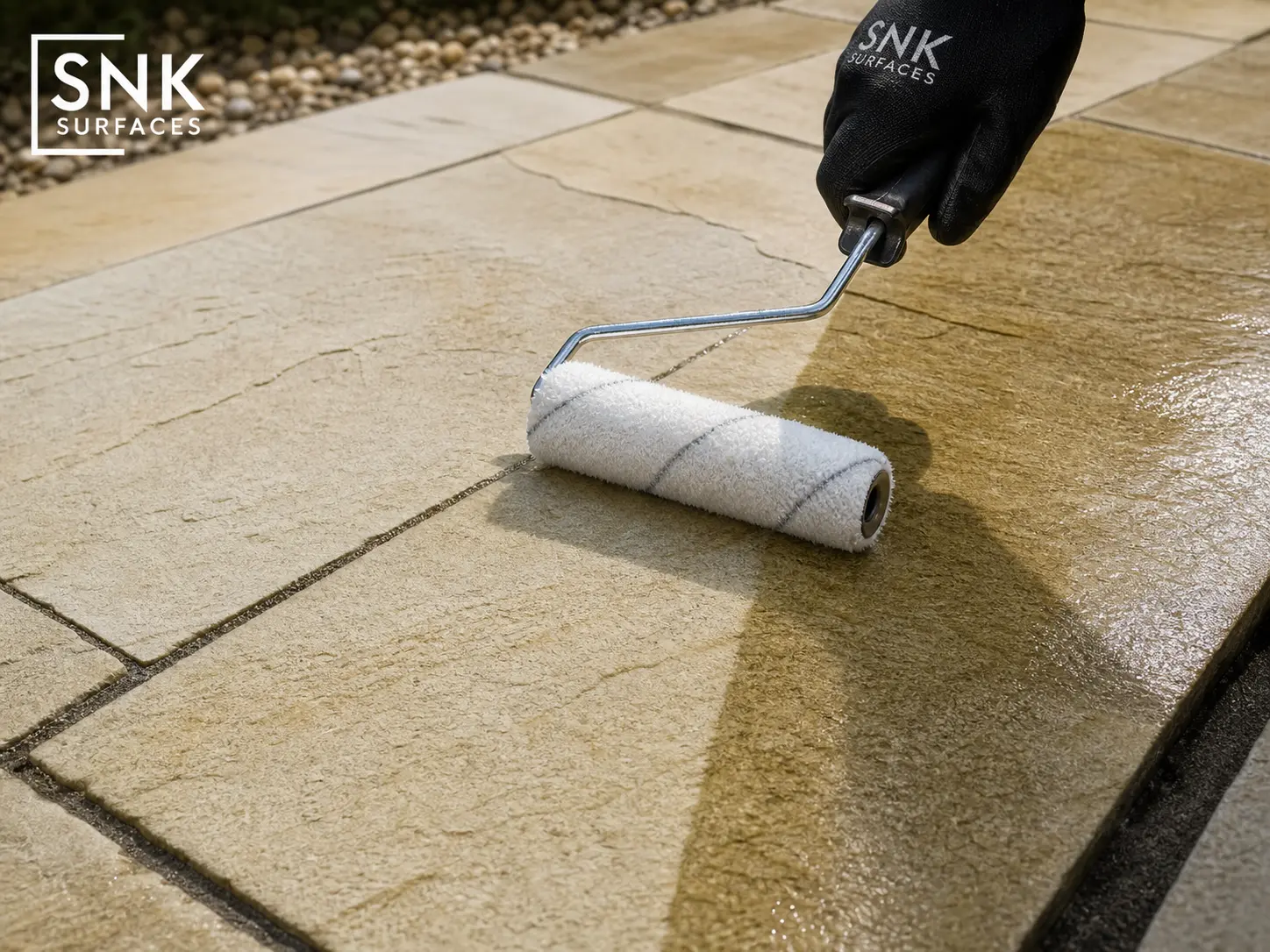
Rule 1: Seal the Stone (Non-Negotiable)
Natural sandstone is porous. It absorbs water, oil, and organic stains like a microscopic sponge. If you spill red wine or BBQ grease on unsealed fossil mint sandstone, it will soak in and leave a permanent mark.
What to do: As soon as your patio is fully laid and completely dry (wait at least 4–6 weeks after installation for the mortar to cure), apply a premium water-based impregnating sealer. We recommend products from trusted UK brands like Lithofin or Azpects.
Rule 2: Prevent Efflorescence During Installation
Efflorescence is the white, powdery residue that sometimes appears on new sandstone a few weeks after laying. It happens when moisture travels up through the mortar bed, carrying natural salts to the surface of the stone.
How to prevent it: Your contractor must paint the back of every single slab with an SBR slurry primer before laying it on the mortar bed. This creates a waterproof barrier that stops salt migration. This is a standard requirement under BS 7533 design guidelines.
Rule 3: Clean Gently and Regularly
- Weekly: Sweep the patio to remove leaves and debris. Wet leaves left on light coloured stone release tannins that cause brown stains.
- Monthly: Wash with warm water and a pH-neutral stone cleaner. Do NOT use bleach, acid-based patio cleaners, or vinegar these will eat away at the natural minerals and dull the surface.
- Annually: A gentle wash with a pressure washer on a low setting (keep the nozzle at least 30cm from the surface) will restore the stone to its original appearance.
Frequently Asked Questions About Fossil Mint Sandstone
1. Does fossil mint sandstone go green in the UK?
Any outdoor surface in Britain will attract algae if it is constantly shaded and damp. However, if you seal your mint sandstone paving with a quality impregnating sealer, algae cannot root into the pores. If slight greening does appear in winter, a gentle wash with soapy water will remove it easily.
2. Are the fern-like markings on fossil mint sandstone real fossils?
No. Despite the name, the dark leaf-like patterns are not plant remains. They are called manganese dendrites mineral crystals that grew inside microscopic cracks in the rock millions of years ago.
3. Is fossil mint sandstone slippery when wet?
Riven mint sandstone has excellent natural grip due to its textured surface, making it safe for pool surrounds and rainy UK weather. Sawn-and-honed mint sandstone is smoother, so we recommend specifying a micro-textured finish if the patio will be frequently wet to meet HSE slip resistance guidelines.
4. What thickness should mint sandstone paving be for UK use?
The industry standard for UK patios and pathways is 22mm calibrated thickness. This ensures the stone can handle frost heave, heavy foot traffic, and garden furniture without cracking.
5. Does fossil mint sandstone fade in sunlight?
No. Unlike dyed concrete paving, which loses its colour after a few years of UV exposure, the colour in natural sandstone comes from ancient minerals locked inside the rock. Fossil mint sandstone is 100% UV stable.
6. Can I use fossil mint sandstone for driveways?
Yes, but only if you use the thicker 40mm setts or cobbles rather than the standard 22mm paving slabs. See our Mint Sandstone Setts for driveway applications.
7. How do I match my paving with steps and walling?
The simplest solution is to order everything from a single quarry source. Our complete Mint Sandstone range includes matching paving, bullnose steps, setts, cobbles, and walling bricks.
The Bottom Line
Fossil mint sandstone paving is not the cheapest option on the market. If budget is your only concern, concrete slabs or basic riven sandstone from a builders' merchant will cost less upfront.
But if you want a patio that brightens your garden on grey British days, handles frost without cracking, and still looks stunning in 20 years, fossil mint sandstone is the smartest long term investment you can make. And if you source your paving, steps, setts, cobbles, and walling from the same quarry block, you eliminate the colour mismatch headaches that plague so many UK landscaping projects.
Ready to see the stone in person?
Request a free sample box of our Fossil Mint Sandstone range delivered direct to your UK site or office.
Order Your Samples Today