
Contractor's Guide • 2026
Kandla Grey Sandstone Paving: Why the UK's Most Popular Grey Indian Sandstone Is Still the Contractor's Choice
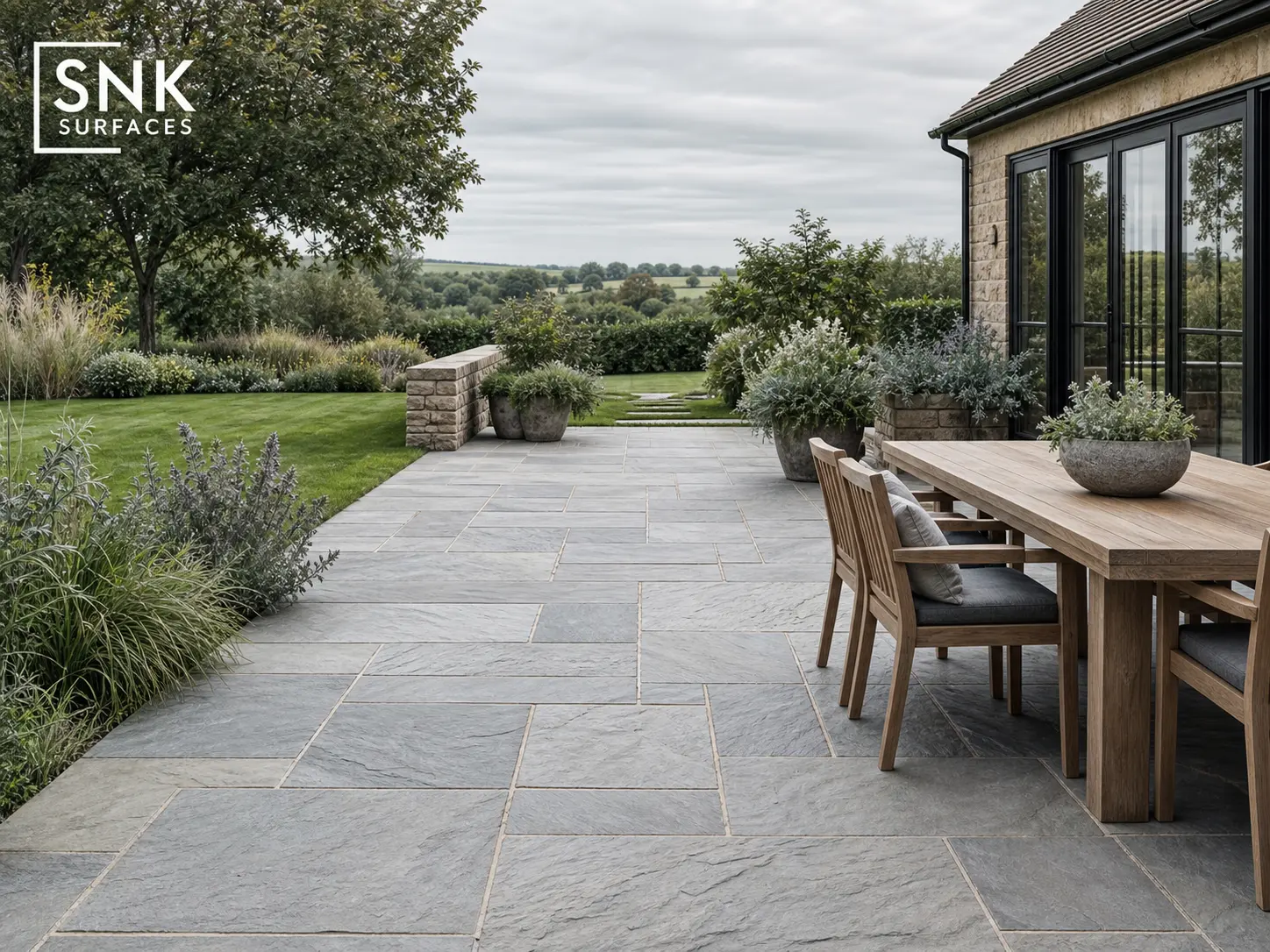
Walk onto almost any new patio, pub terrace, or driveway in the UK, and you are probably standing on Kandla Grey sandstone paving. It is everywhere. And it has been everywhere for the last 20 years.
Even with all the new outdoor porcelain tiles hitting the market, most UK landscape contractors still reach for grey Indian sandstone first. It is their default. Their safe bet. The stone they know will not cause callbacks.
But why is that? What makes Kandla Grey sandstone paving UK projects so popular compared to every other option out there?
This guide breaks it all down in plain English. We will look at where the stone comes from, what colours to expect, which finish to pick, how to spot cheap rubbish before you buy it, and why this particular stone keeps winning over contractors and homeowners across Britain.
Where Does Kandla Grey Sandstone Come From?
Kandla Grey sandstone paving is quarried in the Rajasthan region of northwestern India, mostly around the Bhilwara and Bundi districts. It is a sedimentary rock, which means it was formed millions of years ago when layers of sand, quartz, and minerals settled in ancient riverbeds and got crushed together under enormous pressure.
The high quartz content is what makes Kandla Grey paving slabs so tough. Quartz is one of the hardest natural minerals on earth. It gives the stone its density, its frost resistance, and its ability to handle decades of British weather without falling apart.
When the stone is extracted from the quarry, large blocks are split by hand along their natural layers. This reveals the textured, slightly rippled surface that gives grey Indian sandstone its characteristic look.
The Colour: What to Actually Expect
Calling this stone "grey" is a bit misleading. It is not a flat, boring, concrete grey. Here is what you will actually see when you open a crate of Kandla Grey sandstone paving UK slabs:
- The main colour: A cool, silvery grey that sits somewhere between light charcoal and pale silver. It is neutral enough to work with almost any garden design, from ultra-modern to traditional cottage.
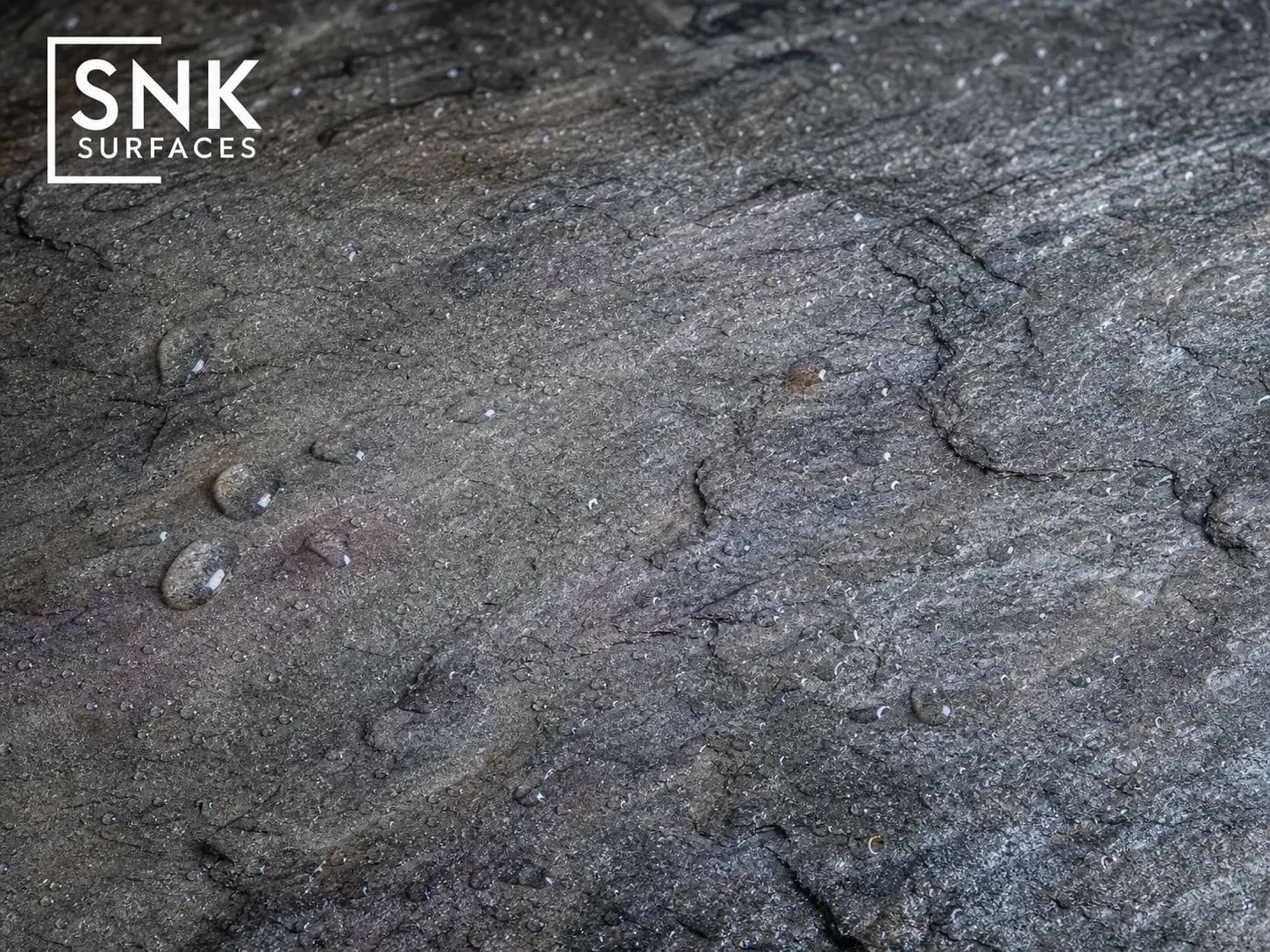
- The hidden undertones: Look closely, especially when the stone is wet, and you will spot subtle hints of pale blue, soft lavender, and occasional darker charcoal streaks. These undertones are what give Kandla Grey paving slabs their depth and stop them from looking flat or dull.
Wet vs dry: This is the part that surprises most homeowners. On a dry summer day, the patio looks light, silvery, and crisp. But when it rains (and in the UK, it rains a lot), the stone darkens dramatically. The blues and gunmetal greys come alive, and the patio looks completely different. Most people love this dual personality.
The Three Finishes: Which One Should You Pick?
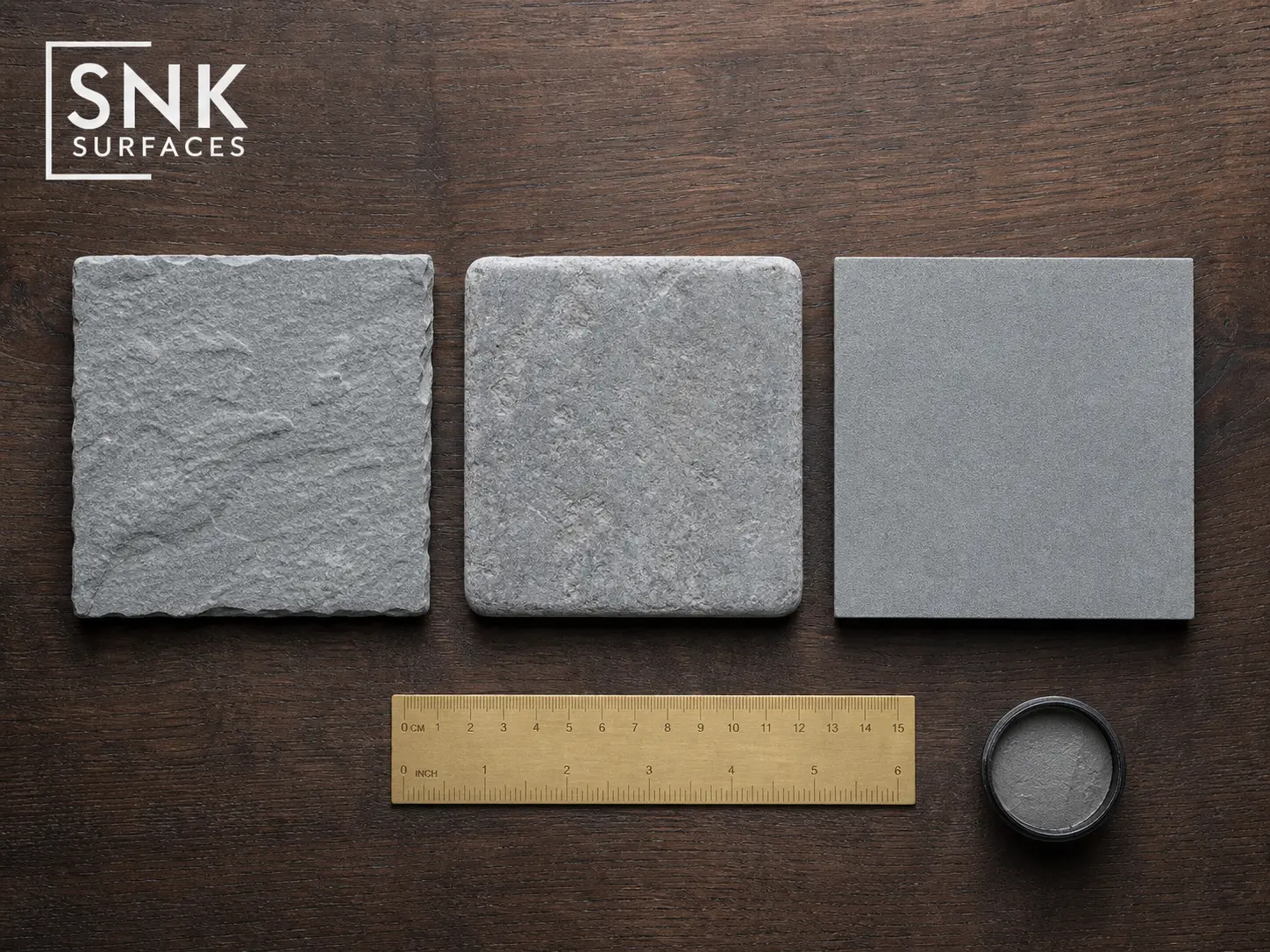
One of the biggest strengths of Kandla Grey sandstone paving is that the same stone can look completely different depending on how it is finished at the quarry. Here are the three options you will see in the UK market:
1. Traditional Riven (Natural Cleft)
This is the classic, most popular finish. The Kandla Grey paving slabs are hand-split along their natural layers, leaving a gently textured, slightly bumpy surface with hand-chiselled edges.
- Best for: Standard garden patios, family outdoor spaces, and budget-conscious projects.
- Why contractors love it: The natural ridges provide excellent grip underfoot, even in heavy rain. It meets UK slip resistance requirements without any extra treatment. It is also the fastest to lay because the rustic edges hide minor cutting imperfections.
2. Antiqued Tumbled
For this finish, riven grey Indian sandstone slabs are put into large spinning drums with ceramic stones and water. The tumbling process rounds off the sharp edges, softens the surface, and gives the stone a weathered, aged look.
- Best for: Heritage properties, period homes, cottage gardens, and traditional driveways.
- Why contractors love it: The stone looks like it has been there for 100 years the day you finish laying it. Clients who want that "old English garden" feel absolutely love this finish.
3. Sawn-and-Honed
This is the premium, contemporary option. The Kandla Grey sandstone paving UK slabs are machine-cut on all six sides with diamond blades to create perfectly straight edges. The top surface is then ground smooth and flat.
- Best for: Modern new-build homes, sleek urban courtyards, and seamless indoor-outdoor spaces with bi-fold doors.
- Why contractors love it: The straight edges allow ultra-tight 3mm to 5mm grout joints, giving you a clean, minimalist look that rivals porcelain. You get the contemporary aesthetic without losing the natural character of real stone.
Why Contractors Keep Choosing Kandla Grey
Talk to any experienced UK landscape contractor and they will tell you that Kandla Grey paving slabs are their go-to stone. Here are the three main reasons:
- 1. It goes with everything. Modern British garden design leans heavily on dark features: anthracite bi-fold doors, black pergolas, dark cedar fencing. The cool, light tones of grey Indian sandstone create a perfect contrast. The dark features stand out, but the garden still feels bright and open.
- 2. It handles British winters. The UK freeze-thaw cycle destroys cheap, porous stone. Water gets in, freezes, expands, and cracks the surface. High-quality Kandla Grey sandstone paving is dense enough to resist this when calibrated to the correct thickness. It will not spall, flake, or crack after a harsh winter.
- 3. The price is right. When you compare cost against performance, Kandla Grey sandstone paving UK is very hard to beat. You get the look and longevity of a premium natural stone patio at a fraction of the cost of native Yorkstone or high-end outdoor porcelain.
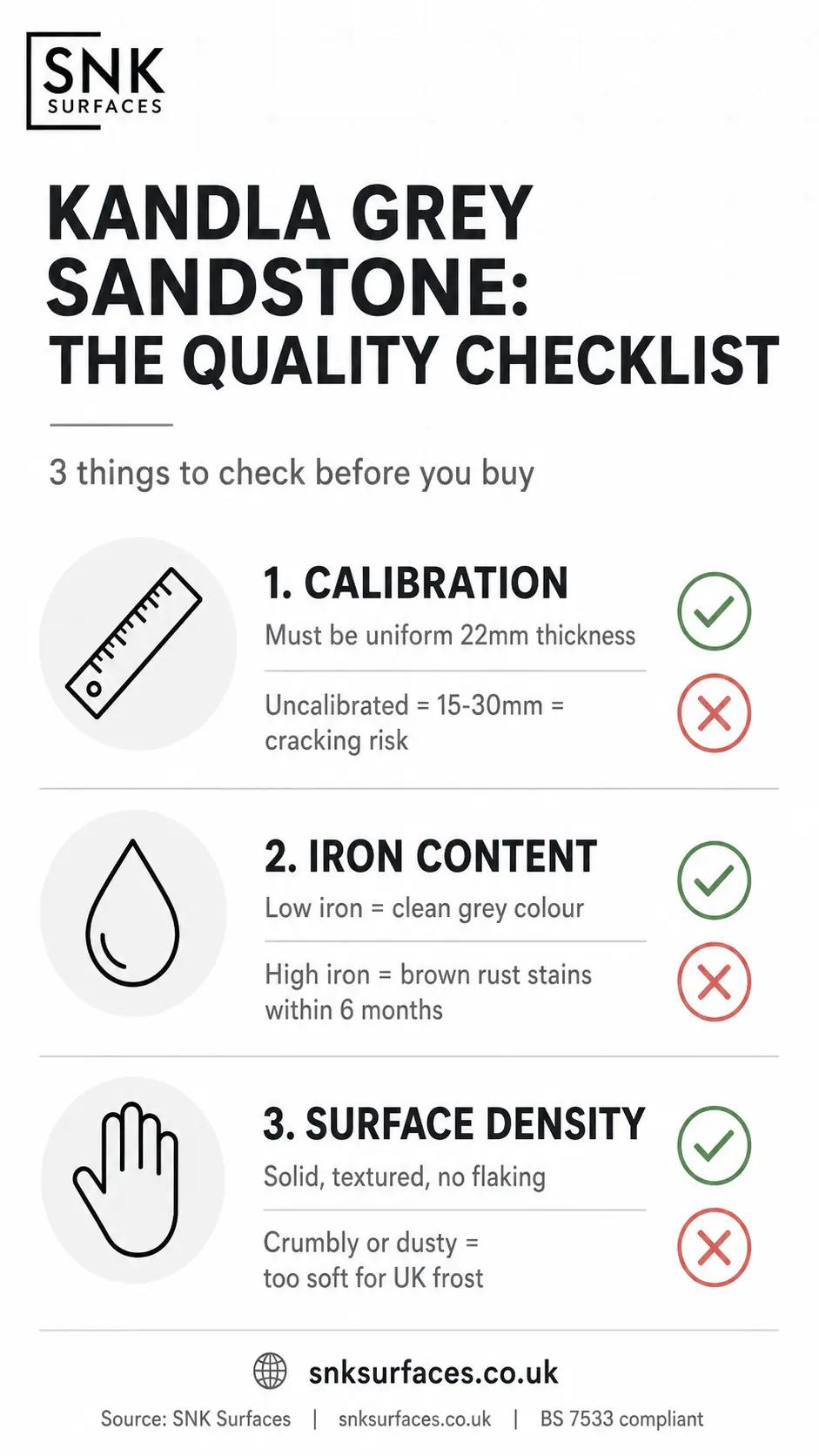
How to Spot Quality Kandla Grey (The 3-Point Checklist)
Not all Kandla Grey paving slabs are the same quality. The UK market is flooded with cheap, low-grade imports that look fine in the showroom but fall apart within two years. Here is how to tell the difference:
1. Check the Thickness (Calibration)
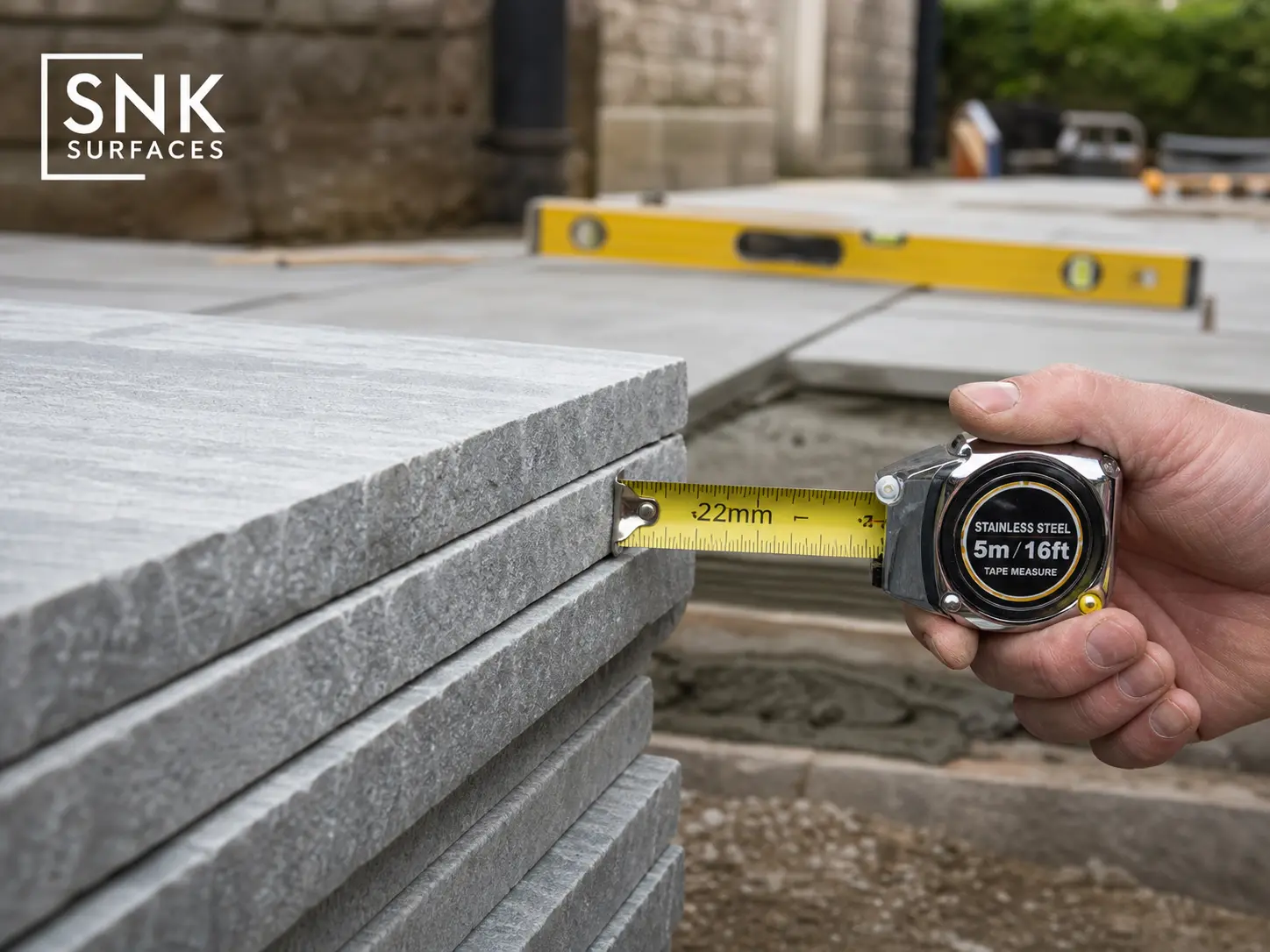
Premium Kandla Grey sandstone paving UK should always be calibrated to a uniform 22mm thickness. This means the underside has been machine-planed so every slab is exactly the same depth.
Why does this matter? Uncalibrated stone can vary from 15mm to 30mm in the same crate. This makes installation painfully slow because the contractor has to adjust the mortar bed under every single slab. Worse, a 15mm slab is structurally weak and likely to crack under frost pressure. Always specify 22mm calibrated stone that meets BS 7533 paving standards.
2. Watch Out for High Iron Content
Some cheaper seams of grey Indian sandstone contain high levels of natural iron ore. When this stone gets wet in a UK garden, the iron oxidises and rusts. Within six months, ugly brown and orange stains bleed across the surface and ruin the grey look.
How to avoid it: Buy from a reputable direct supplier like SNK Surfaces who specifically selects quarry blocks with low iron content. Ask for a sample and leave it outside in the rain for a week. If rust marks appear, do not buy it.
3. Test the Surface Density
Run your hand across a dry riven slab. It should feel textured but solid. If the surface feels dusty, crumbly, or brittle, or if flakes of stone peel off easily under your fingernail, the stone is too soft for outdoor UK use. It will delaminate after the first winter.
Design Ideas: How to Use Kandla Grey in UK Gardens
Kandla Grey sandstone paving is incredibly versatile. Here are three proven design approaches that UK landscape designers are using right now:
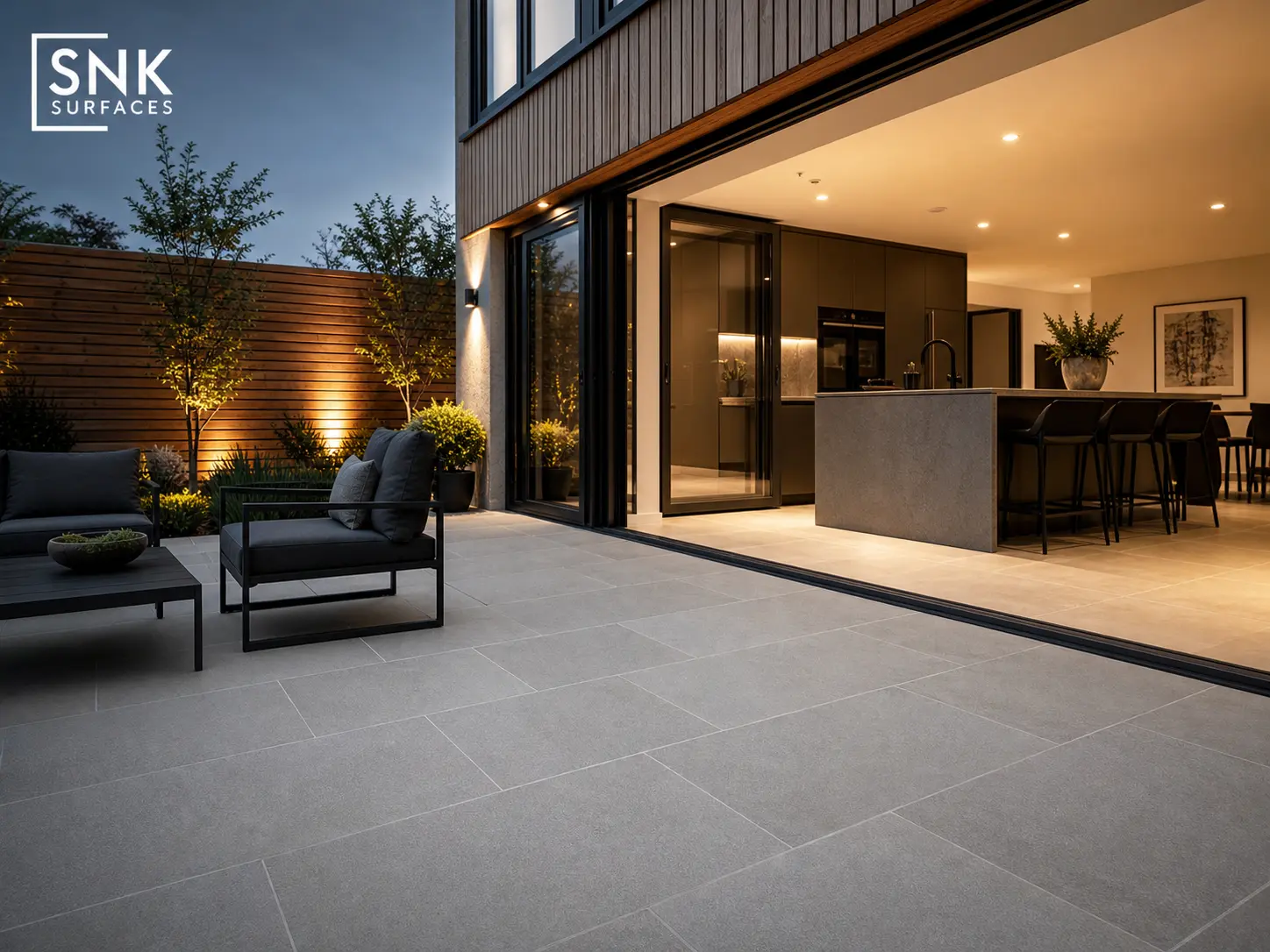
The Modern Minimalist Terrace
Use large-format 900x600mm sawn-and-honed Kandla Grey paving slabs laid in a uniform stack-bond pattern with tight 3mm joints and light grey resin grout. The result is a clean, contemporary surface that extends the indoor kitchen space out into the garden through bi-fold doors.
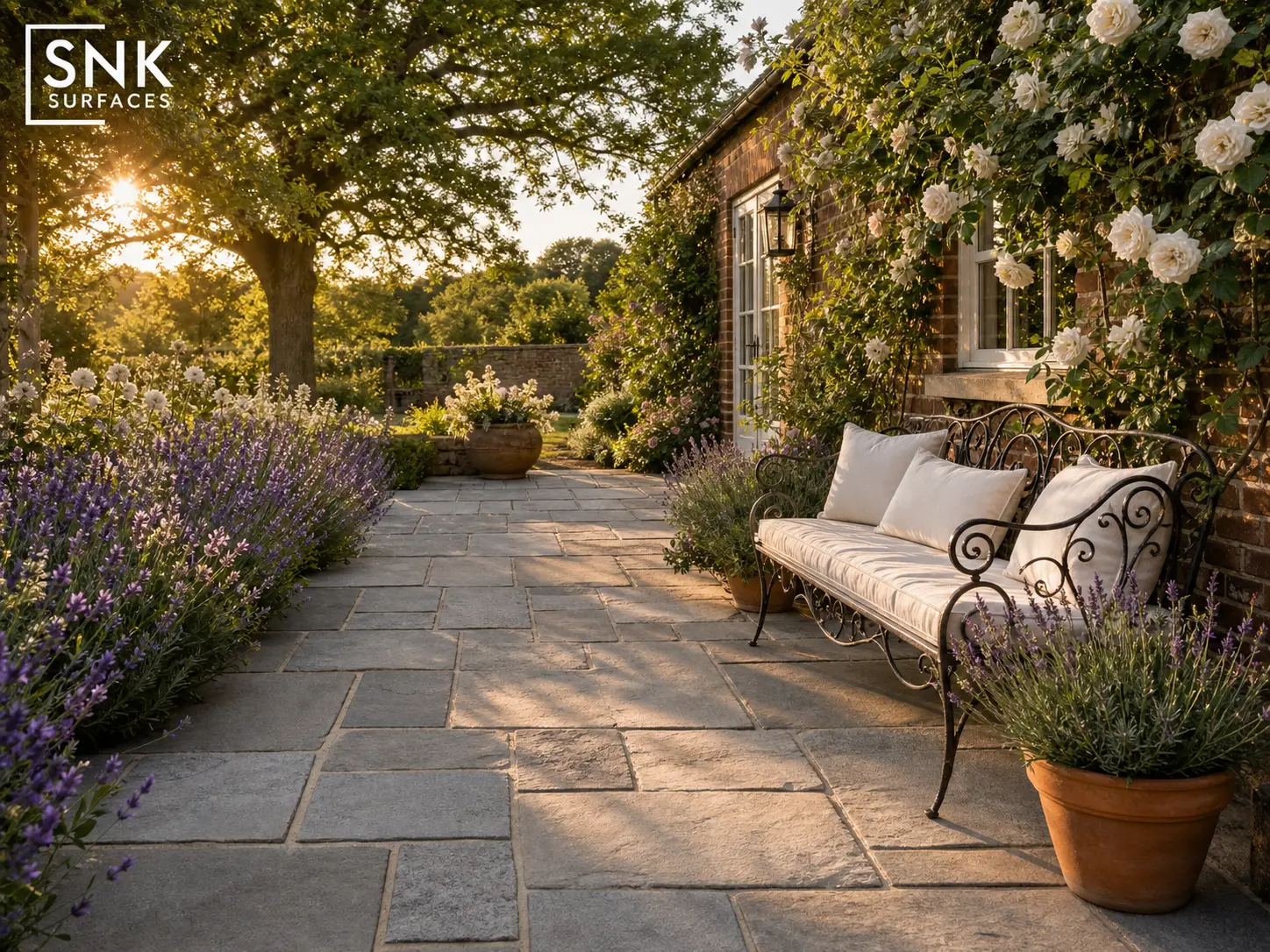
The Traditional Cottage Courtyard
Use a mixed-size project pack of riven grey Indian sandstone laid in a random, staggered pattern with 15mm sand-and-cement pointing joints. The varied sizes and natural texture give the patio an authentic, centuries-old feel that suits period properties perfectly.
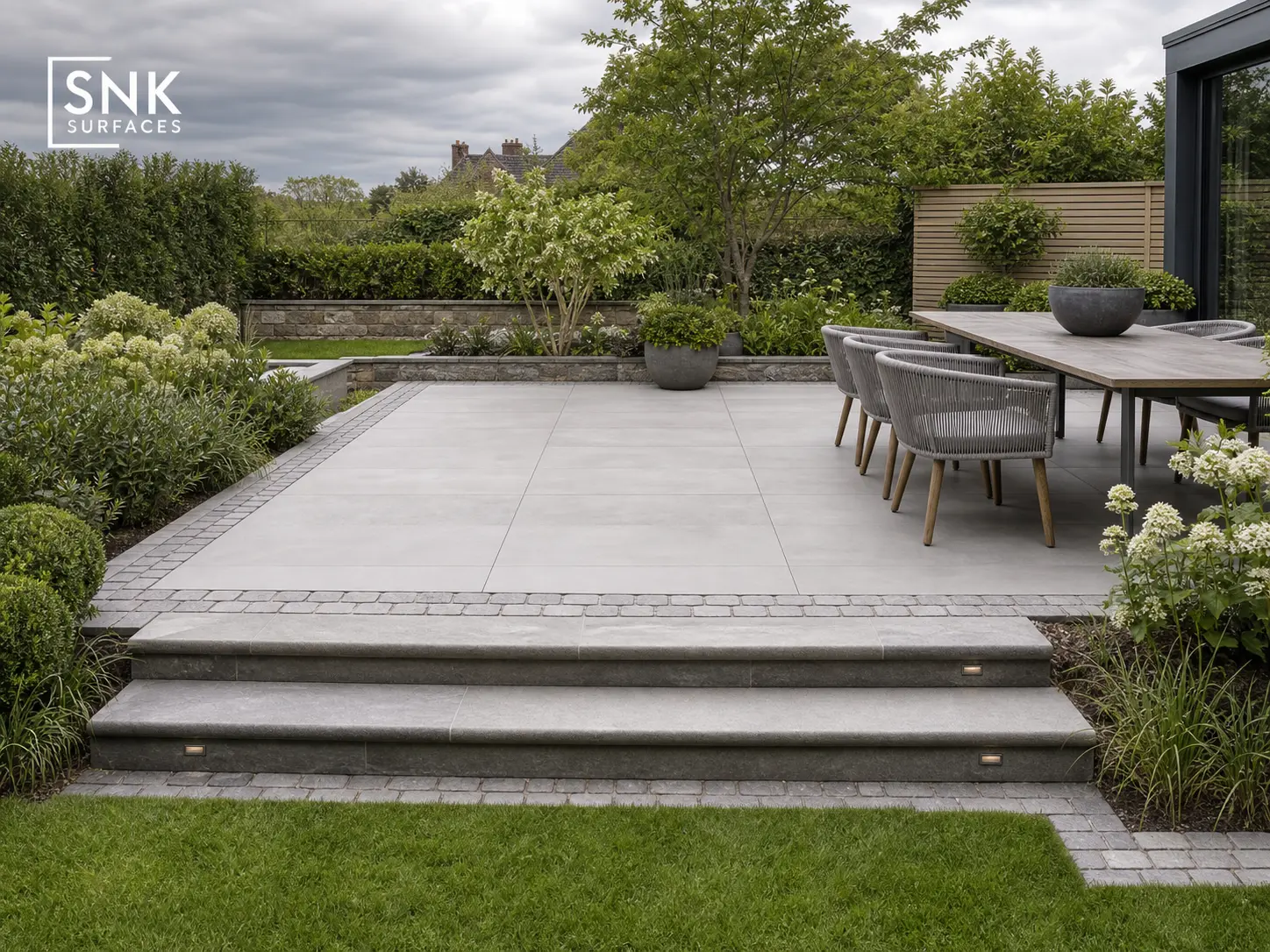
The Hybrid Approach (Stone + Porcelain)
This is the fastest-growing trend in UK landscaping. Lay the main dining terrace in Kandla Grey Porcelain Paving for a wipe-clean, stain-proof surface. Then border the patio with natural tumbled Kandla Grey sandstone paving setts and steps to add warmth and texture around the garden edges. You get the practicality of porcelain where it matters most and the beauty of natural stone everywhere else.
Frequently Asked Questions
1. Does Kandla Grey sandstone need sealing?
Yes. Like all natural grey Indian sandstone, it is porous. Apply a water-based impregnating sealer like Lithofin MN Stain-Stop within 4 to 6 weeks of installation. This prevents oil, wine, and leaf stains from soaking in and stops algae from rooting into the pores during winter.
2. Can I use Kandla Grey for a driveway?
Standard 22mm Kandla Grey sandstone paving UK slabs are designed for foot traffic only. For driveways, specify 40mm or 50mm tumbled setts laid on a reinforced concrete sub-base. The extra thickness handles vehicle weight without cracking.
3. Why do some slabs look slightly brown or buff?
Because it is a natural geological product, Kandla Grey paving slabs will occasionally have subtle streaks of warm buff or copper. This is normal and adds character. If your client wants absolutely zero colour variation, specify Kandla Grey Porcelain instead.
4. How do you clean grey Indian sandstone?
Sweep weekly to remove wet leaves. Wash monthly with warm soapy water and a stiff brush. Jet wash once a year on a low-fan setting, keeping the nozzle at least 30cm from the surface. Never use acid-based cleaners on natural sandstone. For more detailed maintenance advice, see our Indian Sandstone Buyer's Guide.
5. What is the best grout colour for Kandla Grey?
For a modern look, use a light silver-grey or mid-grey resin grout. For a traditional look, use a warm buff sand-and-cement mortar that contrasts with the cool grey stone and highlights the shape of each slab.
6. Is Kandla Grey slippery when wet?
Riven Kandla Grey sandstone paving has excellent natural grip thanks to its textured cleft surface. It easily meets HSE slip resistance guidelines for outdoor pedestrian areas. Sawn-and-honed finishes are smoother, so specify a micro-textured surface if the patio will be frequently wet.
The Bottom Line
Kandla Grey sandstone paving UK projects are popular for a simple reason: the stone delivers on every front. It looks great in both modern and traditional gardens. It handles British frost and rain without cracking. It is easy for contractors to lay. And it costs significantly less than Yorkstone or porcelain.
The key is buying from a supplier who guarantees 22mm calibration, low iron content, and ethical quarrying practices. Cheap imports might save you a few pounds per square metre upfront, but they will cost you in callbacks, replacements, and unhappy clients within two years.
Ready to specify Kandla Grey for your next project?
Browse our complete range of Kandla Grey Sandstone Paving or explore the zero-maintenance Kandla Grey Porcelain alternative. Request a free sample box delivered to your UK site or office at snksurfaces.co.uk.
View the Kandla Grey Collection