
Specifier's Guide • 2026
County LGY Porcelain Paving: The Complete UK Specifier's Guide
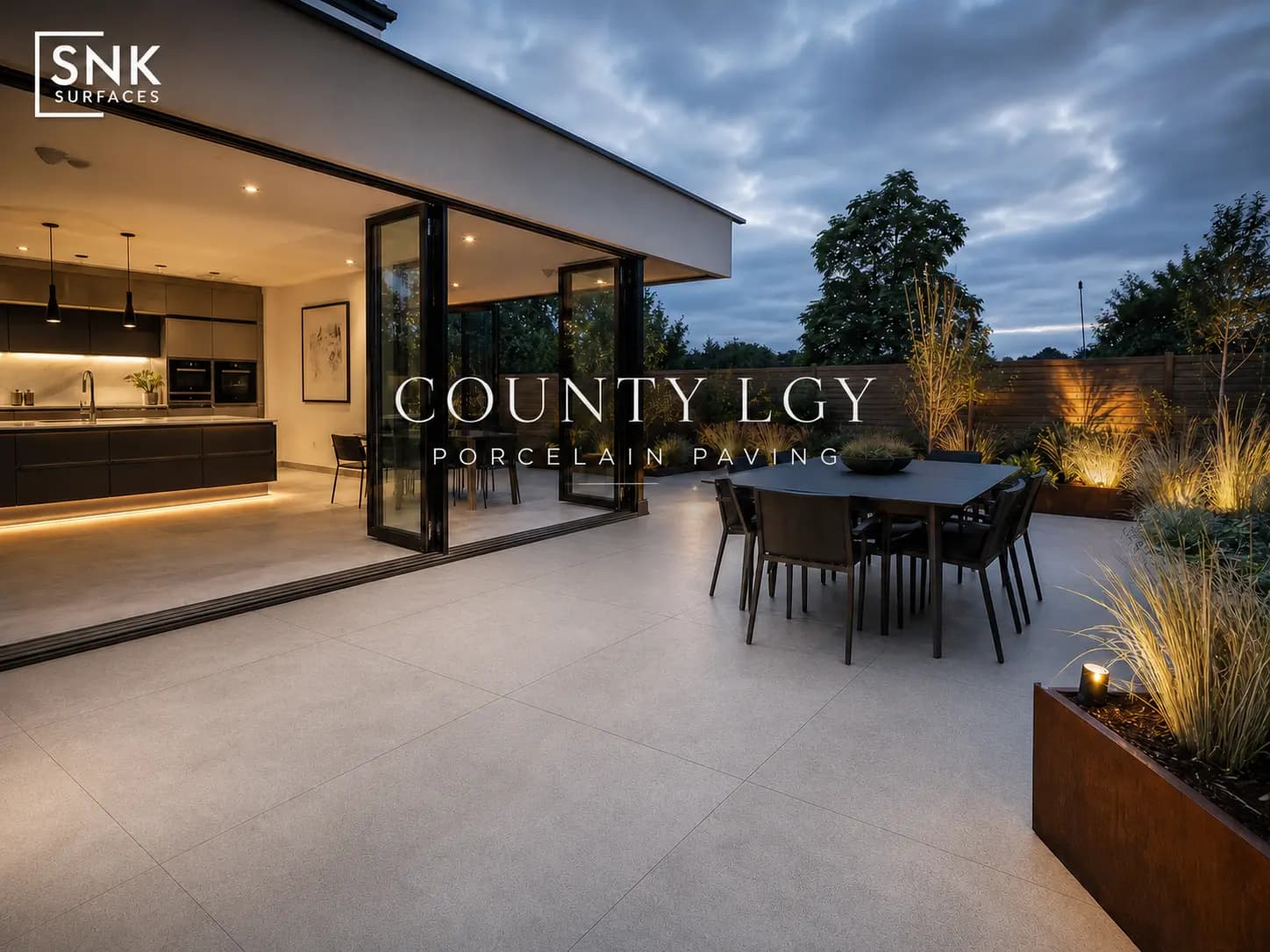
Every UK landscape contractor knows the drill. You finish a beautiful natural stone patio in September. By February, the client is calling you about green algae, oil stains from the BBQ, and a hairline crack near the drainage channel. The British weather is brutal on outdoor surfaces, and no matter how well you lay the stone, nature always finds a way in.
That frustration is exactly why County LGY porcelain paving has become the most requested material in UK landscaping over the past three years.
It is not hype. It is physics. County LGY porcelain paving is fired at over 1,200°C until the clay vitrifies into a near-glass surface that water, frost, oil, and algae simply cannot penetrate. For UK homeowners, that means a patio that looks identical in year ten to the day it was laid. For contractors, it means fewer callbacks and happier clients.
In this guide, we will walk you through everything you need to know about County LGY porcelain paving from the technical specs that matter to the installation mistakes that ruin projects. Whether you are specifying for a residential garden in Surrey or a commercial roof terrace in Manchester, this is your complete reference.
What Exactly Is County LGY Porcelain Paving?
County LGY is a premium 20mm outdoor porcelain tile designed specifically for exterior hard landscaping in the UK and European climate.
The "LGY" stands for Light Grey, but do not picture a flat, concrete-looking slab. County LGY porcelain paving has a soft, warm "greige" tone a blend of pale grey and subtle beige with delicate natural mottling that gives each tile a slight variation. The result is a surface that looks organic and high-end, not industrial.
The finish is matte, not glossy. This is deliberate. A glossy surface would reflect harsh sunlight and become dangerously slippery when wet. The matte finish on County LGY porcelain paving eliminates glare and works hand-in-hand with the micro-textured surface to provide grip underfoot, even after a heavy British downpour.
The Technical Specs That Actually Matter for UK Projects
You can ignore most of the marketing fluff on porcelain packaging. As a specifier or contractor, these are the four numbers that determine whether a porcelain tile will survive a British winter.
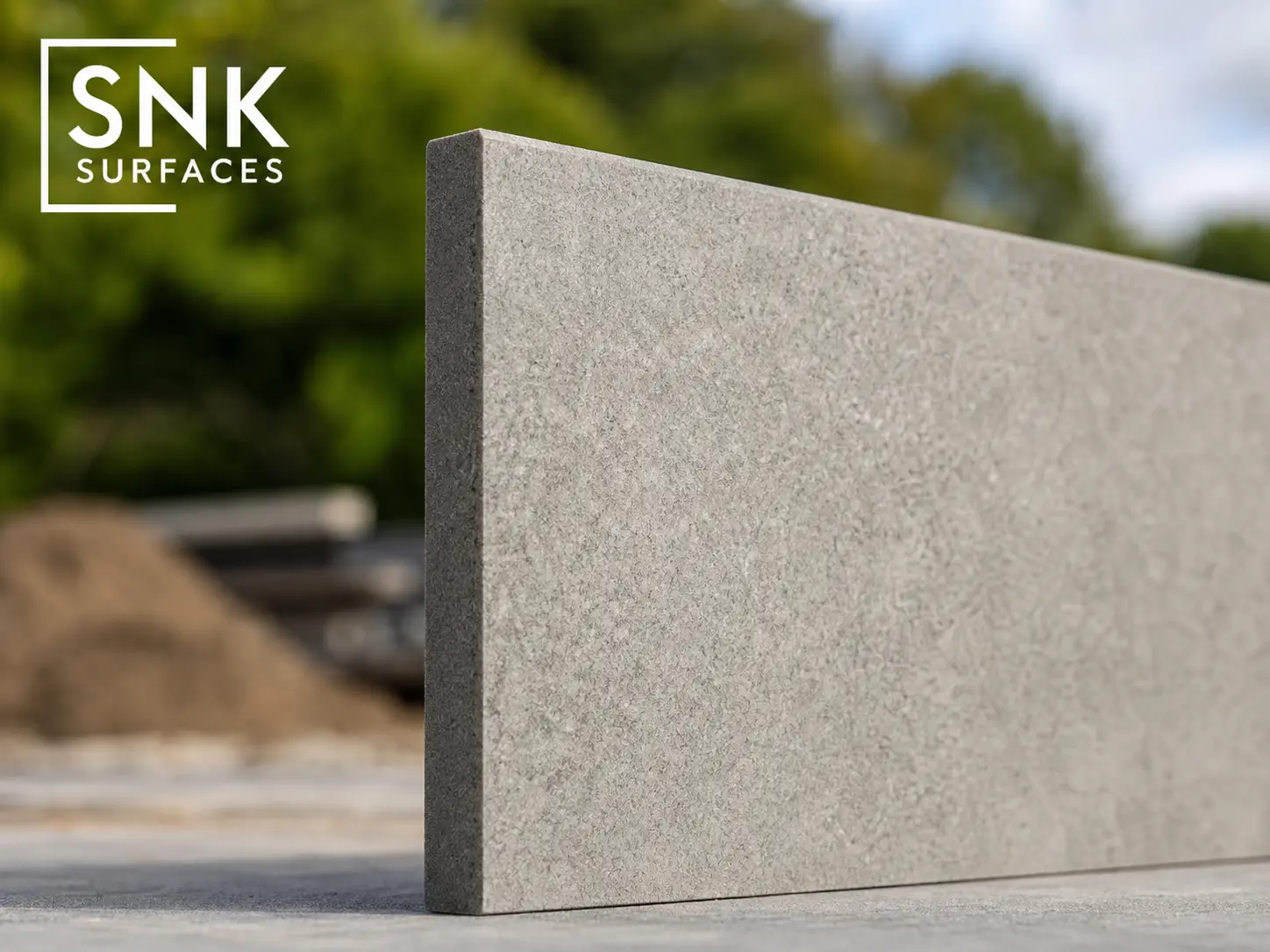
1. Thickness: 20mm (Not 10mm, Not 18mm - 20mm)
Indoor porcelain tiles are typically 8–10mm thick. That is fine for a kitchen floor. Outdoors, the tile must handle ground movement, frost heave, heavy planters, and the occasional dropped garden bench.
County LGY porcelain paving is precision-calibrated to a full 20mm thickness. This is the industry standard for exterior use in the UK and aligns with BS 7533-101 design guidelines for pedestrian paving. Anything thinner risks cracking under point loads.
2. Slip Rating: Certified R11
The UK gets an average of 133 rainy days per year. Slip resistance is not optional it is a legal requirement for commercial projects and a moral one for residential gardens.
County LGY porcelain paving carries a certified R11 slip rating on the European DIN 51130 scale. This means the surface provides reliable grip at incline angles between 19° and 27°, which covers everything from a flat patio to a gently sloping ramp.
For commercial projects subject to HSE slip resistance guidelines, County LGY also achieves a PTV (Pendulum Test Value) of 36+ in wet conditions, which is the minimum threshold for low slip potential in public areas.
3. Water Absorption: Less Than 0.5%
This is the single most important number for UK frost resistance.
Natural sandstone absorbs between 2% and 5% of its weight in water. When that water freezes inside the stone, it expands by 9%, creating internal pressure that causes cracking, flaking, and spalling over time.
County LGY porcelain paving has a water absorption rate of less than 0.5%. The vitrified structure is so dense that water physically cannot enter the tile. No water inside means no freeze-thaw damage. Ever. This is why we confidently describe County LGY as 100% frost-proof for UK conditions.
4. Breaking Strength: 13,000N+
For context, the European standard EN 14411 requires a minimum breaking strength of 1,300N for outdoor porcelain. County LGY porcelain paving exceeds this by a factor of ten, making it suitable for heavy commercial foot traffic, outdoor dining areas, and even light vehicular use when installed on a concrete base.
Why UK Contractors and Architects Keep Specifying County LGY
The technical specs explain why County LGY porcelain paving performs. But the reasons it keeps getting specified on UK projects go beyond the lab data.
The Indoor-Outdoor Flow
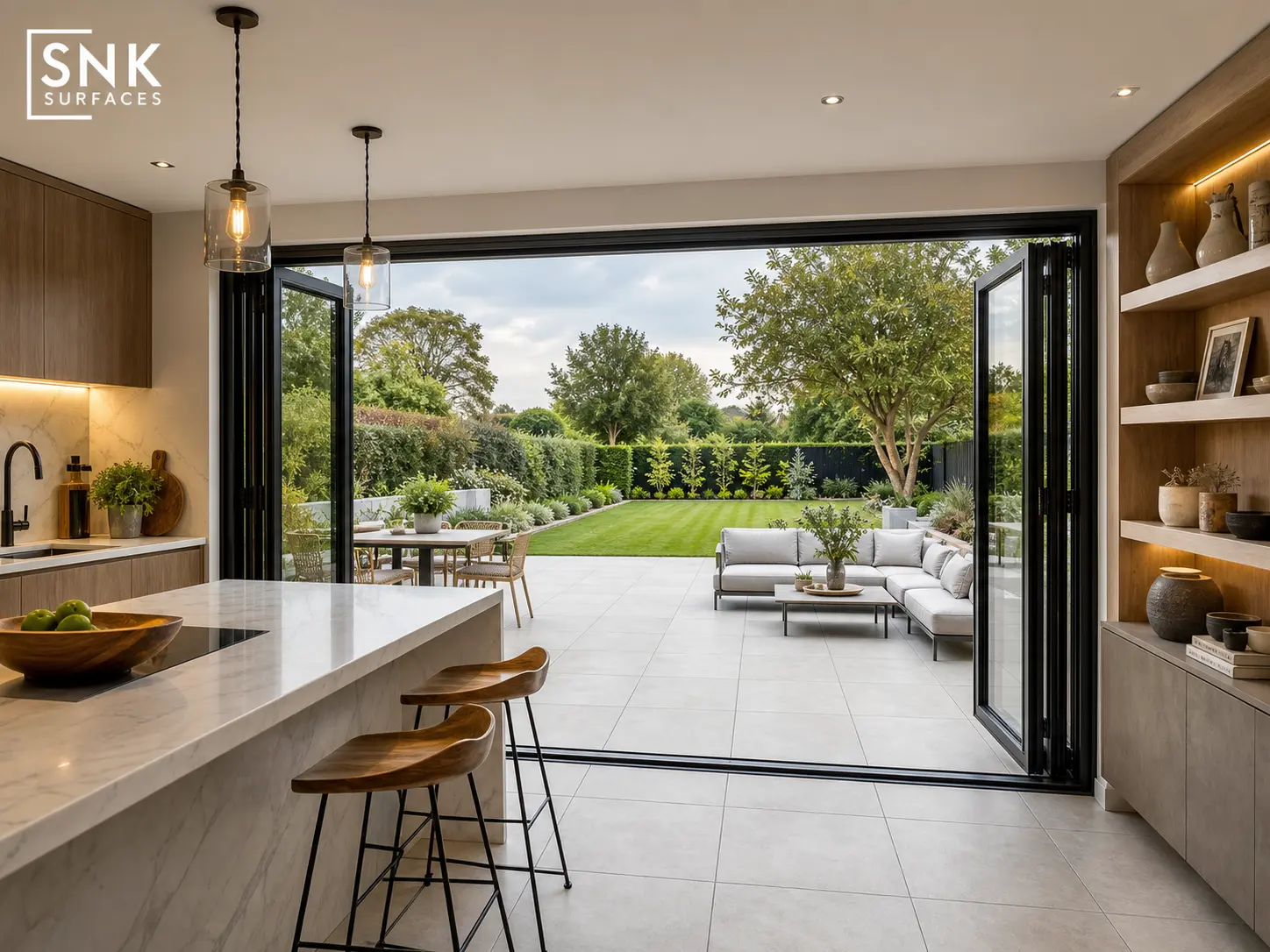
Modern UK homes increasingly feature bi-fold or sliding glass doors that open the kitchen or living room directly onto the patio. Homeowners want the outdoor surface to visually continue the indoor floor.
Because County LGY porcelain paving tiles are rectified (precision-cut at the factory to exact dimensions), they can be laid with ultra-tight 3mm grout joints. This creates a near-seamless surface that reads as a single continuous plane from the kitchen to the garden. You simply cannot achieve this look with natural stone, which has irregular edges and requires 10-15mm joints.
Commercial Durability Without the Commercial Look
Pub beer gardens, hotel terraces, and restaurant outdoor dining areas need surfaces that can handle hundreds of covers per night, spilled wine, dropped food, and dragged furniture. County LGY porcelain paving handles all of this without staining, scratching, or wearing down. And because of that warm greige tone, it looks like a premium residential surface, not a commercial car park tile.
The Lifetime Cost Argument
Here is the conversation that wins over budget-conscious clients. Natural sandstone requires chemical sealing every 18 - 24 months at a cost of roughly £3 - £5 per square metre per application. Over 20 years, that adds up to £30 - £50 per square metre in maintenance alone.
County LGY porcelain paving requires zero sealant, zero chemical treatment, and zero re-sanding of joints. The total lifetime maintenance cost is effectively zero. When you factor this in, the upfront price difference between porcelain and premium sandstone narrows significantly.
How to Install County LGY Porcelain Paving
Installation is where most porcelain projects go wrong. Porcelain is not natural stone. You cannot treat it the same way. Here are the two proven methods for UK installations.
Method 1: Full Mortar Bed (Gardens, Patios, Pathways)
This is the standard method for ground-level installations.
- Sub-base: Compact 100 - 150mm of MOT Type 1 aggregate to create a stable, free-draining foundation.
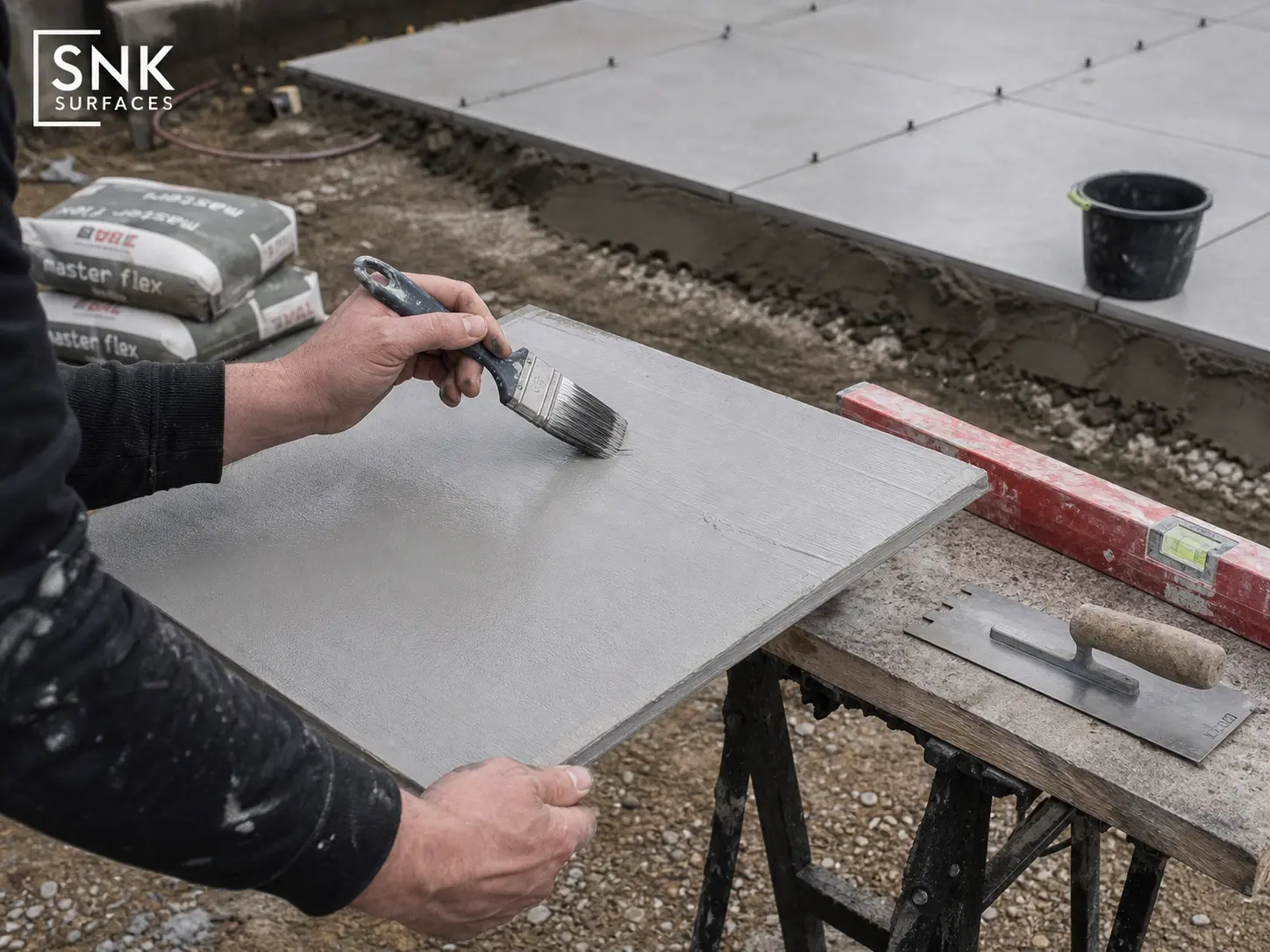
- Bedding: Lay a full 30 - 40mm bed of sharp sand and cement mortar (4:1 ratio). Do NOT use spot bedding; porcelain requires 100% contact with the mortar.
- Primer (CRITICAL): Paint the back of every County LGY porcelain paving tile with a porcelain-specific slurry primer such as Larsen LPA or Mapei Kerabond. Because porcelain is non-porous, standard cement will not bond to it. Skip this step and your tiles will de-bond within 6 - 12 months.
- Grouting: Use an exterior-grade epoxy or resin-based porcelain grout in the 3 - 4mm joints. Do NOT use standard sand-and-cement pointing.
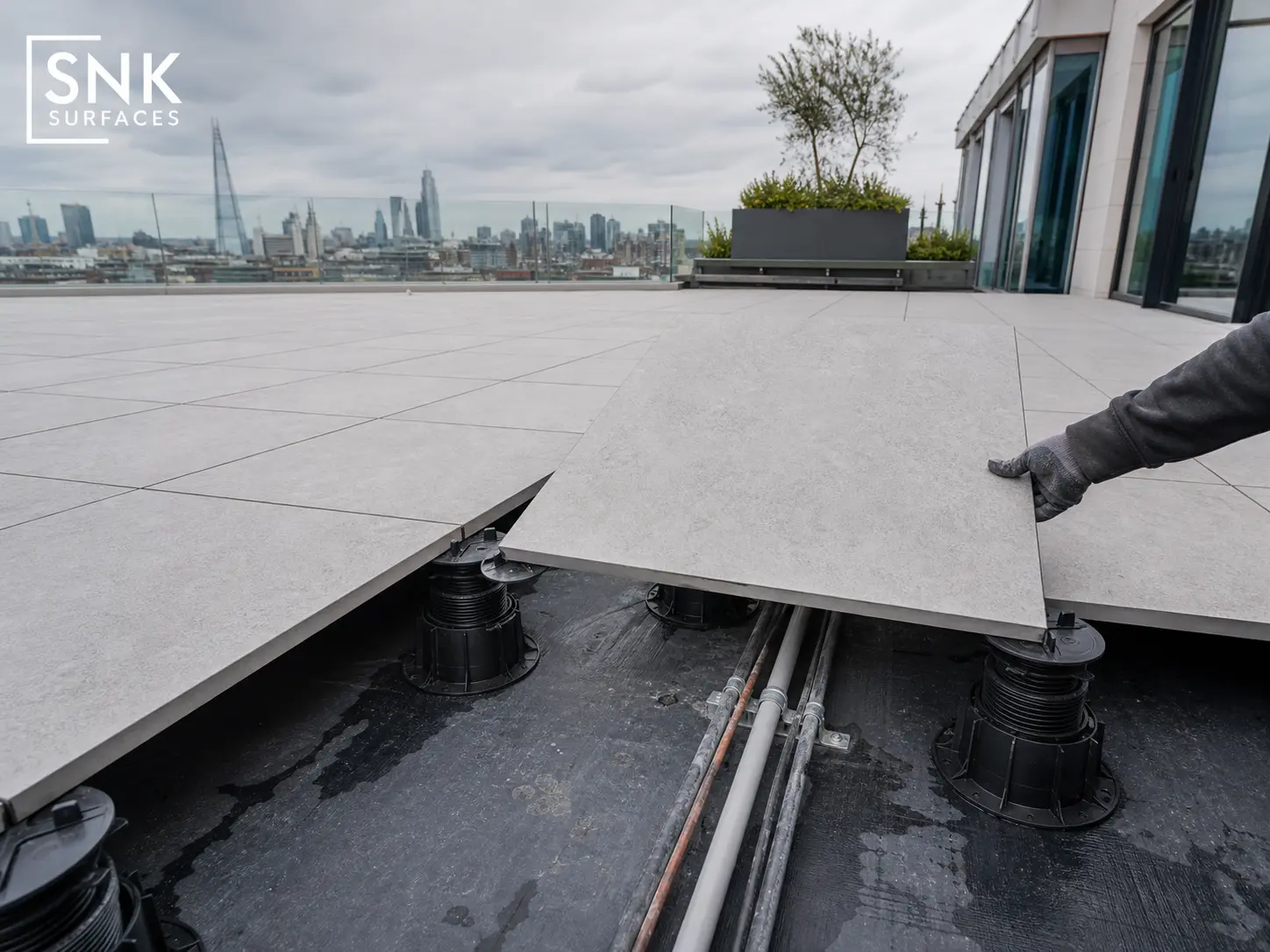
Method 2: Pedestal System (Roof Terraces, Balconies, Overlays)
For elevated installations where weight and drainage are concerns, the pedestal system is the preferred approach.
- No mortar required. The 20mm County LGY tiles rest on adjustable plastic pedestals that screw up or down to achieve a perfectly level surface.
- Open joints allow rainwater to drain freely through the gaps and flow to the waterproof membrane below.
- Service access is simple: lift any tile to access drainage pipes, lighting cables, or waterproofing layers underneath.
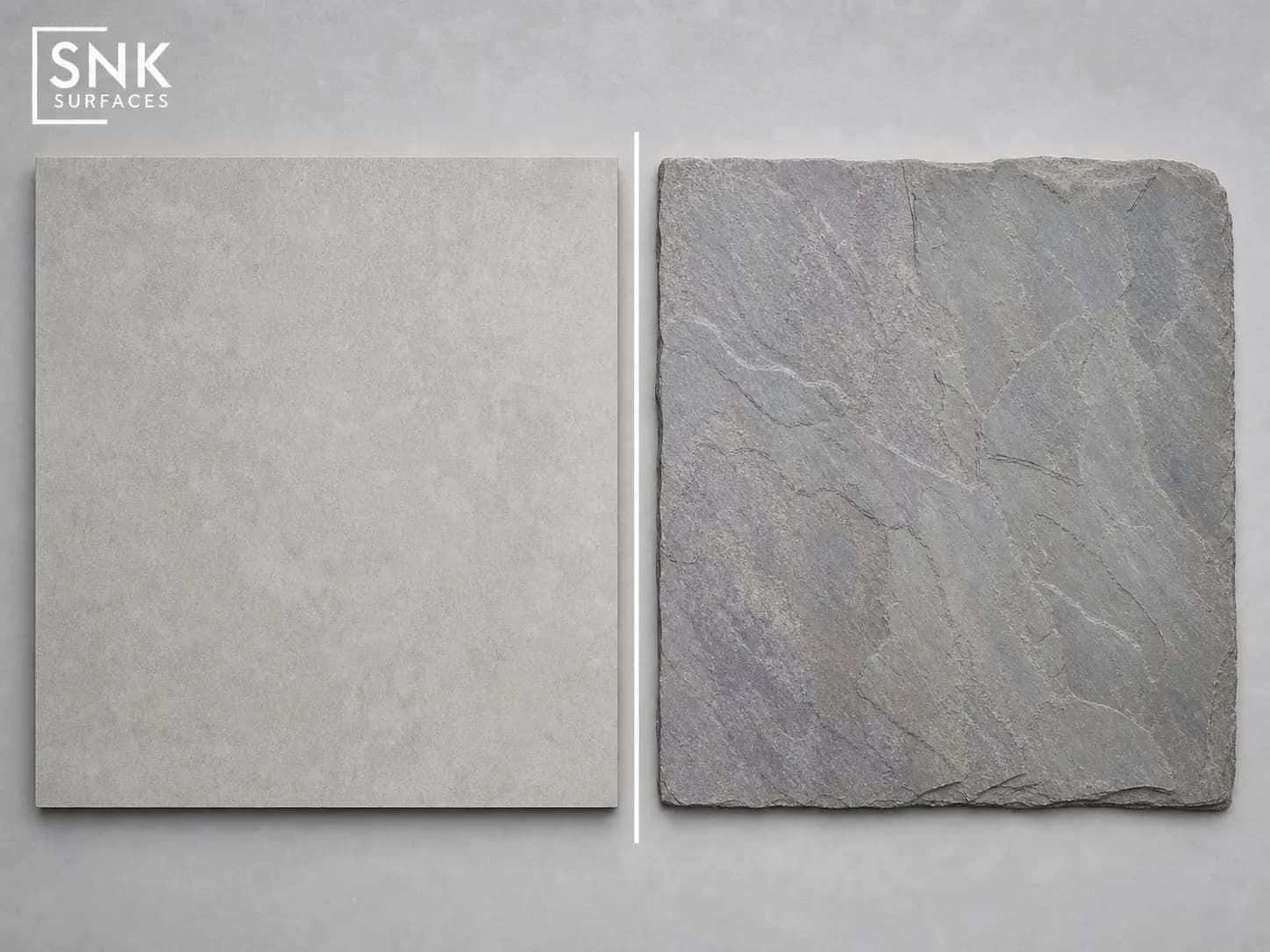
County LGY Porcelain vs Natural Grey Sandstone
We sell both porcelain and natural stone, so we have no reason to push one over the other. The right choice depends on the project, the client, and the budget. Here is an honest, side-by-side comparison of County LGY porcelain paving versus natural grey sandstone like our Kandla Grey Sandstone.
| Feature | County LGY Porcelain | Natural Sandstone |
|---|---|---|
| Colour Consistency | 100% uniform across every tile. | Naturally variable with unique veining. |
| Maintenance | Near zero. No sealing required. | Requires sealing every 18–24 months. |
| Frost Resistance | 100% frost-proof (<0.5% absorption). | Good, but porous stone can spall. |
| Aesthetic | Clean, contemporary, crisp edges. | Warm, organic, rustic charm. |
| Installation | Requires diamond blade & primer. | Bonds naturally to mortar. |
The honest verdict: If your client wants a crisp, modern patio that will look identical in 20 years with zero effort, County LGY porcelain paving is the clear winner. If they love the warmth and character of natural stone and are happy with seasonal upkeep, our Kandla Grey Sandstone or Mint Sandstone Paving are beautiful alternatives.
Maintenance: What "Zero Upkeep" Actually Means
Let us be specific, because "low maintenance" is one of the most overused claims in the paving industry.
With County LGY porcelain paving, "zero upkeep" means:
- No sealant. Ever. The vitrified surface cannot absorb liquids, so sealant has nothing to bond to.
- No algae treatment. Moss and algae need a porous surface to root into. County LGY is so dense that organic growth simply washes off.
- No stain removal chemicals. Red wine, BBQ grease, coffee, and leaf tannins wipe away with warm soapy water.
- No re-grouting. The epoxy grout used in the 3mm joints does not crumble or wash out.
- Spring clean: Once a year, a light pass with a standard pressure washer will restore the patio to its original appearance.
Frequently Asked Questions
1. Does County LGY porcelain paving get slippery when wet?
No. County LGY carries a certified R11 slip rating and a PTV of 36+ in wet conditions. The micro-textured matte surface provides reliable grip even during heavy rain.
2. Can you drive on County LGY 20mm porcelain tiles?
Yes, but only when installed on a reinforced concrete base with a full mortar bed. Do NOT lay porcelain on a flexible sand or gravel base if vehicles will cross it.
3. Do I need to seal County LGY porcelain paving?
No. Porcelain is vitrified and non-porous. Sealant will not penetrate the surface and will create a cloudy residue.
4. How do you cut County LGY porcelain paving?
Porcelain is extremely dense. You must use a continuous-rim diamond blade designed specifically for porcelain, ideally on a wet saw to prevent chipping.
The Bottom Line
County LGY porcelain paving is not the right choice for every UK garden. If your client wants the rustic warmth of natural stone with all its beautiful imperfections, our Fossil Mint Sandstone or Raj Green Sandstone ranges are outstanding options.
But if the brief calls for a clean, contemporary surface that will look flawless for decades with virtually no maintenance, County LGY porcelain paving is the strongest performer in the UK market right now.
Ready to specify County LGY?
Request a free sample box delivered directly to your UK site or office.
Order Your Sample Today