
Driveway Guide • 2026
Sandstone Setts vs Cobbles: Which Is Right for a UK Driveway?
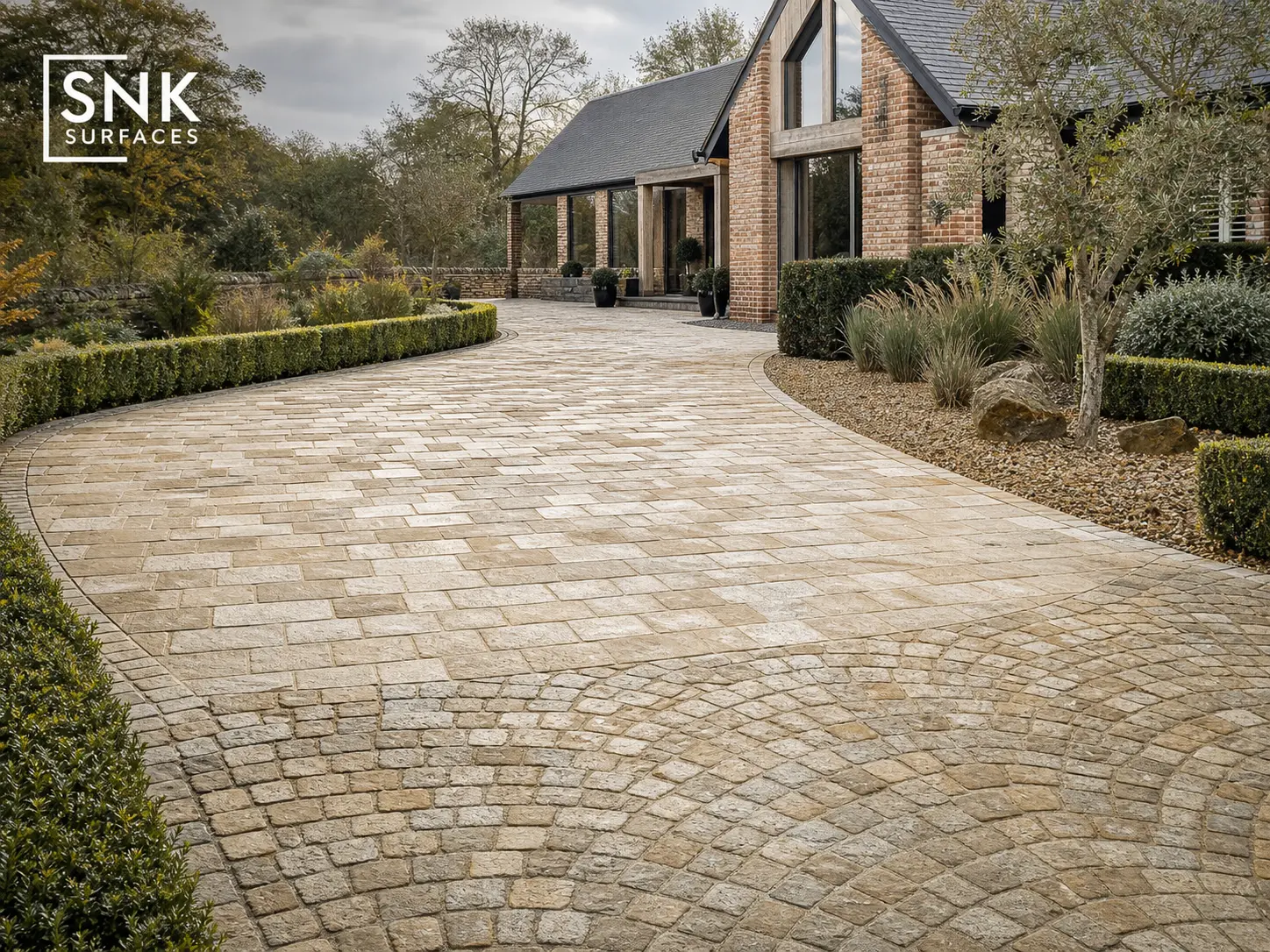
A patio supports people. A driveway supports cars. That simple difference changes everything about how you specify the stone.
When a family walks across a garden patio, the surface carries about 80kg of distributed weight. When that same family parks a 2-tonne SUV on the driveway, each tyre pushes hundreds of kilograms of point load straight down into the stone. And every time they turn the steering wheel while stationary, the tyres twist against the surface with enough force to pop loose blocks right out of the bedding.
So when a client asks you to build them a natural stone driveway, you cannot just lay standard 22mm patio slabs and hope for the best. You need thicker, heavier units that lock together and resist vehicle loads. That usually means choosing between sandstone setts and sandstone cobbles.
The problem is that most people use these two words interchangeably. Builders' merchants mix them up. Homeowners think they are the same thing. But setts and cobbles are different shapes, different sizes, and different jobs. Getting it wrong leads to cracked stone, rutted sub-bases, and expensive callbacks.
This guide breaks down the real differences between sandstone setts vs cobbles UK contractors need to know, covering thickness, vehicle loads, laying patterns, and what BS 7533 actually requires for driveways.
What Exactly Is a Sandstone Sett?
A sett is a block of natural natural stone cut into a clean rectangular or square shape. Think of it as a thick, chunky brick made from solid rock.
The key feature of a sett is its depth. While a standard patio slab is 22mm thick, a driveway sett is typically 50mm to 100mm deep. That extra thickness is what stops the stone from cracking under the weight of a car.
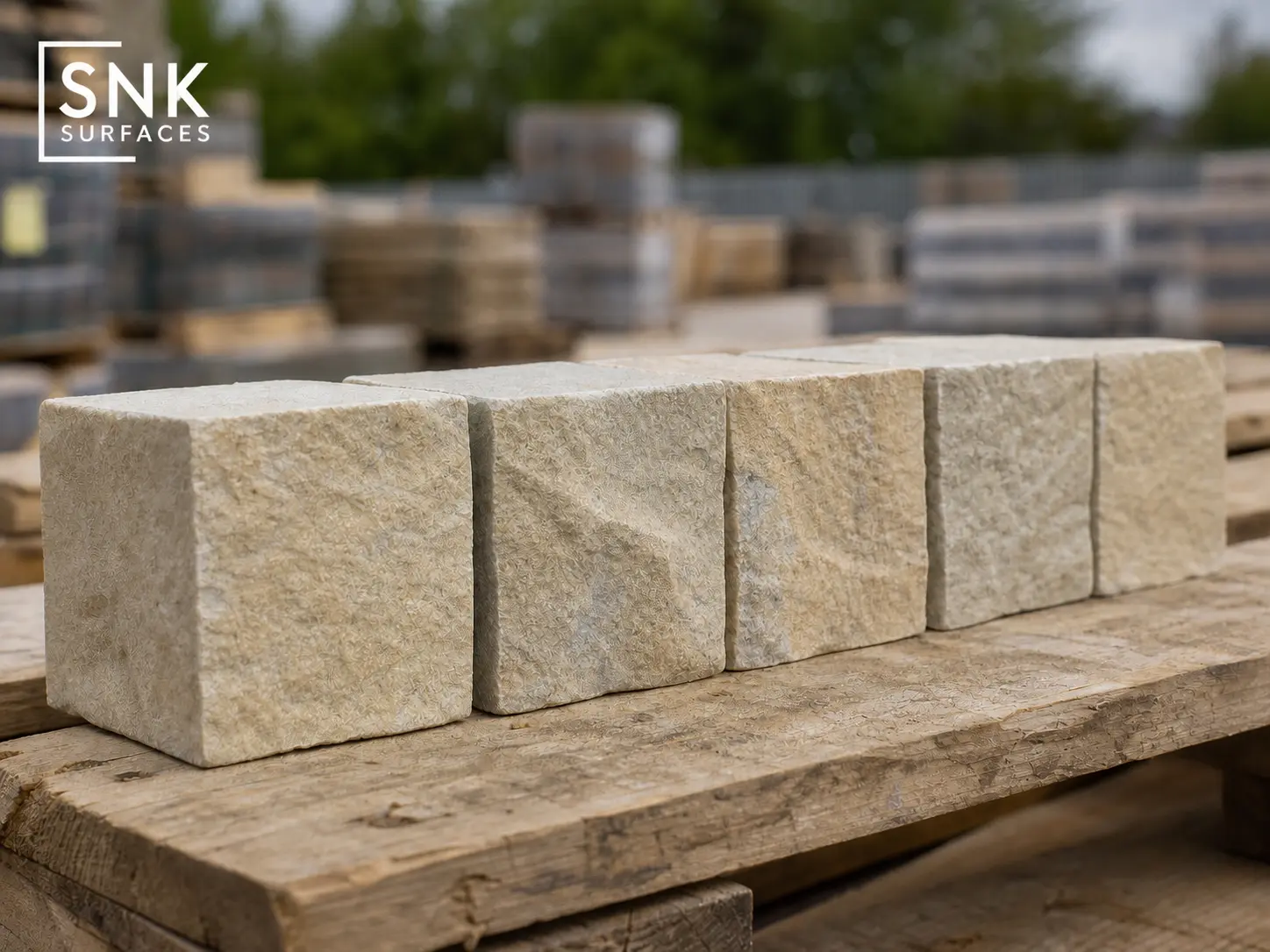
Common UK trade sizes for sandstone setts include:
- 100mm x 100mm x 50mm (standard square sett)
- 100mm x 100mm x 100mm (cube sett for heavy commercial use)
- 200mm x 100mm x 50mm (rectangular sett for faster laying)
The sides of a sett are cropped or sawn at roughly 90-degree angles. This means they fit tightly together in straight, regular rows called "coursed" patterns. When a car drives over coursed setts, the load transfers sideways through the joints into the neighbouring blocks. That interlock is what keeps the surface stable under braking and turning wheels.
Our Mint Sandstone Setts are calibrated to 40mm to 50mm depth, cut from the same Gwalior quarry block as our Mint paving range. They handle passenger vehicles easily and give driveways a warm, natural look that concrete block paving simply cannot match.
What Is a Sandstone Cobble?
The word "cobble" originally meant a smooth, rounded stone pulled from a riverbed. Old British coaching yards and harbour streets were paved with these naturally rounded stones, set upright into deep sand and lime mortar.
Those traditional river cobbles are rarely used on modern driveways. Their smooth, rounded tops give car tyres very little grip, and they are a trip hazard for anyone walking in heels or dress shoes.
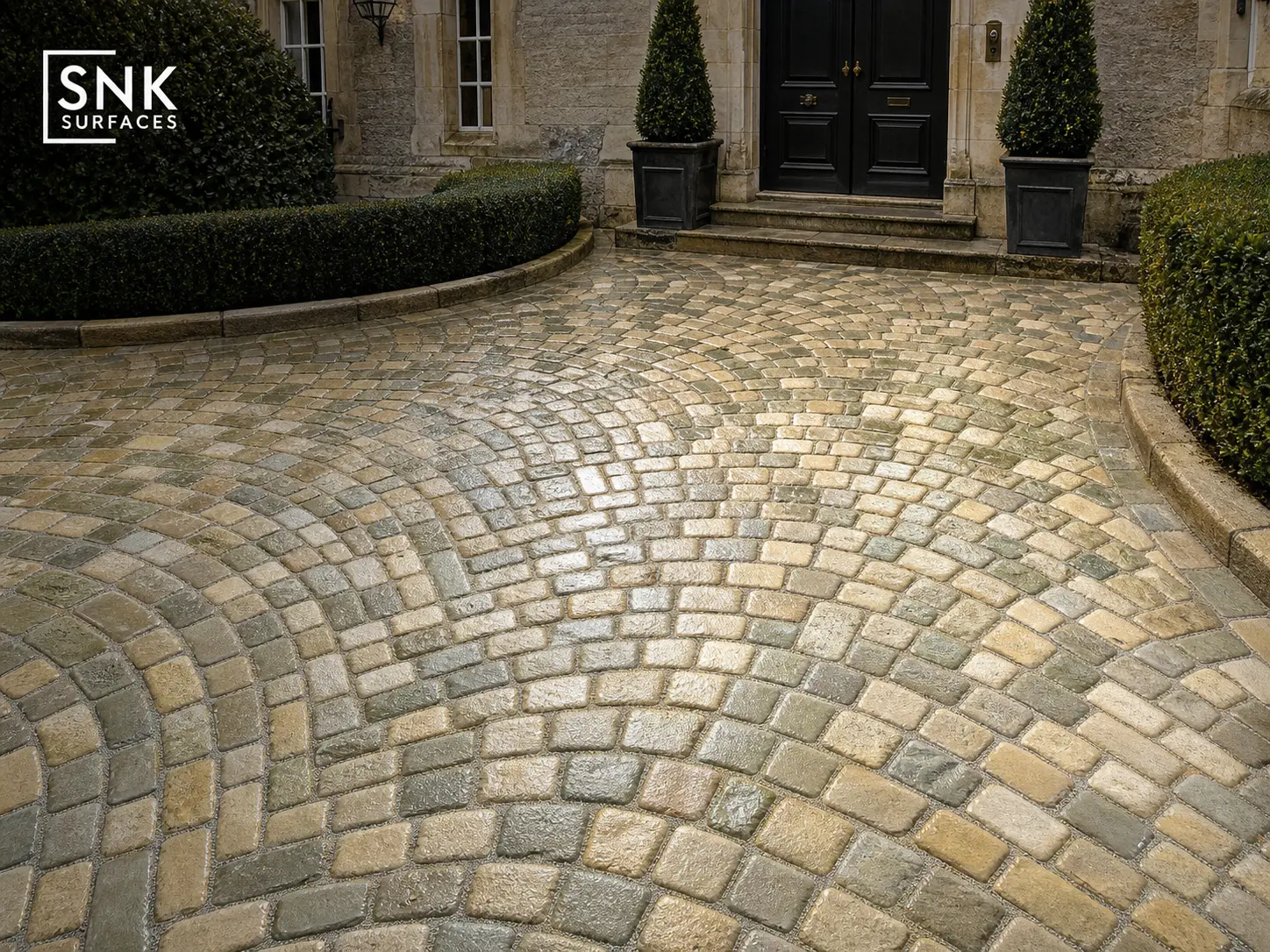
When UK suppliers talk about sandstone cobbles today, they mean something different. Modern cobbles are smaller, tumbled natural stone units with deliberately softened, aged edges. Common sizes include:
- 200mm x 50mm x 40mm to 50mm (elongated cobble bricks)
- 100mm x 100mm tumbled cubes (softened edges, rustic look)
The main difference from setts is the edge profile. Where setts have sharp, clean 90-degree sides, cobbles have rounded, tumbled edges that give them an instant "hundred years old" character. This makes them ideal for decorative borders, curved entrance aprons, and herringbone patterns where a softer, heritage look is what the client wants.
Our Mint Sandstone Cobbles are 200mm x 50mm elongated units with a heavy tumbled finish. They share the same pale cream and sage-green tones as our Mint paving because they come from the same quarry block in Gwalior, Madhya Pradesh.
Head-to-Head Comparison: Setts vs Cobbles
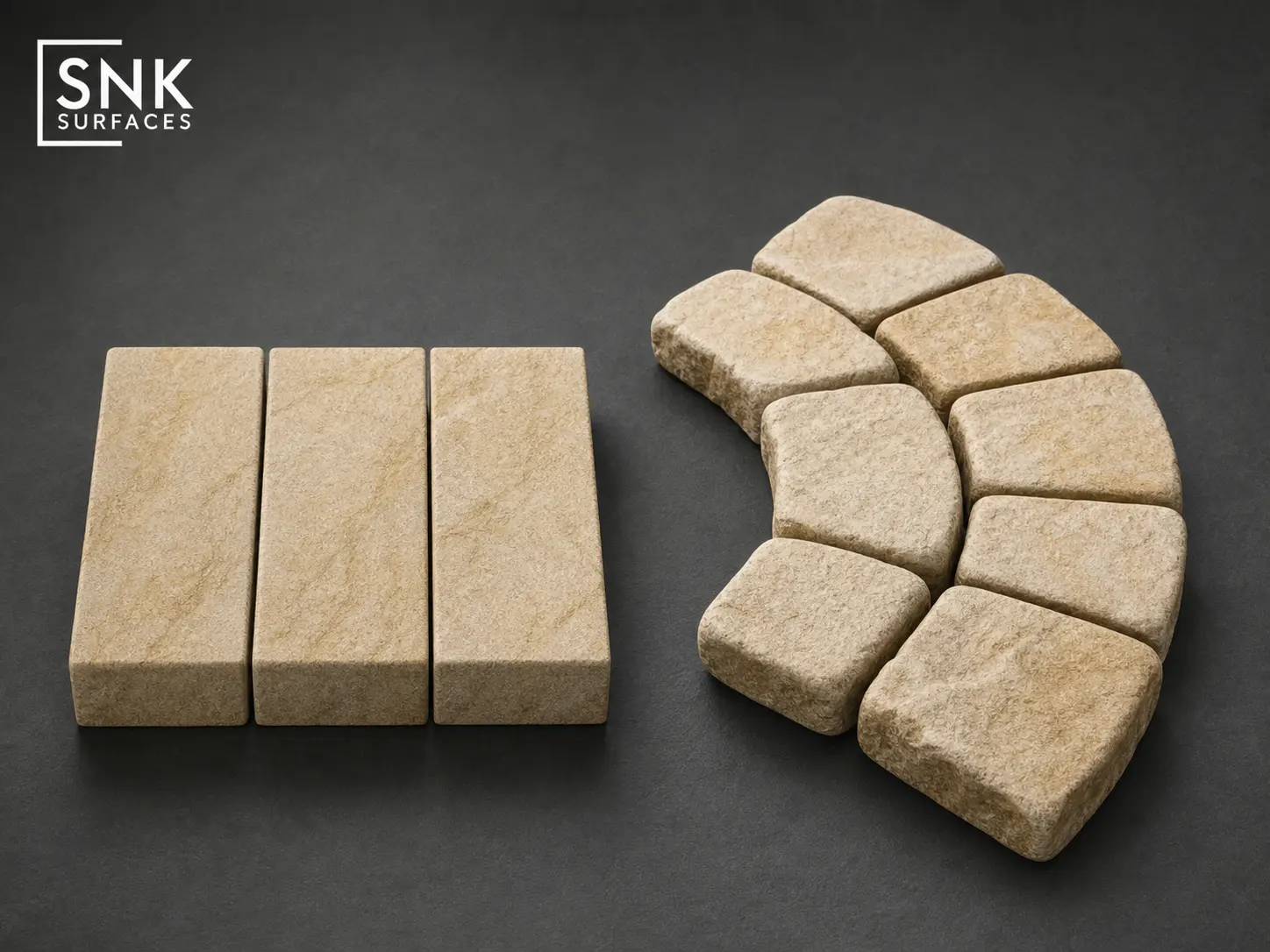
Here is a quick-reference table for specifiers and contractors comparing sandstone setts vs cobbles across the factors that matter on UK driveway projects:
| Factor | Sandstone Setts | Sandstone Cobbles |
|---|---|---|
| Typical sizes | 100x100mm, 200x100mm | 200x50mm, 100x100mm tumbled |
| Depth | 50mm, 60mm, 100mm | 40mm, 50mm |
| Edge shape | Clean 90-degree cropped sides | Rounded, tumbled, softened |
| Best laying pattern | Straight coursed rows | Herringbone, fan arcs, curves |
| Joint width | 6mm to 10mm (tight) | 8mm to 15mm (wider, rustic) |
| Vehicle load | Up to 7.5-tonne vans on rigid base | Domestic cars and light vans |
| Laying speed | Faster on straight drives | Slower on curves and patterns |
| Best used for | Full driveways, parking bays | Aprons, borders, curved entrances |
| Aesthetic | Clean, structured, modern | Rustic, heritage, traditional |
The simple way to think about it: setts are your structural workhorse for the main driveway surface. Cobbles are your design tool for curves, borders, and decorative features.
Vehicle Loads and Groundwork: What BS 7533 Requires
The biggest mistake contractors make on UK driveways is focusing on the stone and ignoring what sits underneath it. The stone is just the wearing surface. The real strength comes from the sub-base and the bedding layer.
Under BS 7533 paving standards, any surface carrying vehicle traffic needs a properly engineered foundation. Here is what that looks like in practice.
The Sub-Base
For a domestic driveway carrying family cars, SUVs, and the occasional delivery van, you need:
- A minimum of 150mm to 200mm of compacted MOT Type 1 aggregate
- Compaction in layers no thicker than 75mm using a heavy vibrating plate
- A geotextile membrane beneath the aggregate to stop the soil below from migrating up into the stone base
Do not cut corners on the sub-base. A driveway built on a weak foundation will rut and sink within two years, no matter how good the stone on top is.
The Bedding Layer: Why Rigid Construction Wins
There are two ways to bed driveway stone: flexible (sand bed) and rigid (mortar bed).
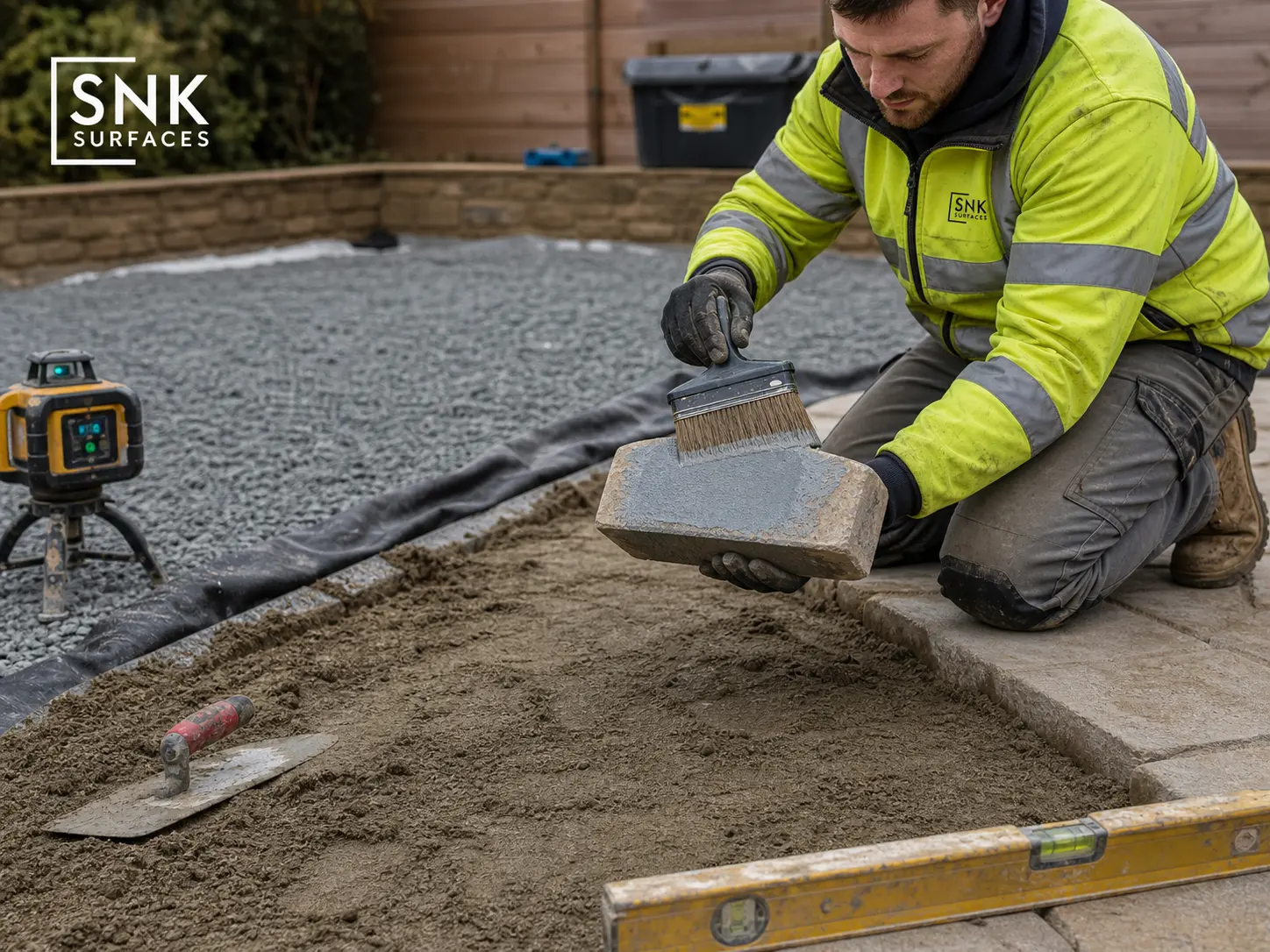
Flexible construction means laying the setts or cobbles on a bed of sharp sand with dry-swept jointing sand. This works fine for concrete block paving, but it is risky for natural stone. Sandstone has natural surface variations, and under constant vehicle braking and turning, individual blocks can work loose on a sand bed. Once water gets underneath, the sub-base starts to soften.
Rigid construction means laying every sett or cobble on a full 30mm to 40mm bed of wet sand-and-cement mortar (4:1 mix). This locks the stone permanently in place and prevents any movement under vehicle loads.
Laying Patterns: When to Use Setts and When to Use Cobbles
The shape of the driveway often makes the decision for you.
Setts Win on Long, Straight Drives
Sandstone setts are designed to be laid in straight rows across the width of the driveway, perpendicular to the direction of travel. When a car drives over the long face of a 200x100mm sett, the load transfers directly into the adjacent blocks through the tight joints. Staggering the joints by at least one-third of the block length creates a transverse bond that resists the sideways push of turning tyres.
For long straight driveways, rectangular parking bays, and contemporary homes, coursed setts give you a clean, structured look and the fastest installation speed. An experienced paving team can lay 8 to 12 square metres of coursed setts per day on a prepared mortar bed.
Cobbles Win on Curves and Radius Entrances
Try laying rectangular setts around a tight curve and you will quickly see the problem. Every row requires diamond-blade cuts to create awkward triangular pieces that look messy and weaken the mortar joints.
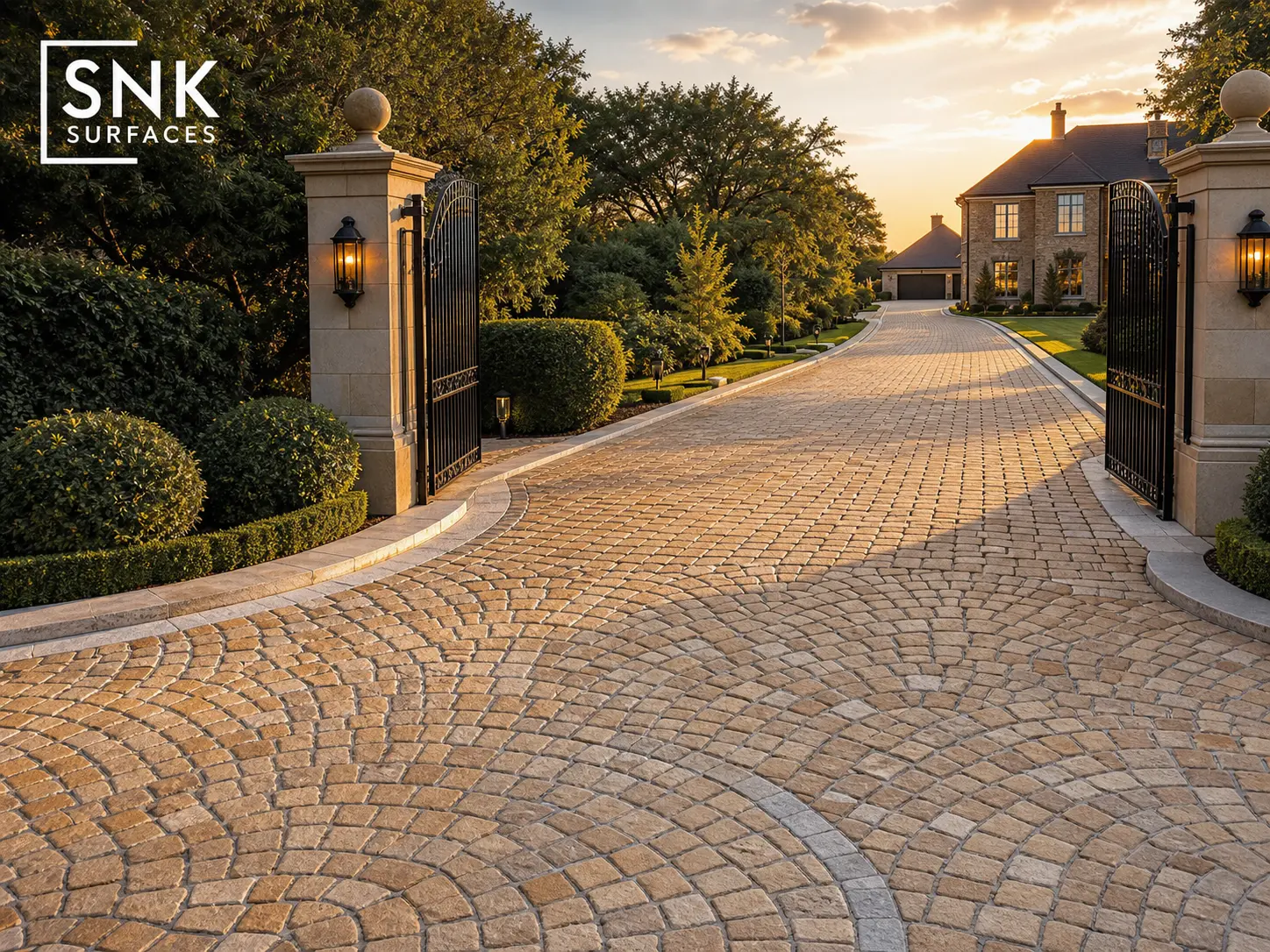
This is where smaller cobbles come into their own. Because they are narrower and have softer edges, you can ease them around sweeping curves, circular turning heads, and serpentine access roads without excessive cutting. They work beautifully in:
- European fan patterns (Bogen): Arching curves that distribute wheel loads in multiple directions
- Herringbone layouts: 90-degree interlocking patterns with the highest resistance to turning forces
- Curved entrance aprons: Elegant transitions from the public road onto private property
The trade-off is speed. Intricate cobble patterns require skilled stonemasons and daily output can drop to 4 to 6 square metres per day, which increases labour costs.
Slip Resistance in British Weather
A UK driveway has to stay safe underfoot in autumn rain, winter frost, and spring mud. Both setts and cobbles have a natural advantage over smooth tarmac or poured concrete.
High-quality Indian sandstone is packed with dense quartz grains. The natural riven surface texture provides excellent grip underfoot, easily achieving an R11 to R12 slip rating under the DIN 51130 standard. Under the HSE pendulum test, riven sandstone typically scores PTV 36+ in wet conditions, which is the threshold for low slip potential.
The multiple joints between setts and cobbles also act as tiny drainage channels. During heavy rain, they break up the sheet of water on the surface and channel it away, reducing the risk of ice forming on frosty mornings.
Maintenance and Sealing for Driveways
Driveways get exposed to things that garden patios never see: motor oil, brake fluid, tyre rubber marks, and anti-freeze drips. Natural sandstone is porous, so if you leave it unsealed, automotive fluids will soak in and leave permanent dark stains.
Here are three rules for keeping a sandstone driveway looking its best:
- Wait before sealing. Do not seal a new driveway immediately. Allow 4 to 6 weeks for ground moisture and efflorescence salts to escape through the stone and joints.
- Use a breathable impregnating sealer. Specify a water-based penetrating sealer like Lithofin MN Stain-Stop. This coats the capillary walls inside the stone without creating a plastic-looking film on top. Moisture beneath the driveway can still escape as vapour, but oil and fluid spills cannot soak in.
- Use heavy-duty jointing. Standard brush-in patio grout is not strong enough for vehicle traffic. Specify a two-part epoxy resin paving compound with a minimum compressive strength of 25N/mm². This resists the vibration and rotational forces from car tyres and prevents weeds from rooting in the joints.
Cost: What You Will Actually Pay
When comparing sandstone setts vs cobbles UK prices, the raw material cost is only part of the picture.
Material costs: High-grade 50mm sandstone setts and tumbled cobbles sit in a similar price bracket per square metre when sourced direct from a manufacturer. By buying quarry-direct from a supplier like SNK Surfaces, you avoid the importer and merchant markups that inflate prices by 20% to 40%.
Labour costs: This is where the real difference lies. Straight coursed setts are faster to lay (8 to 12m² per day), while intricate cobble patterns require more skilled labour (4 to 6m² per day). On a 50m² driveway, that difference can add several hundred pounds to the labour bill.
Long-term value: A well-built sandstone driveway is one of the few home improvements that actually increases in value over time. Unlike tarmac that fades and softens, or concrete block paving that sags and grows moss, natural stone improves with age. It adds kerb appeal, heritage character, and genuine resale value to premium UK properties.
The Decision Framework
Here is a simple way to decide between sandstone setts and cobbles for your next driveway project.
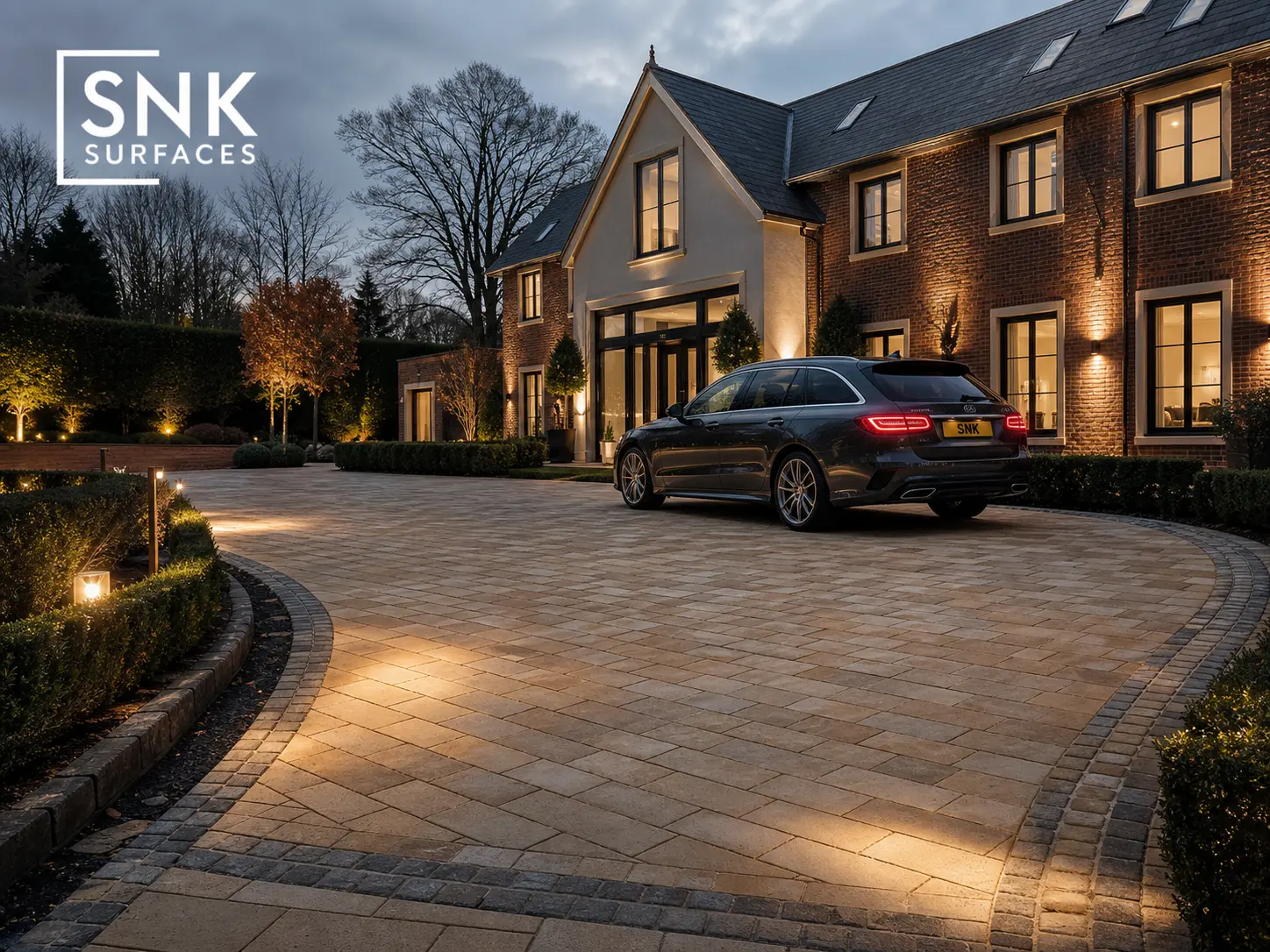
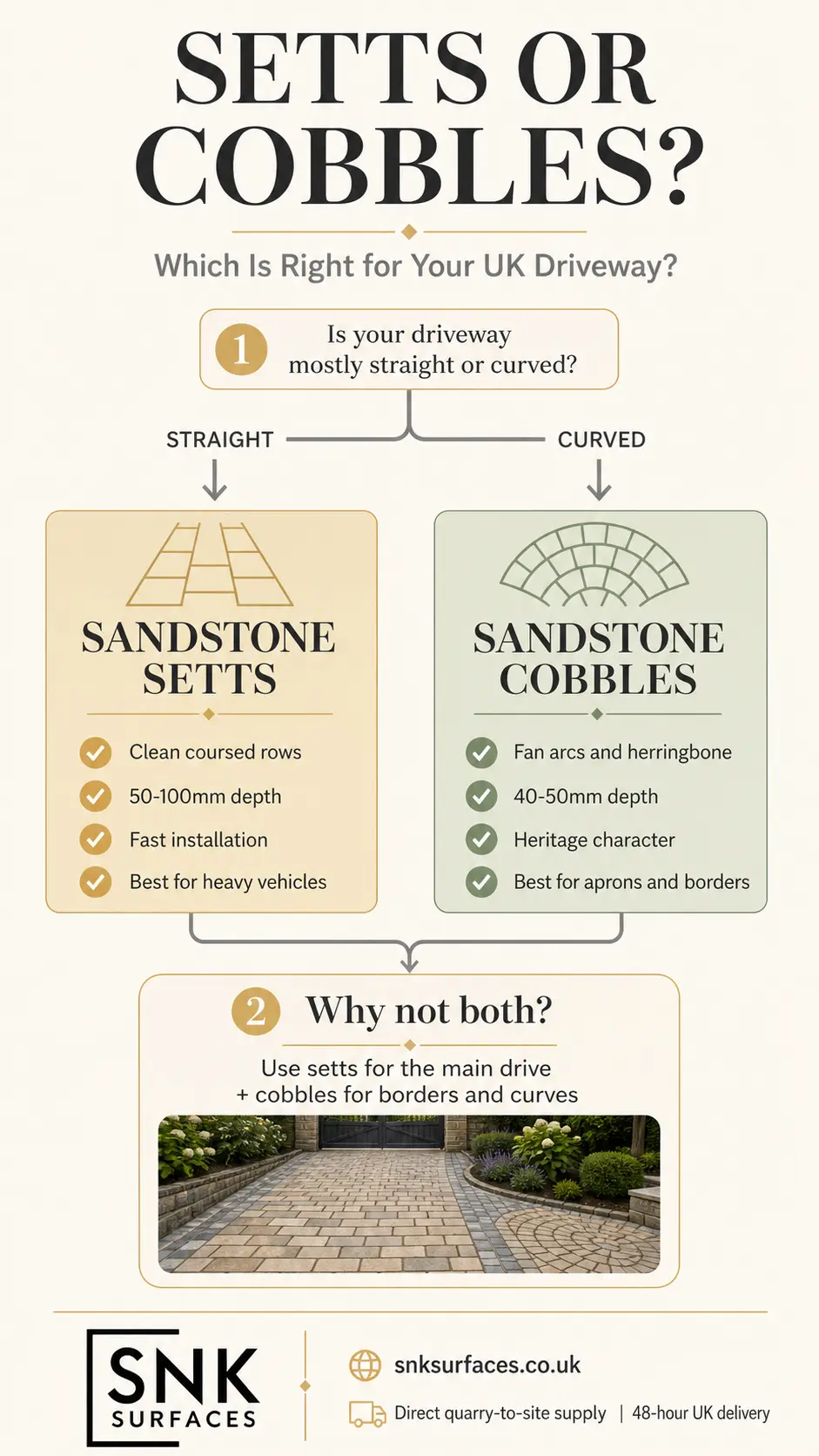
Choose sandstone setts if:
- The driveway is mostly straight with long approaches or rectangular parking bays
- The property is modern or contemporary and needs clean geometric lines
- Heavy vehicles like delivery vans or large SUVs use the drive regularly
- You need maximum installation speed to control labour costs
Choose sandstone cobbles if:
- The driveway has sweeping curves, circular turning areas, or winding access roads
- The property is a period home, barn conversion, or traditional cottage
- You are designing a decorative entrance apron or border feature
- The client wants an authentic heritage look that mimics old British coaching yards
Choose both if:
You want the structural strength of setts on the main drive with the decorative charm of cobbles on the entrance apron and borders. Many of the best UK driveway designs combine both, using setts for the vehicle surface and cobbles for the visual details.
Frequently Asked Questions
1. Are sandstone setts thick enough for an SUV?
Yes. A 50mm sandstone sett laid on a rigid mortar bed over a compacted MOT Type 1 sub-base will easily support modern passenger vehicles, including heavy electric SUVs. Just make sure you use SBR slurry primer under every block.
2. Can I use 22mm patio slabs for a driveway?
No. Standard 22mm calibrated sandstone paving is designed for foot traffic only. A car tyre will crack a 22mm slab under point load. Driveways need the extra depth and mass of 40mm to 60mm setts or cobbles.
3. What is the best jointing compound for a sandstone driveway?
Use a two-part epoxy resin mortar or a high-strength sand-and-cement mix with SBR bonding additive. Standard one-part brush-in patio grouts do not have the compressive strength to handle vehicle turning forces.
4. Do sandstone setts get slippery in winter?
No. The natural riven texture of sandstone provides excellent wet grip, achieving R11 or better. Make sure the driveway has a minimum 1:60 cross-fall gradient to shed standing water and prevent ice sheets.
5. How do I stop weeds growing between driveway setts?
Weeds grow in loose soil and decaying organic matter, not through solid stone. A full mortar bed with high-strength resin joints eliminates the open soil voids where weed seeds germinate.
6. Can I match my driveway setts to my garden patio?
Yes. Our Mint Sandstone Setts and Mint Sandstone Cobbles are cut from the same quarry block as our Mint Sandstone Paving, so the colour and texture match perfectly across the entire property.
The Bottom Line
The choice between sandstone setts vs cobbles comes down to the shape of the driveway, the style of the property, and the weight of the vehicles using it. Setts give you structural strength and fast installation on straight drives. Cobbles give you design flexibility and heritage character on curves and borders.
Either way, the stone is only as good as the groundwork beneath it. Build a proper sub-base, use rigid mortar bedding, apply slurry primer, and seal the surface after six weeks. Do those four things right and your sandstone driveway will outlast the house it sits in front of.
Ready to specify stone for your next driveway project?
Browse our full range of Mint Sandstone Setts and Mint Sandstone Cobbles, or request a free trade sample box delivered to your site. Contact the SNK Surfaces team at snksurfaces.co.uk for direct-from-quarry pricing and 48-hour UK delivery.