Comparison Guide • 2026
County LGY vs Kandla Grey Porcelain: Which Grey Porcelain Suits Your UK Garden?
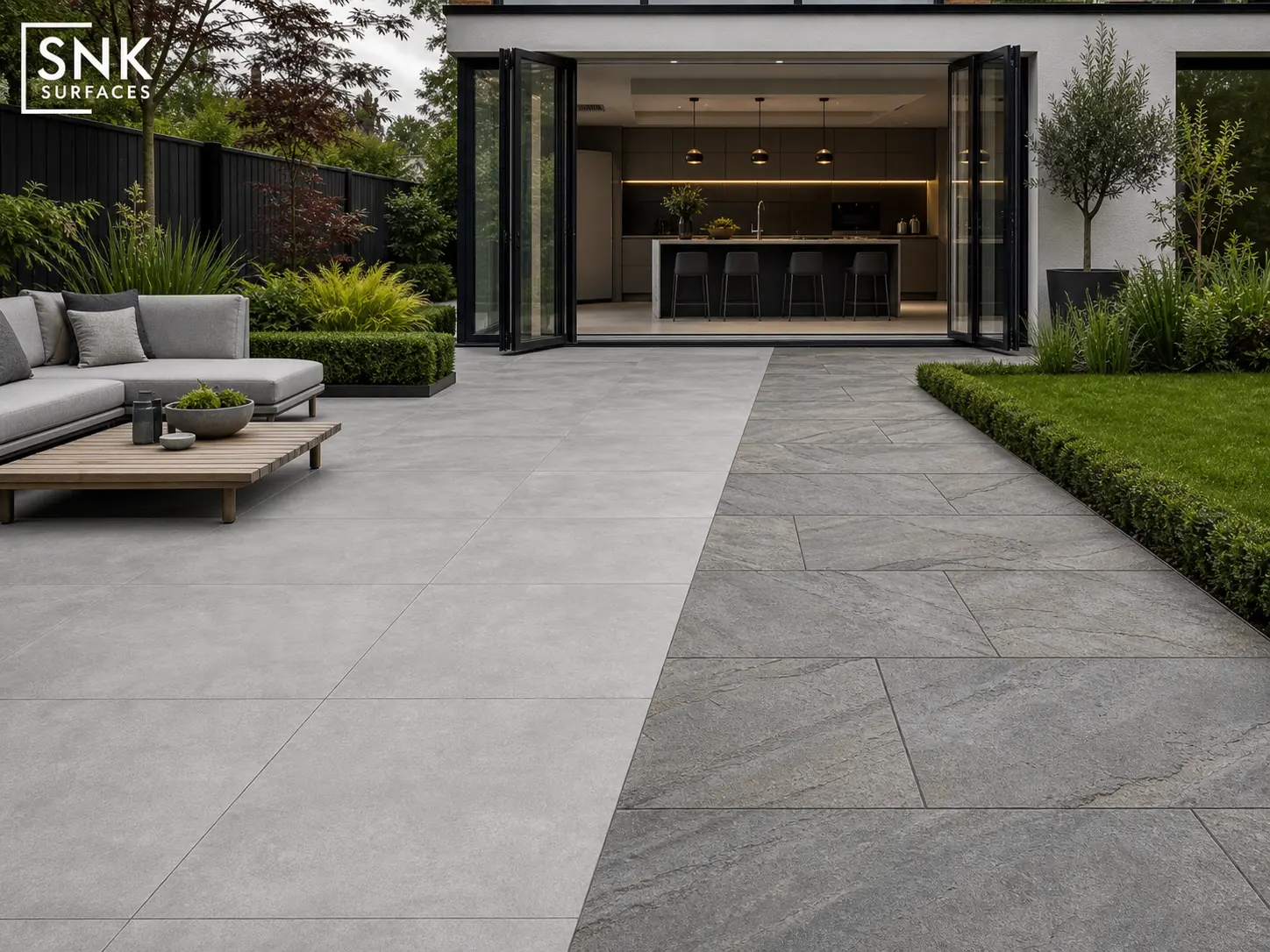
Grey outdoor porcelain is the most requested paving material in UK landscaping right now. When a client asks for a low-maintenance, silver-toned patio, you are usually choosing between two specific styles.
On one side, County LGY porcelain gives you a clean, modern, concrete-inspired finish. On the other, Kandla Grey porcelain gives you a detailed, natural stone look with all the texture and character of real Indian sandstone.
Both tiles are 20mm thick. Both are vitrified. Both are frost-proof. Both carry an R11 slip rating. The internal engineering is identical. So the choice comes down to one thing: the visual style that fits your project.
This guide breaks down the real differences between County LGY and Kandla Grey porcelain paving so you can specify the right tile with confidence.
Quick Answer
County LGY porcelain is designed to replicate smooth, modern architectural concrete. It has a calm, uniform appearance with subtle shade variations and a flat micro-textured surface. It suits minimalist new builds, commercial courtyards, and seamless indoor-outdoor transitions through bi-fold doors.
Kandla Grey porcelain is designed to replicate natural Indian sandstone. It features high-definition printed riven textures, charcoal banding, and organic quartz-like patterns. It suits traditional cottages, heritage renovations, and any project where the client wants the look of real stone without the maintenance.
Both tiles share the same technical performance: sub-0.5% water absorption, 100% frost resistance, R11 certified slip rating, and zero sealing requirements.
Why Grey Porcelain Is the UK's Top Paving Specification
For decades, natural Indian sandstone was the default choice for British gardens. But natural stone is porous. It absorbs rainwater, grows green algae over winter, and needs chemical sealing every 18 to 24 months to prevent stains.
UK homeowners and commercial clients now want a patio that looks premium but requires zero weekend maintenance. That demand has pushed 20mm vitrified porcelain to the top of specification sheets across the country.
Fired at over 1,200 degrees Celsius, both County LGY and Kandla Grey porcelain slabs achieve a water absorption rate below 0.5 percent. Water physically cannot enter the tile. That means no freeze-thaw cracking, no algae growth, and no oil stains soaking into the surface.
But while the internal structure is identical, the top surfaces are engineered for completely different design styles.
The County LGY Profile: Modern and Minimalist
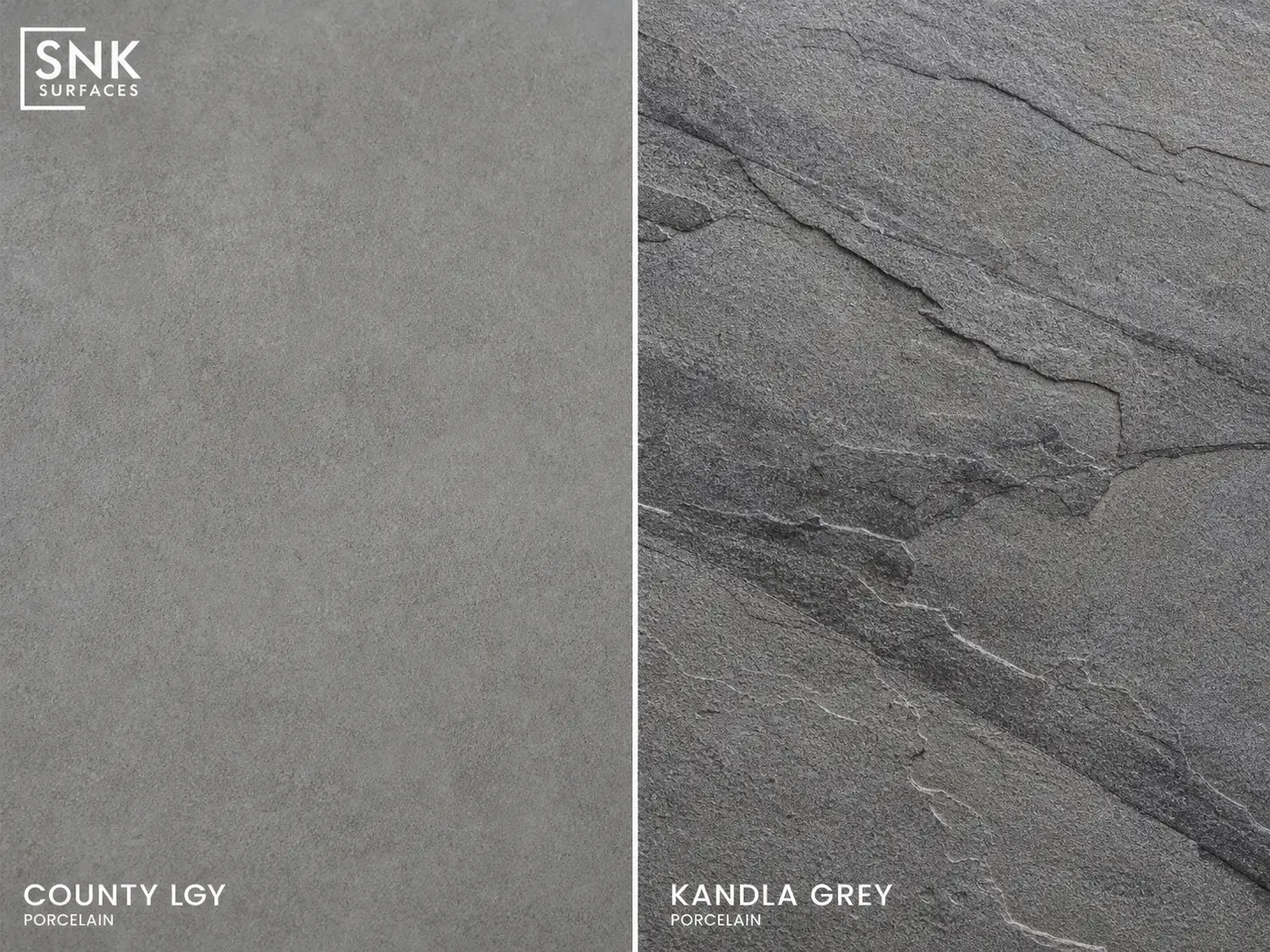
County LGY porcelain is engineered to replicate the look of floated architectural concrete. It does not try to imitate natural rock. Instead, it provides a calm, neutral silver-grey base with very subtle mottling, similar to the light variations you see in a freshly poured concrete floor.
The surface texture is flat and consistent. It has a micro-texture baked in for slip safety, but it does not have artificial bumps or ridges. This flatness is important for modern designs because it allows the contractor to lay the slabs perfectly flush with tight 3mm joints, creating a seamless monolithic surface.
Best applications for County LGY:
- New-build properties: The crisp, clean lines complement fresh brickwork, white render, and anthracite aluminium window frames.
- Seamless indoor-outdoor flow: When a kitchen opens onto the garden through large bi-fold doors, County LGY porcelain matches modern interior floor tiles and creates one continuous surface from kitchen to patio.
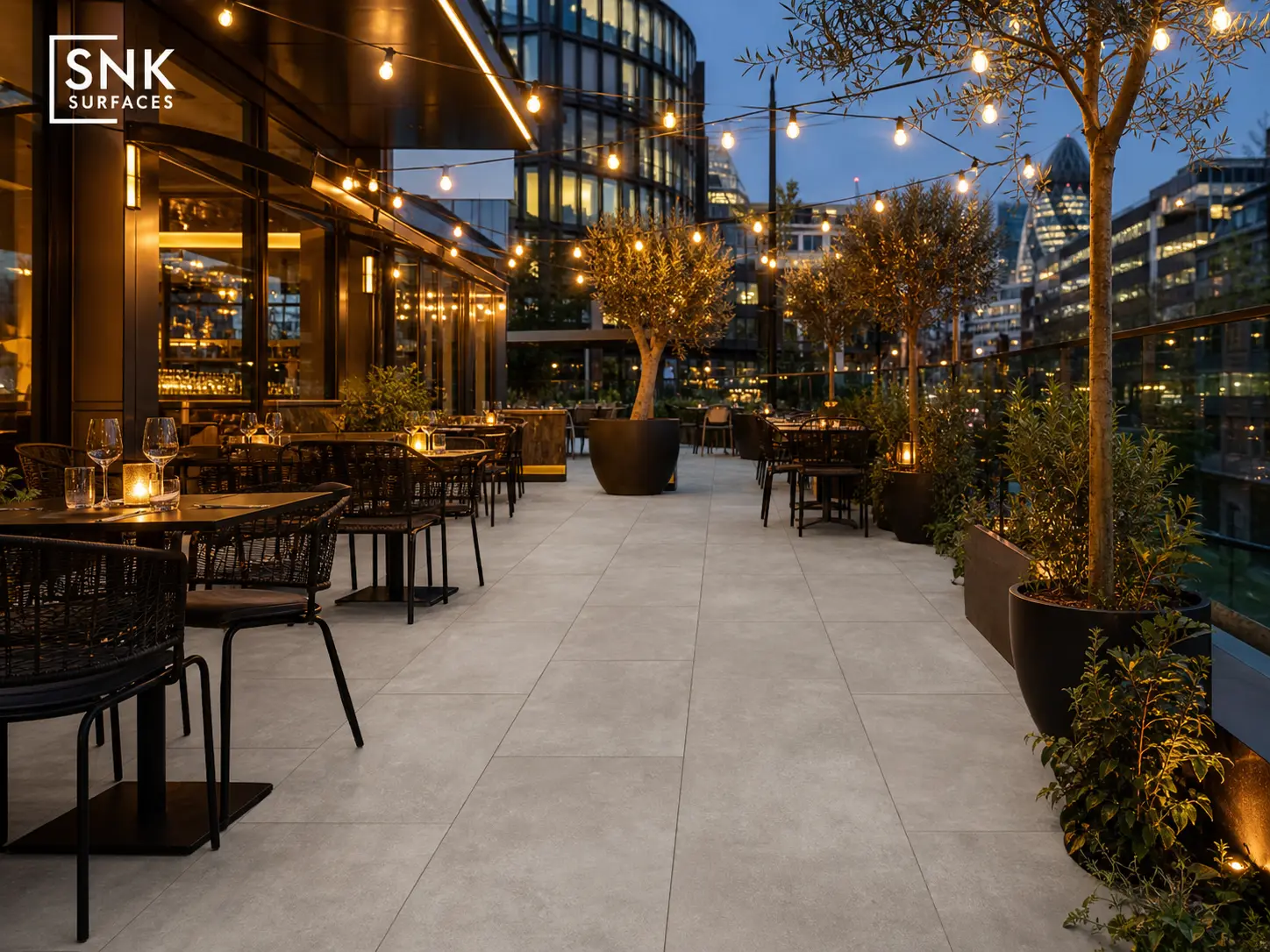
- Commercial courtyards and roof terraces: The uniform pattern hides dust and footprints well in high-traffic environments. Its lightweight 20mm profile also works on adjustable pedestal systems where heavy mortar beds are not permitted.
View full County LGY specifications and trade pricing.
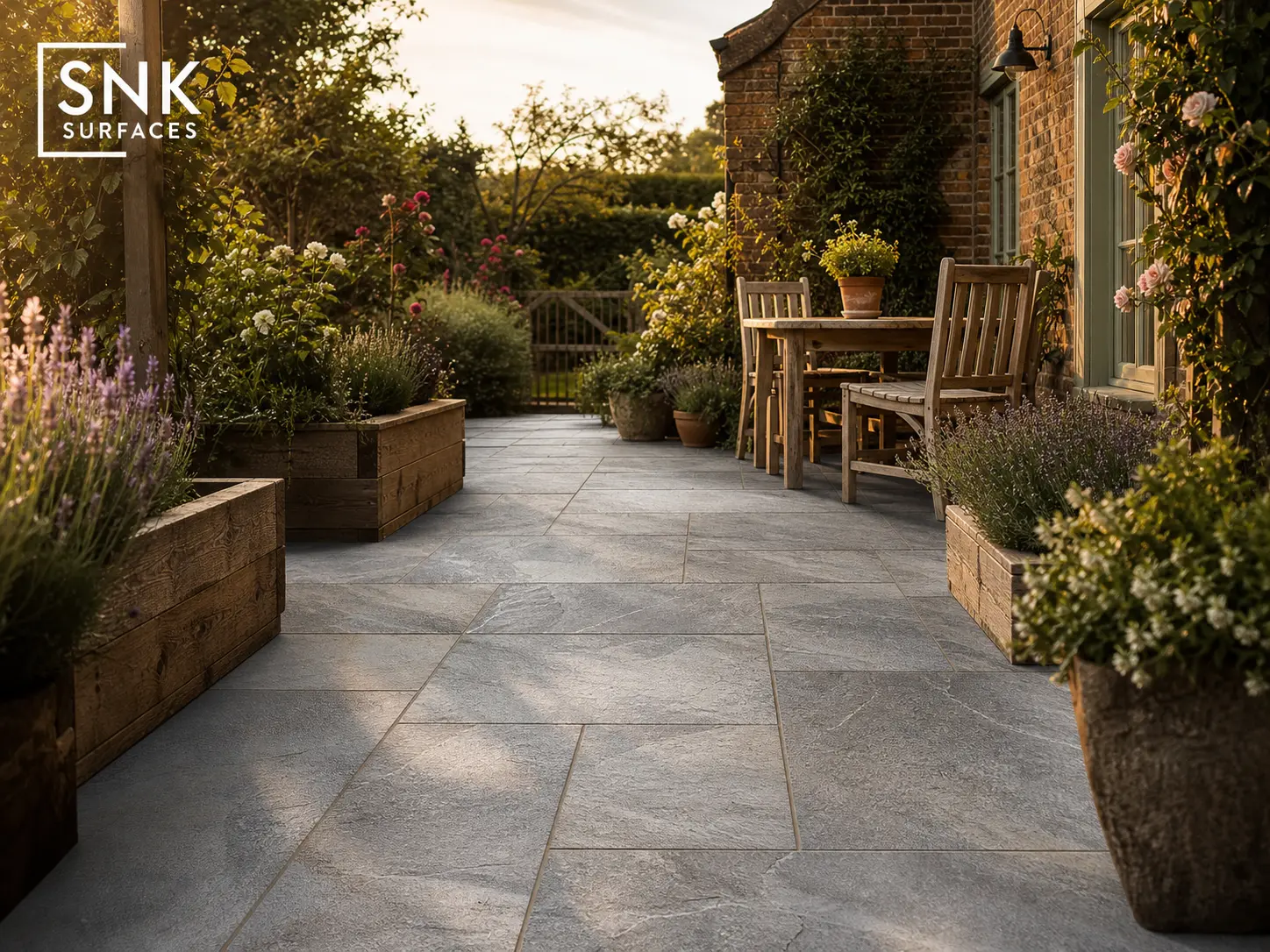
The Kandla Grey Porcelain Profile: Classic and Natural
If your client loves the look of natural Indian sandstone but refuses to deal with the sealing and algae problems, Kandla Grey porcelain is the answer.
This tile is a high-definition digital copy of real stone. Manufacturers take the best blocks of natural Kandla Grey sandstone from the quarry and scan them at ultra-high resolution. The resulting print features strong charcoal banding, subtle hints of ice blue, and organic quartz-like patterns that are almost indistinguishable from the real thing.
The surface texture is where the biggest difference lies. The manufacturing process presses an artificial riven cleft into the top of each tile. When you run your hand over it, you feel the bumps, ridges, and grain of natural rock. It catches sunlight the same way real stone does.
Best applications for Kandla Grey porcelain:
- Heritage and period homes: The organic pattern blends naturally with older weathered brickwork, stone walls, and traditional planting schemes.
- Cottage gardens: It provides rustic charm without the risk of turning green in shaded, damp areas.
- Replacement patios: When upgrading a failing natural stone patio, this tile keeps the original design character while upgrading the performance to zero maintenance.
Explore Kandla Grey porcelain pattern variations and sizes.
Head-to-Head Technical Comparison
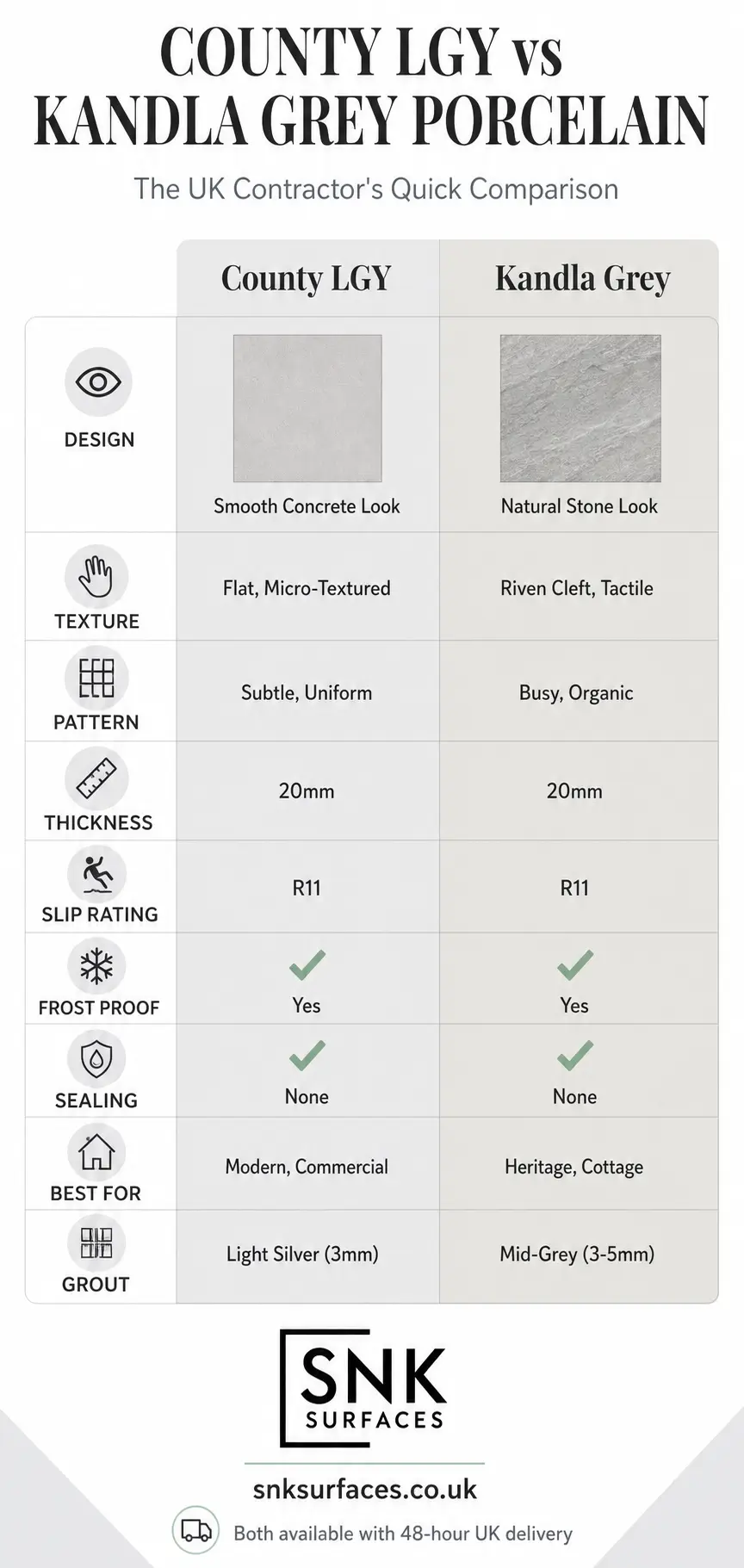
To make the specification process straightforward, here is the exact technical breakdown of County LGY vs Kandla Grey porcelain across the factors that matter on UK job sites.
| Factor | County LGY Porcelain | Kandla Grey Porcelain |
|---|---|---|
| Design Inspiration | Smooth architectural concrete | Natural Indian sandstone |
| Surface Texture | Flat, micro-textured, consistent | Artificial riven cleft, tactile grain |
| Pattern Complexity | Subtle mottling, low variation | High-definition stone scan, busy organic pattern |
| Number of Faces | Fewer needed (subtle pattern) | 20+ recommended (natural randomness) |
| Thickness | 20mm vitrified | 20mm vitrified |
| Water Absorption | Under 0.5% | Under 0.5% |
| Frost Resistance | 100% frost-proof | 100% frost-proof |
| Slip Rating | R11 certified (DIN 51130) | R11 certified (DIN 51130) |
| Grout Joint Width | 3mm to 5mm | 3mm to 5mm |
| Best Grout Colour | Light silver (seamless look) | Mid-grey (highlight individual slabs) |
| Sealing Required | None | None |
| UV Stability | 100% UV stable | 100% UV stable |
| Best Design Style | Modern, minimalist, commercial | Traditional, rustic, heritage |
Pattern Faces: The Detail Most Contractors Overlook
A "face" is a unique printed pattern on a porcelain tile. If a batch only has 4 or 5 faces, you will see the same pattern repeating across a large patio, which breaks the illusion of natural stone.
County LGY requires fewer faces because the concrete-inspired pattern is naturally subtle and uniform. Even with 8 to 10 faces, the repetition is hard to spot.
Kandla Grey porcelain requires a higher number of faces (ideally 20 or more) to ensure the natural stone look appears random and organic across a large area. When ordering, ask your supplier how many faces are in the batch. This is especially important on projects over 30 square metres.
Slip Resistance and Safety
This is a critical factor for UK contractors working under HSE slip resistance guidelines.
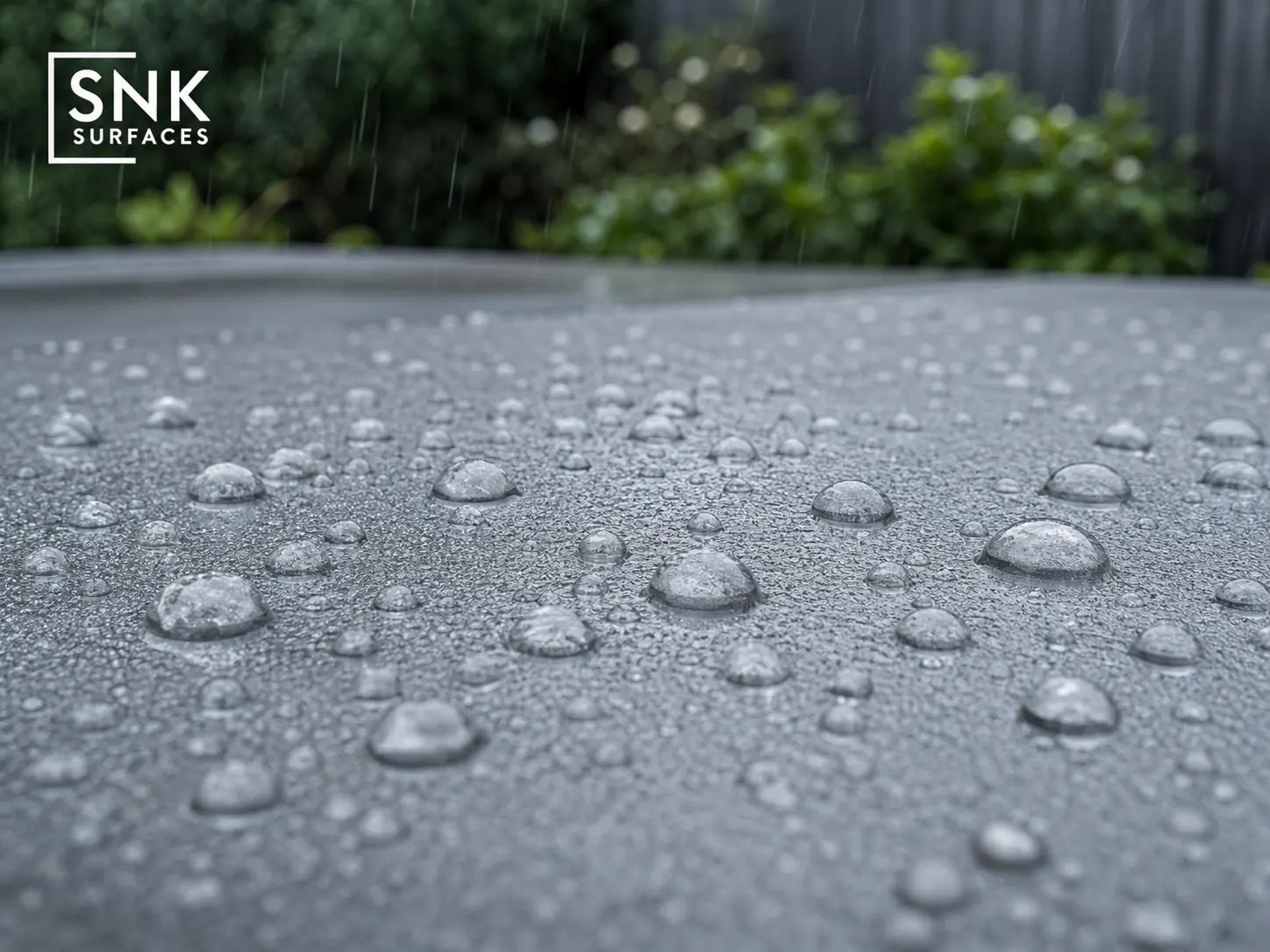
Do not let the smooth appearance of County LGY fool you. Both County LGY and Kandla Grey porcelain carry a certified R11 slip rating under the DIN 51130 European standard.
The R11 rating guarantees safe grip underfoot in wet exterior conditions. You can confidently specify either product around swimming pools, hot tubs, ramped access areas, and rain-exposed commercial terraces. Both tiles also achieve a PTV of 36+ under the pendulum test, which is the threshold for low slip potential in public areas.
Installation: The Same Rules Apply to Both
Because the technical bodies of both tiles are identical, the installation process is exactly the same. Both must be laid in accordance with BS 7533 British paving standards.
The essential requirements include:
- Sub-base: Minimum 100mm to 150mm compacted MOT Type 1 aggregate.
- Mortar bed: Full 30mm to 40mm wet 4:1 sand-and-cement bed. Never use spot bedding.
- SBR slurry primer: This is non-negotiable. Because vitrified porcelain absorbs zero water, standard mortar cannot grip the tile. You must paint the underside of every slab with a polymer-modified SBR slurry primer immediately before placing it on the wet mortar. Skip this step and the tiles will de-bond within months.
- Jointing: Use an exterior-grade flexible porcelain grout in the 3mm to 5mm joints. Do not use standard sand-and-cement pointing in narrow joints.
- Drainage fall: Build a minimum 1:60 gradient into the mortar bed so rainwater runs off the non-porous surface into a drainage channel.
Which Grey Porcelain Is Right for Your Project?
The choice between County LGY and Kandla Grey porcelain is not about quality or performance. It is entirely about the architectural context of the site.
Choose County LGY if:
- The property is a modern new build with clean lines and rendered walls.
- The client wants a minimalist, uncluttered finish that lets the architecture speak for itself.
- The patio connects to an open-plan kitchen through bi-fold doors and needs to match interior porcelain flooring.
- The project is a commercial courtyard or roof terrace where a uniform, professional appearance is required.
Choose Kandla Grey porcelain if:
- The property is a period home, barn conversion, or traditional cottage.
- The client wants the warmth and character of natural stone without the maintenance headaches.
- The garden features timber sleepers, red brick walls, and loose colourful planting.
- You are replacing an old natural stone patio and want to preserve the original design intent.
Choose both if:
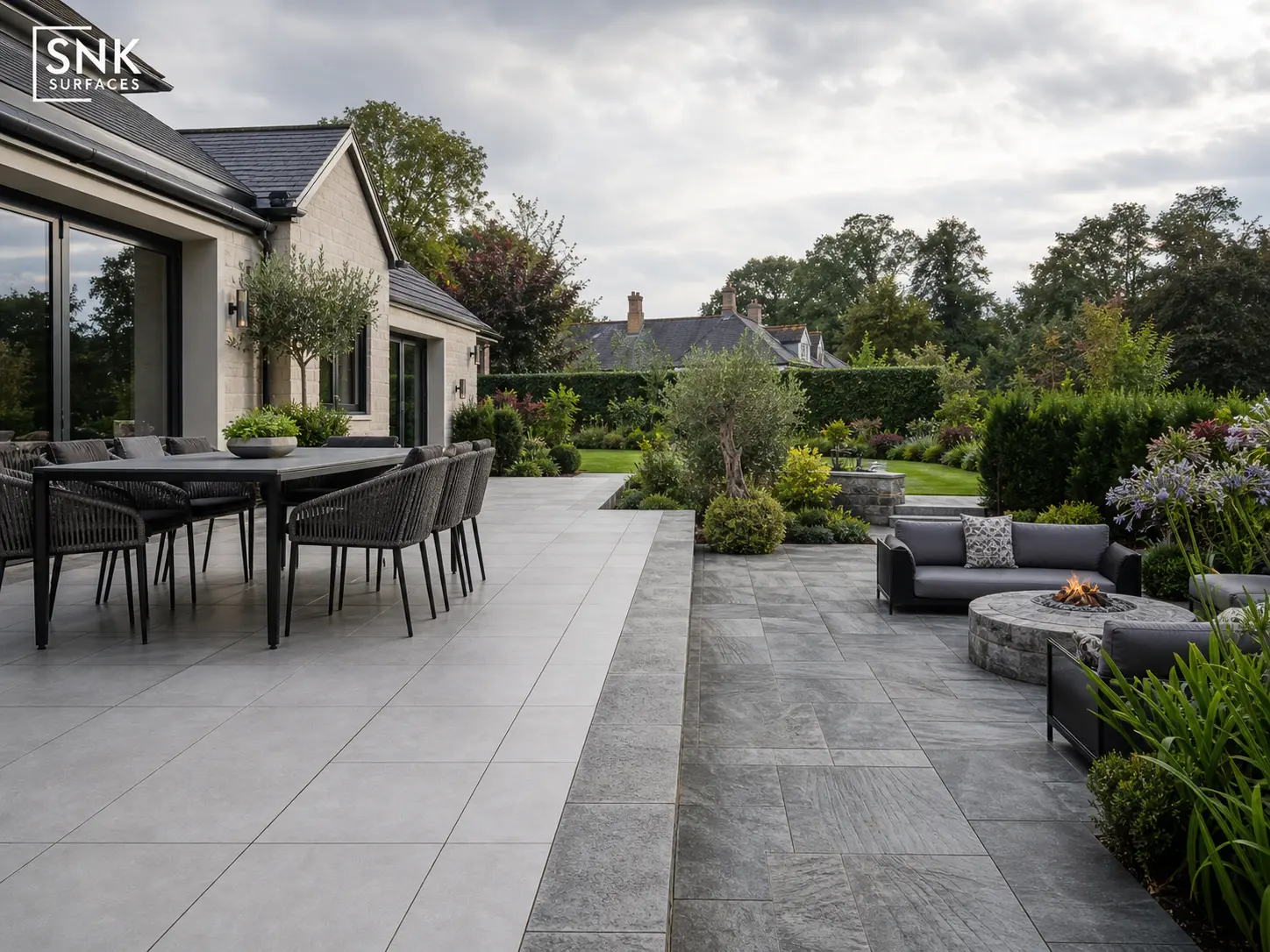
The project has distinct zones. Many designers use County LGY for the main dining terrace near the house and Kandla Grey porcelain for the outer garden pathways and seating areas. The contrast between the smooth modern surface and the textured natural look creates visual depth and separates the spaces naturally.
Frequently Asked Questions
1. Do County LGY and Kandla Grey porcelain fade differently in sunlight?
No. Both tiles use UV-stable digital printing baked into the ceramic body at over 1,200 degrees Celsius. Neither tile will fade, bleach, or discolour, even after decades of direct sunlight.
2. Is one easier to clean than the other?
Both are equally easy to maintain. With porosity below 0.5 percent, dirt cannot penetrate either surface. A simple sweep and wash with warm soapy water is all that is needed. That said, the busier multi-tonal pattern of Kandla Grey hides dried mud and bird droppings slightly better than the uniform surface of County LGY.
3. Can I use both tiles on pedestal systems for roof terraces?
Yes. Both products are exactly 20mm thick and structurally strong enough for adjustable plastic pedestal installations on balconies and urban roof terraces where heavy wet mortar is not permitted.
4. Can I mix County LGY and Kandla Grey on the same project?
Yes. Many UK landscape architects use County LGY for the main terrace and Kandla Grey for borders, pathways, or secondary seating areas. The contrast between smooth and textured surfaces creates a layered, intentional design.
5. Which grout colour works best for each?
For County LGY, use a light silver or pale grey resin grout to maintain the seamless concrete look. For Kandla Grey, use a mid-grey or charcoal grout to highlight the individual stone slabs and enhance the natural pattern.
The Bottom Line
Specifying the right grey porcelain prevents client disputes and costly changes later in the project. When guiding a client through the County LGY vs Kandla Grey porcelain decision, show them physical samples of both. Let them feel the flat finish of the LGY against the textured cleft of the Kandla. The right choice becomes obvious once they see and touch both surfaces in natural daylight.
Whichever option you install, you are providing a premium, zero-maintenance surface that will handle British winters without cracking, staining, or growing algae.
Ready to price your next project?
Browse our County LGY Porcelain Paving for modern spaces, or explore our Kandla Grey Porcelain Paving for a classic natural stone finish. For a detailed comparison of porcelain versus natural sandstone across eight performance factors, read our complete Porcelain vs Sandstone Paving UK guide.
SNK Surfaces is a direct manufacturer and UK supplier of premium natural sandstone and outdoor porcelain paving. Quarry-direct pricing, UK-stocked, and delivered nationwide to trade and retail.