
UK Trade Specs Guide • 2026
Autumn Brown Sandstone Paving: Warm Natural Stone Specs
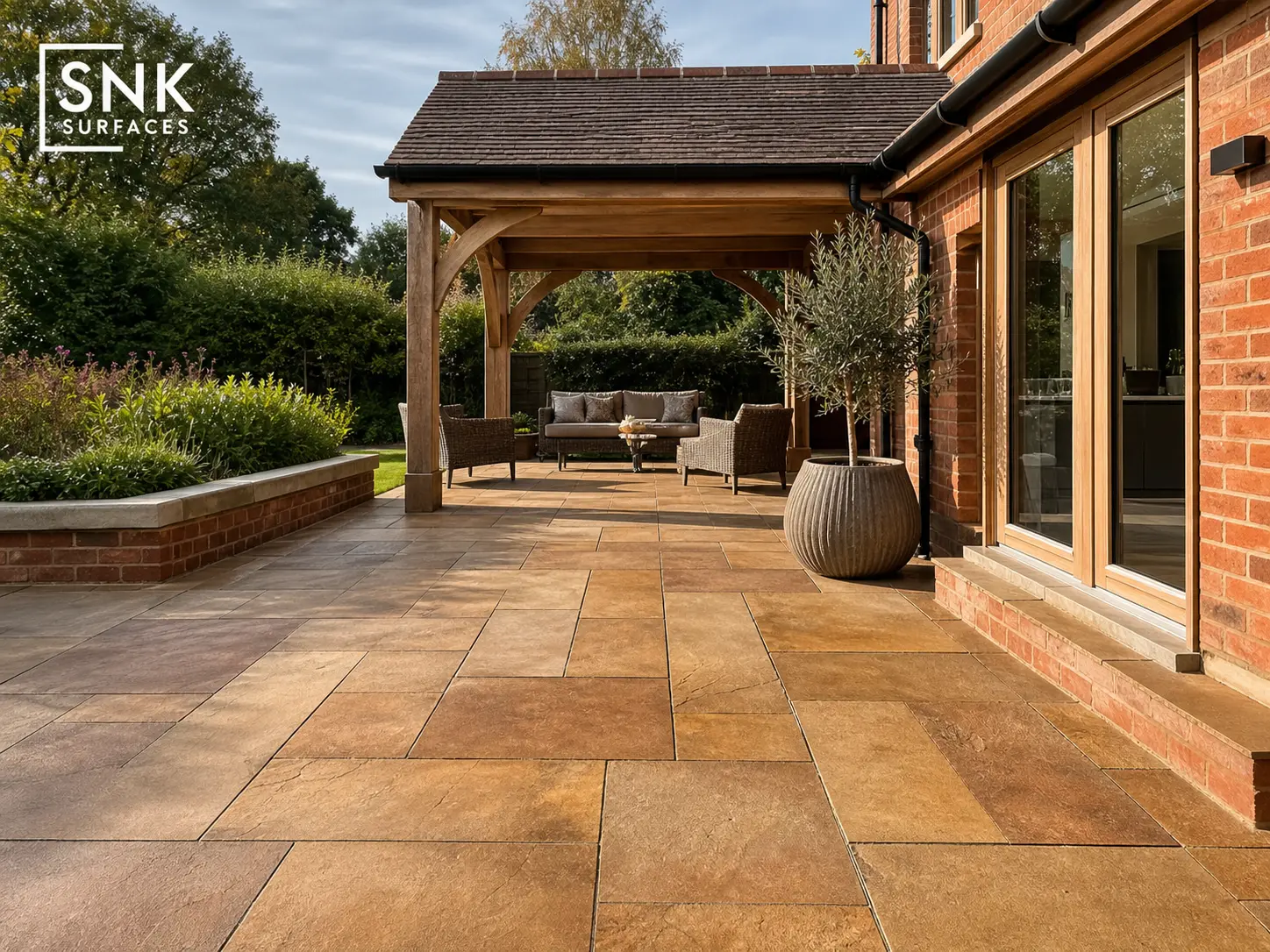
For years, sleek grey and dark paving stones dominated the UK landscaping market. However, design choices are shifting back toward traditional warmth.
Landscape architects, builders, and homeowners are returning to earthy tones like buff, tan, and brown. This trend comes from a clear need to match heritage homes, classic red brick walls, and cottage gardens.
If you want warm, natural tones that outlast short trends, Autumn Brown sandstone paving is a top choice.
Specifying the stone is only the first step. Natural stone requires correct site methods. You need to understand calibration, bonding primers, and post installation care so your patio survives wet British winters.
In this trade guide, we look at the origin of the stone. We also set out BS 7533 installation rules and explain the exact sealing steps needed to protect your paving.
Geological Profile and Natural Colours
Autumn Brown sandstone paving is quarried in the mineral rich region of Rajasthan, India.
Because sandstone is a sedimentary rock formed over millions of years, no two slabs look identical. When you open a crate of this stone, you get a varied natural palette.
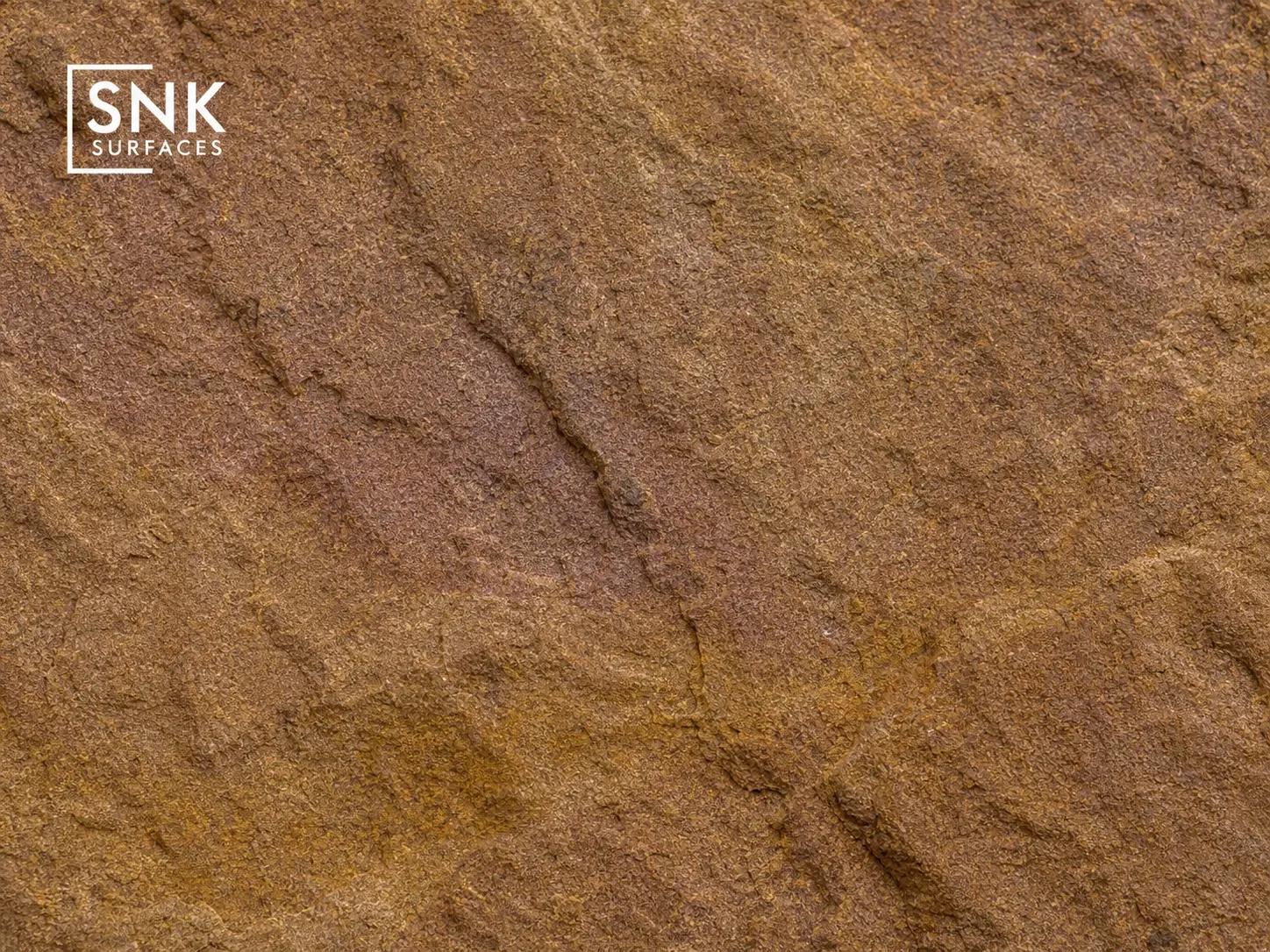
The main base shade is a warm toasted brown. Running through this base are soft bands of deep plum, warm terracotta, and golden buff.
The surface finish is known as a natural riven face. When quarry workers extract large stone blocks, they split them by hand along natural fault lines. This hand splitting leaves a gentle texture across the surface.
This riven texture gives the stone its rustic character. It also provides excellent slip resistance in wet weather, easily meeting Health and Safety Executive slip safety guidance.
Matching Red Brick and Heritage Homes
A common mistake on paving projects is picking a stone colour that clashes with the house.
Over the last decade, many homeowners laid cold grey patios directly against traditional Victorian red brick houses. Cold grey tones can drain the visual warmth out of red brickwork, making the space look mismatched.
This is why Autumn Brown sandstone paving is seeing strong demand across the UK.
Warm sandstone creates a balanced, matching look. The plum and brown shades in Autumn Brown sandstone paving draw out the rich orange and red tones in classic British bricks.
If your home features oak timber frames, exposed beams, or clay roof tiles, this stone acts as a natural visual anchor. It makes a new patio look as if it has belonged to the home for decades.
22mm Calibration and Mortar Bedding
When buying natural stone, you will see two options: uncalibrated stone and calibrated stone. You should always choose calibrated stone for trade work.
Uncalibrated stone varies wildly in thickness, anywhere from 15mm to 35mm. When a builder tries to lay uncalibrated stone, they must constantly adjust the mortar bed depth for every single slab. This slows down work, increases labour costs, and can cause trip hazards.
Quality Autumn Brown sandstone paving is machine calibrated. After workers split the stone by hand, a machine shaves the underside flat. This keeps every slab at an even 22mm thickness.
22mm calibration is the standard trade thickness for UK patios. It allows your landscaping team to prepare a level mortar bed and lay slabs quickly. This consistent thickness also gives the stone the strength needed to handle heavy garden furniture without cracking.
Efflorescence and SBR Priming Chemistry
Sandstone is naturally porous. It contains microscopic pores that allow air and water to move through it. While this is normal for real stone, it creates a specific challenge during laying.
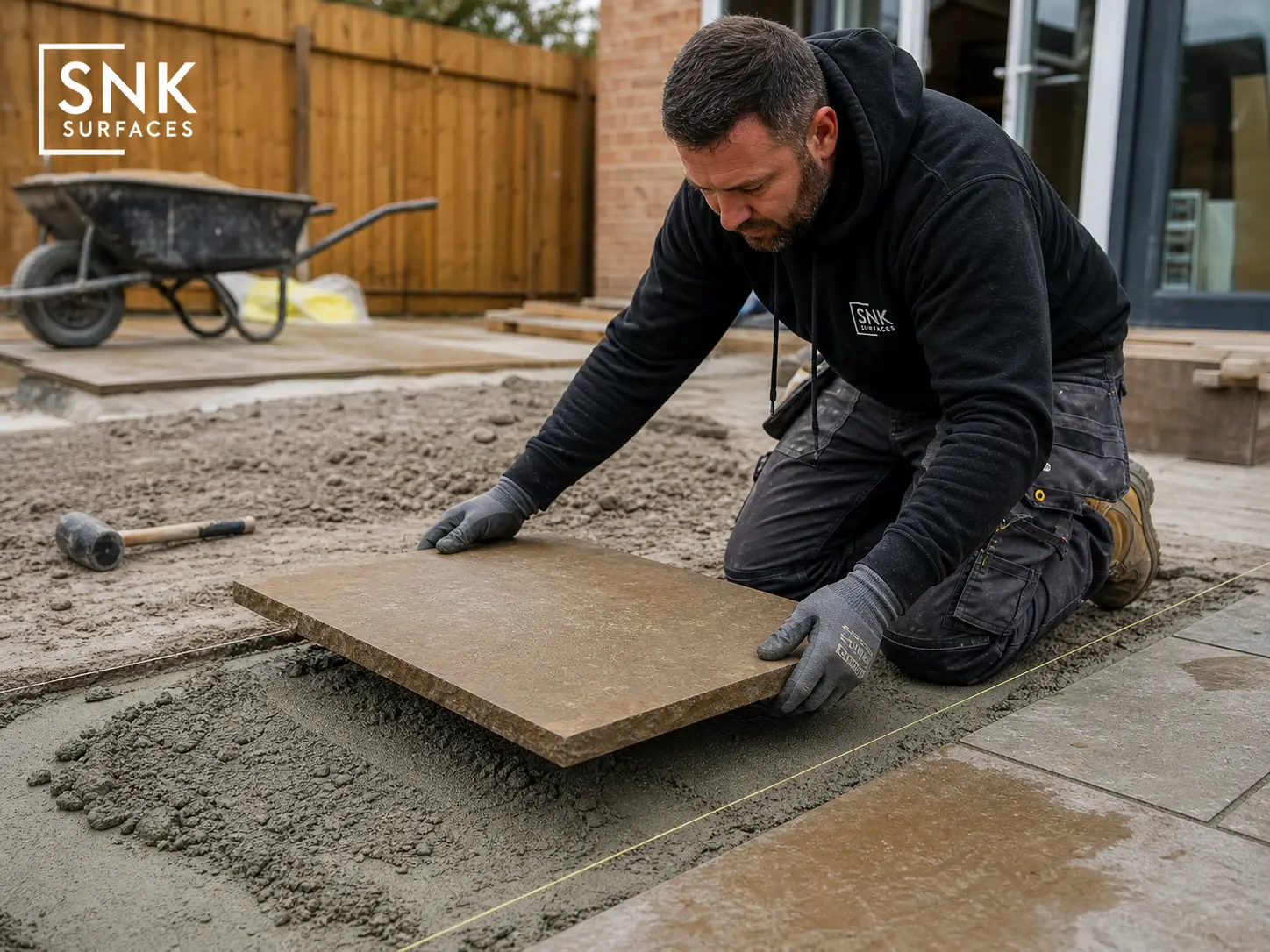
Under the BSI BS 7533 paving code of practice, contractors must lay natural stone on a full wet mortar bed. Cement contains natural mineral salts. As wet mortar dries, moisture moves upward through the porous sandstone slab, carrying dissolved salts with it.
When water reaches the surface and evaporates, it leaves a white powdery deposit behind. This process is called efflorescence.
You prevent efflorescence by using an SBR slurry primer. Your contractor mixes SBR liquid polymer with neat cement to create a thick slurry paste. They paint this slurry onto the back of every slab before placing it on the mortar bed.
The SBR primer creates a waterproof barrier. It bonds the stone to the mortar and stops white salts from rising to the surface.
Jointing Strategy: Mortar vs Resin
Once slabs are laid, you must fill the joints between them. You have two main options for pointing Autumn Brown sandstone paving.
Traditional Sand and Cement
The traditional method uses sharp sand mixed with cement, troweled into joints by hand. While material costs are low, laying is slow. Cement joints can also crack after hard winter freezes.
Brush-In Resin Compounds
Today, specifiers prefer modern brush-in resin compounds. These products contain grading sand mixed with synthetic resin that cures when exposed to air. The contractor wets the patio, sweeps the compound into joints, and lets it harden.
For Autumn Brown sandstone paving, we recommend choosing Buff or Mushroom coloured jointing compound. These warm sandy shades blend with the stone edges, making the patio look wider and more cohesive.
Sealing Rules for UK Winters
Natural stone is an investment. Because sandstone is porous, it absorbs rainwater. In shaded UK gardens, wet stone attracts green algae and moss growth over time.
To protect Autumn Brown sandstone paving, follow this simple sealing rule:
- Wait 6 to 8 Weeks: Never seal stone on the day it is laid. Wait two months so trapped moisture and natural mortar moisture escape completely. Sealing too early traps moisture under the barrier, creating a cloudy film.
- Use Breathable Sealer: Avoid cheap shiny topical sealers that leave a plastic coating. Specify a breathable impregnating sealer from specialist manufacturers like Lithofin Stone Care.
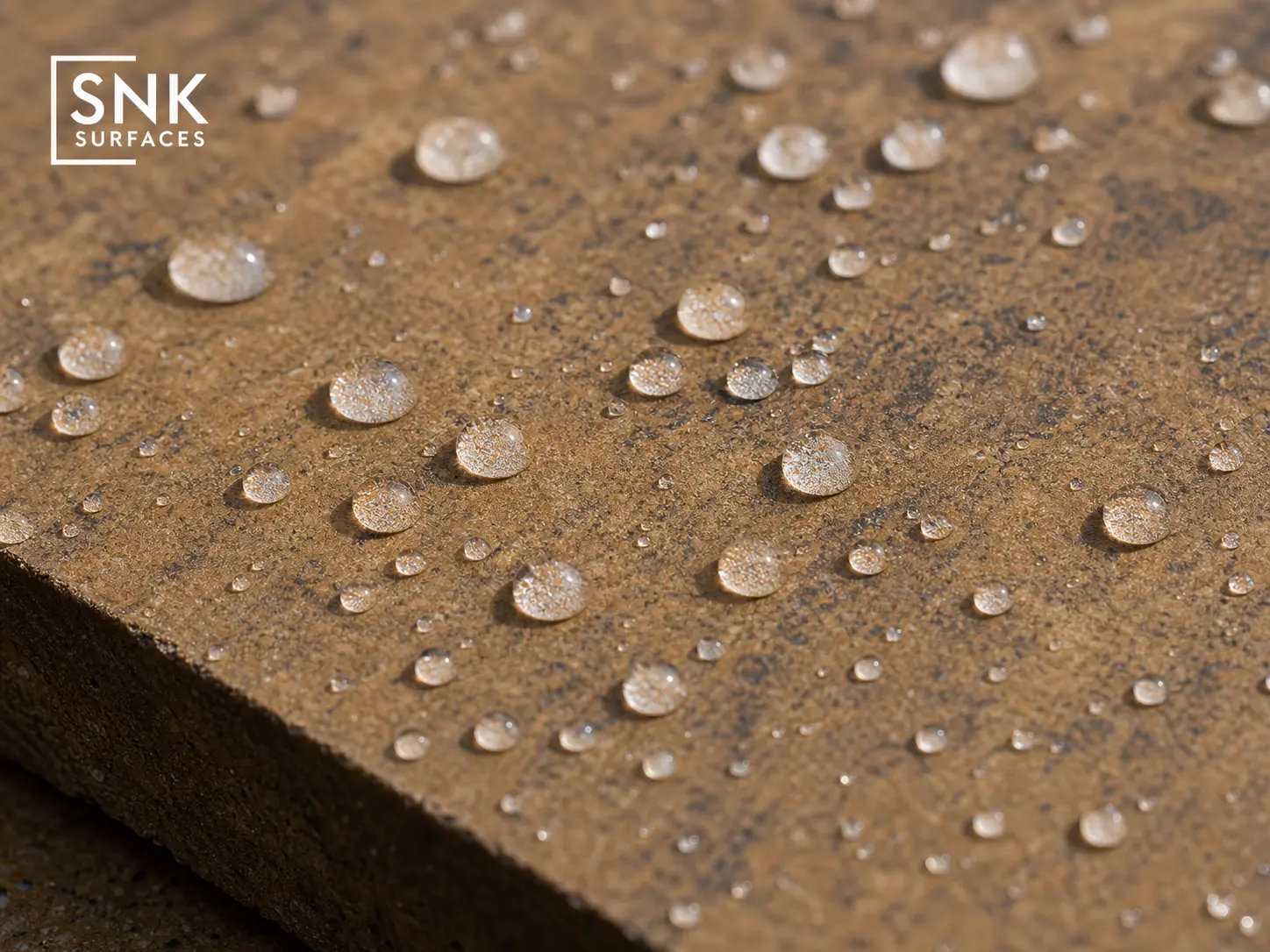
Impregnating sealers soak deep into the stone pores. They fill microscopic gaps with water repellent polymers without changing the natural look. Liquids bead up on top where you can wipe them away easily.
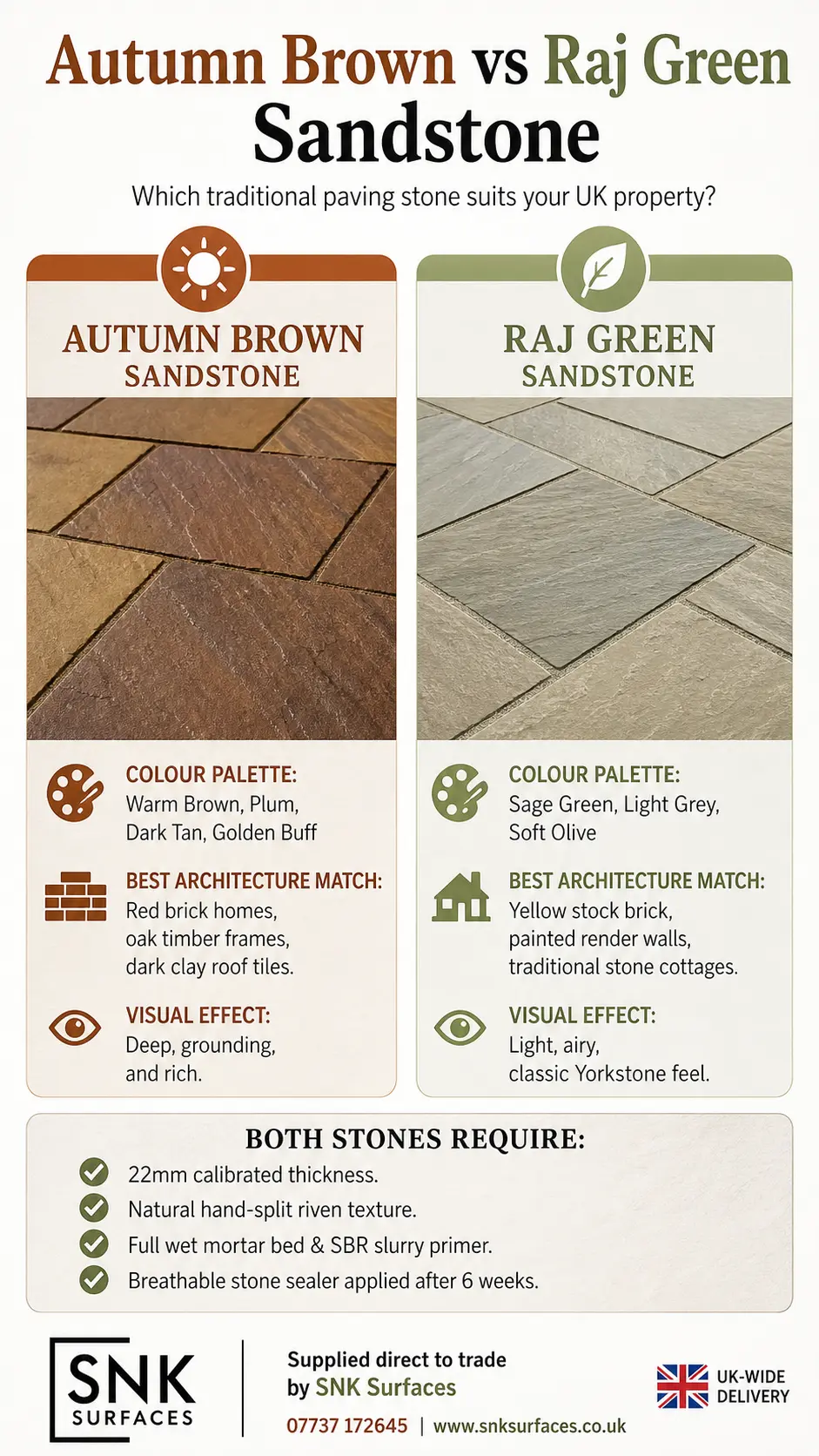
Autumn Brown vs Raj Green Sandstone
If you are renovating a period property, you may also consider Raj Green sandstone. Here is how the two compare:
- Colour Palette: Autumn Brown sandstone paving offers warm brown, plum, dark tan, and golden buff. Raj Green provides sage green, light grey, and soft olive tones.
- Best Architectural Match: Autumn Brown sandstone paving suits red brick, oak timber, and dark roof tiles. Raj Green pairs well with yellow stock brick, stone cottages, and rendered walls.
- Porosity & Texture: Both stones feature hand-riven split faces and calibrated 22mm thickness requiring wet bedding and SBR primer.
If you prefer cooler grey green tones, read our guide on Raj Green Sandstone Paving. If you are torn between porcelain and natural stone, review our Porcelain vs Sandstone Paving Guide.
Frequently Asked Questions (FAQs)
Can I clean Autumn Brown sandstone with brick acid?
No. Never use acid washes on natural sandstone. Acid breaks down internal iron minerals, causes dark rust staining, and strips natural colour. Always use pH neutral stone cleaners and a soft brush.
Does Autumn Brown sandstone paving fade in the sun?
Natural stone can lighten slightly over decades of direct UV light. However, because Autumn Brown sandstone paving is rich in iron minerals, it holds its deep colour very well. Applying a UV resistant sealer keeps the original shades rich.
Can I lay 22mm sandstone on loose sand?
No. You cannot lay 22mm paving slabs on loose sand or gravel. BS 7533 standards require a compacted MOT Type 1 sub-base covered with a full 40mm wet cement mortar bed. Laying on loose sand causes slabs to sink, rock, and crack under foot traffic.
Order Physical Samples Today
Digital photos are a helpful start. But the best way to choose paving is to hold the real stone in your hands. You need to see how the warm brown and plum tones look against your home's brickwork in natural daylight.
Visit our contact page to order a sample of Autumn Brown sandstone paving directly from SNK Surfaces Limited. As a direct manufacturer and trade supplier based in Coventry, we supply full crates, split packs, and site delivery across the UK.
Ready to start your project?
Order a physical sample or speak with our trade team for project pricing.
Contact SNK Surfaces Limited