
Specifier's Guide • 2026
Quartz White Porcelain Paving: Will It Stain in UK Winters?
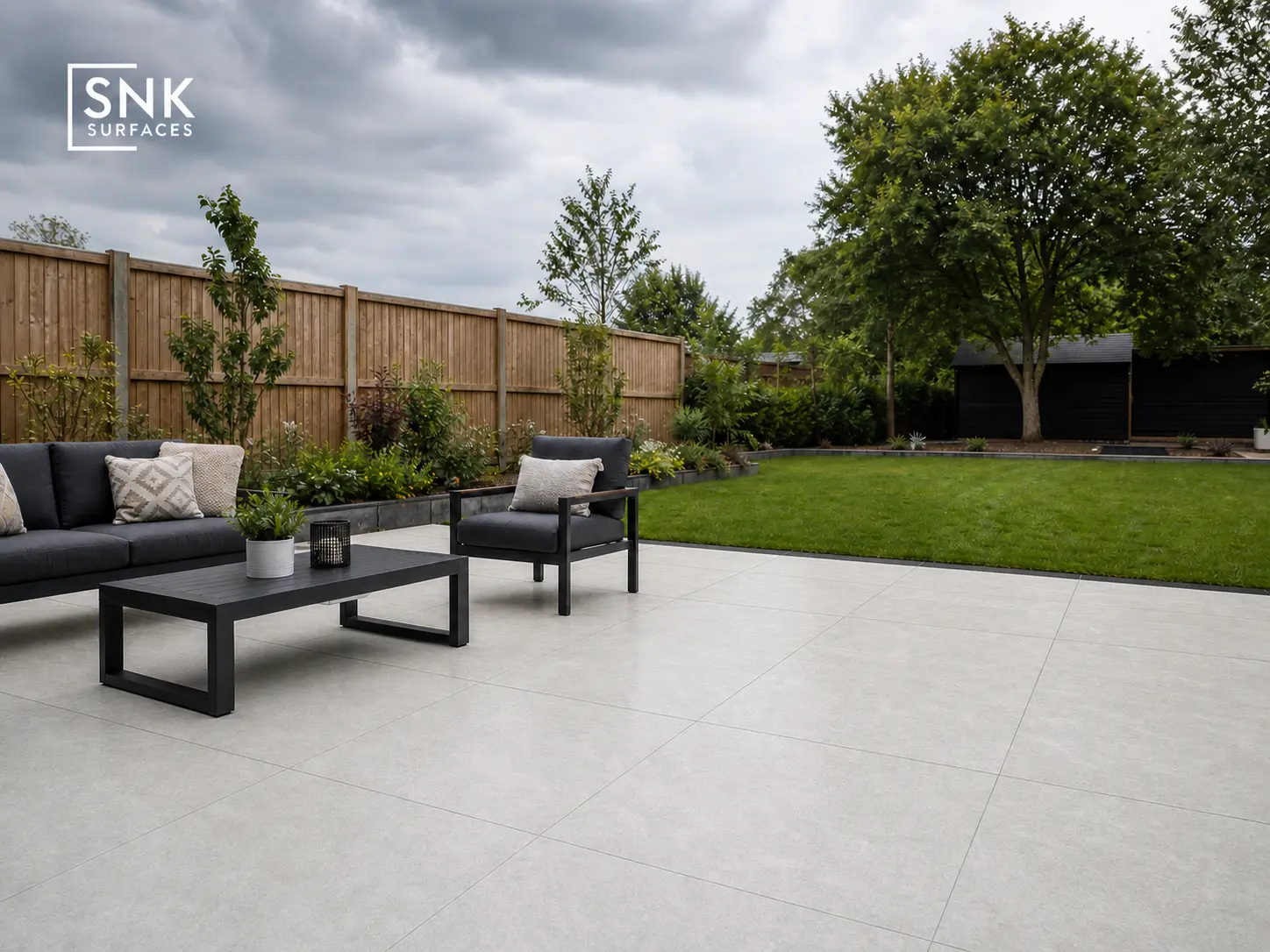
Contractors and garden designers often run into a wall when suggesting light coloured paving to homeowners. The client loves the bright, modern look of a white patio in a brochure. But then they start to worry about British weather. They assume a white patio will turn green within six months, absorb mud, stain permanently, and require constant scrubbing.
If you are laying pale natural limestone or porous light sandstone, those fears are real. Natural stone has open pores that soak up water, dirt, and organic tannins. Engineered ceramic is a completely different material.
This trade guide breaks down the technical facts behind Quartz White Porcelain Paving. We will look at vitrification science, R11 slip ratings, BS 7533 installation rules, and winter maintenance so you can spec white paving with complete confidence.
Why Light Paving Works in UK Gardens
Light coloured paving is not just for sunny Mediterranean villas. It is a smart design choice for British urban homes.
Many UK gardens in towns and cities are small, enclosed by high fences, or shaded by surrounding houses and mature trees. Dark paving in a shaded garden absorbs the limited light, making the space feel smaller and darker.
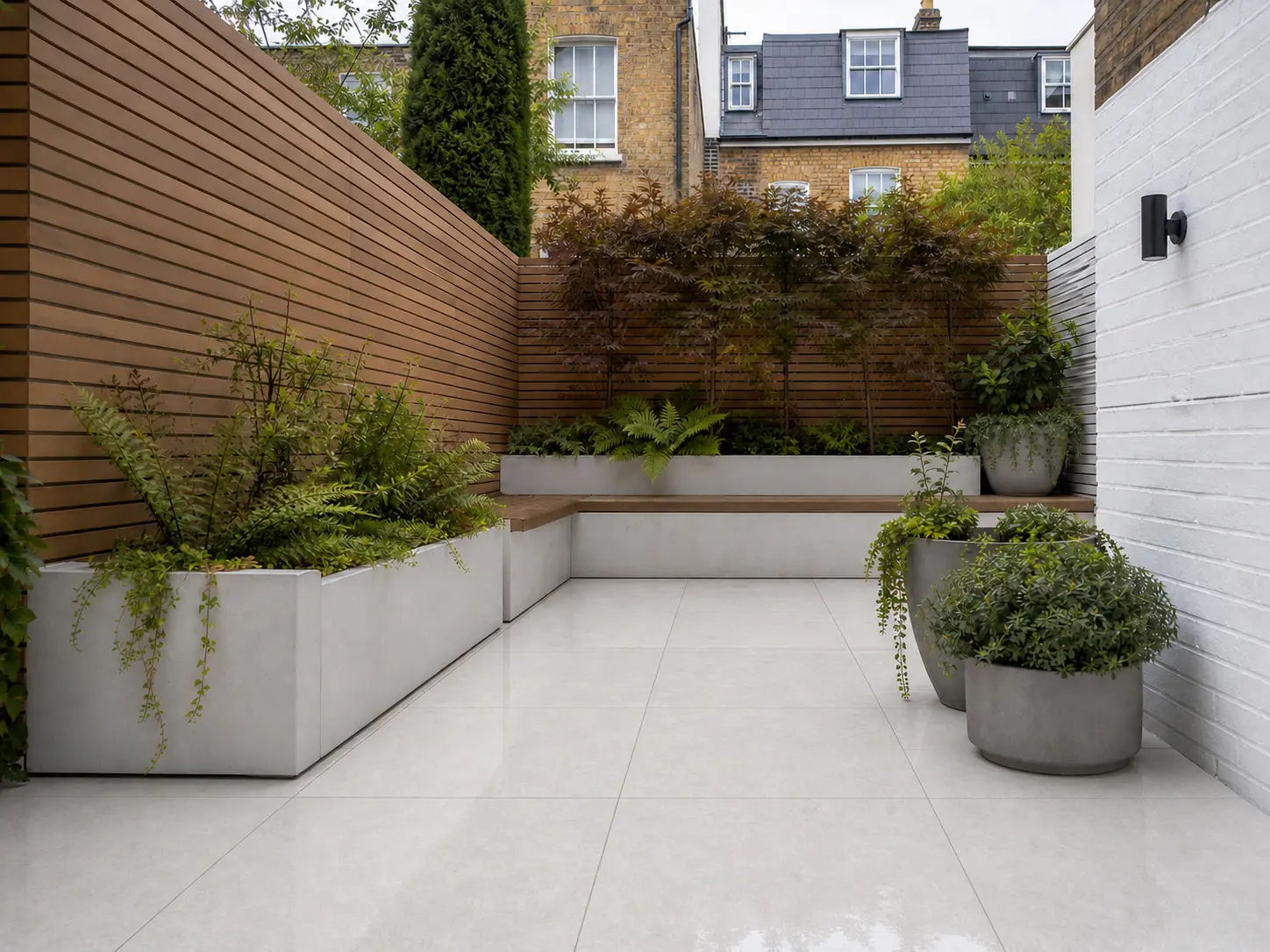
This is where Quartz White Porcelain Paving offers a clear design advantage. Light surfaces have a high albedo effect, meaning they reflect ambient daylight back into the surrounding area. Laying Quartz White Porcelain Paving visually opens up a compact courtyard. It brightens dark corners and keeps the garden feeling open, even on cloudy winter days.
Light porcelain is also ideal for seamless indoor to outdoor transitions. When installing bi-fold or sliding patio doors, running Quartz White Porcelain Paving from the kitchen floor straight out onto the terrace creates a continuous sightline. It blurs the border between the house and the garden.
The Vitrification Science: Why It Rejects Stains
To explain why Quartz White Porcelain Paving will not stain, you need to understand how it is made.
Unlike natural stone pulled straight from a quarry face, porcelain is an engineered ceramic. Fine clays, quartz, and mineral materials are crushed, pressed under heavy load, and fired in a kiln at temperatures above 1200 degrees Celsius. This process is called vitrification.
Vitrification fuses the clay particles into a glass like solid. The internal structure melts together, closing off internal pores. This leaves Quartz White Porcelain Paving with a water absorption rate of less than 0.5 percent.
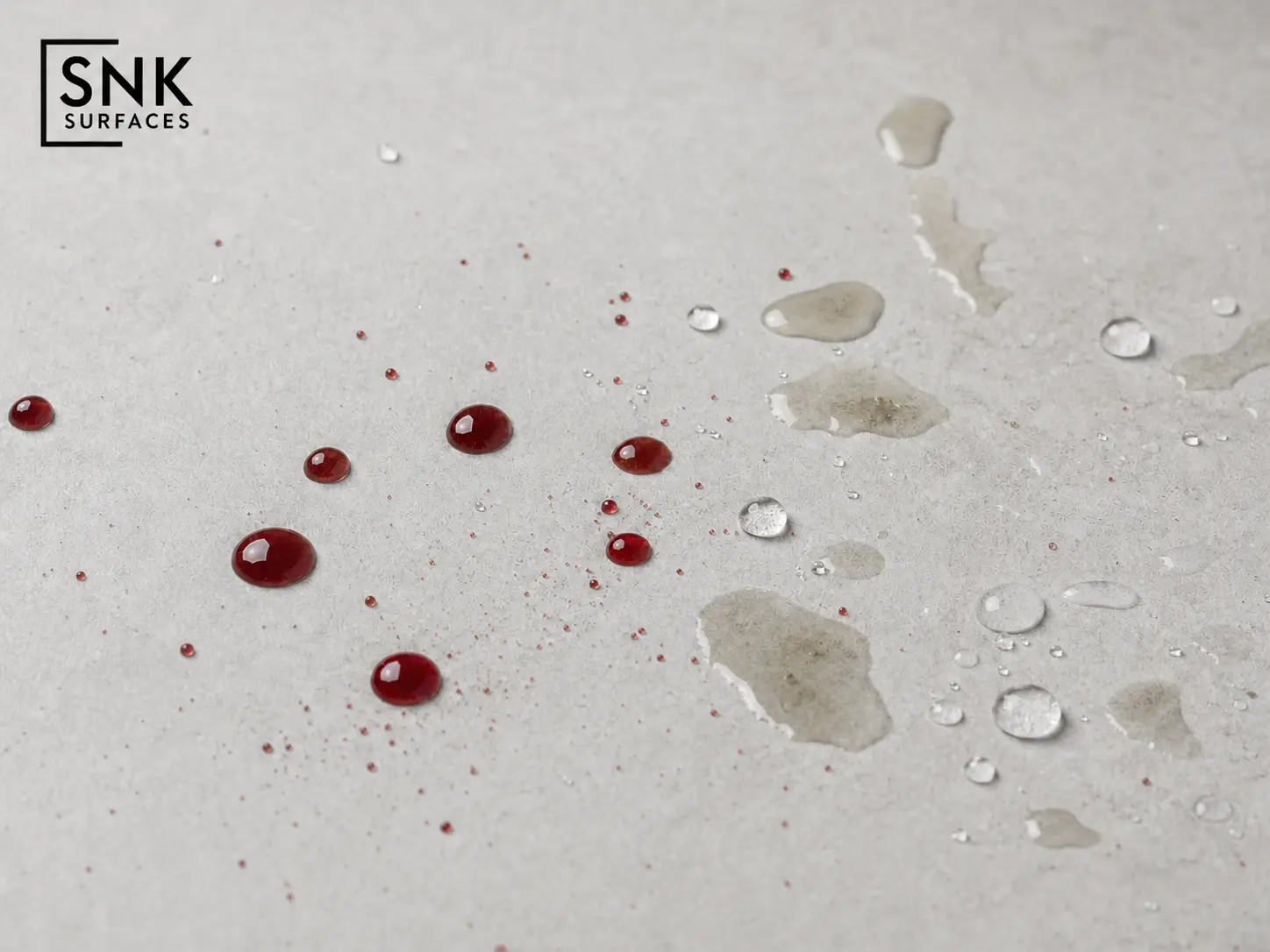
Because the tile cannot absorb water, it cannot absorb stains.
If barbecue oil drops on a porous stone patio, the grease sinks into the rock and leaves a dark mark. If grease drops on Quartz White Porcelain Paving, the oil sits on top of the surface. Red wine, muddy dog paws, and wet autumn leaves react the exact same way. The dirt stays on top of the tile until you wash it away.
Winter Performance and Algae Defense
Green algae and black lichen are the main causes of dirty patios in the UK. During damp autumn and winter months, traditional paving stays wet for weeks.
On natural sandstone or concrete block paving, moisture gets trapped inside the pores. Algae spores settle into these tiny wet pockets, taking root and spreading across the patio. Within one winter, a light natural stone patio can turn green and slippery.
Quartz White Porcelain Paving stops this process completely. Because water absorption is under 0.5 percent, the surface dries quickly after rain. More importantly, there are no microscopic pores for algae to grip onto. Spores cannot take root on the dense surface.
When spring arrives, a patio laid with Quartz White Porcelain Paving does not need harsh chemical treatments or aggressive pressure washing. A quick wash down removes any surface grime, restoring the original light finish.
R11 Slip Resistance Truth
The second concern clients have about white outdoor tiles is slip safety. Because porcelain looks smooth, people assume it becomes as slippery as an indoor bathroom tile when wet.
Using an indoor tile outdoors in the UK is dangerous. But exterior grade Quartz White Porcelain Paving is manufactured specifically for outdoor traction.
During production, a fine micro texture is applied to the face of the slab before firing. This subtle surface texture provides firm grip underfoot without compromising the clean visual appearance.
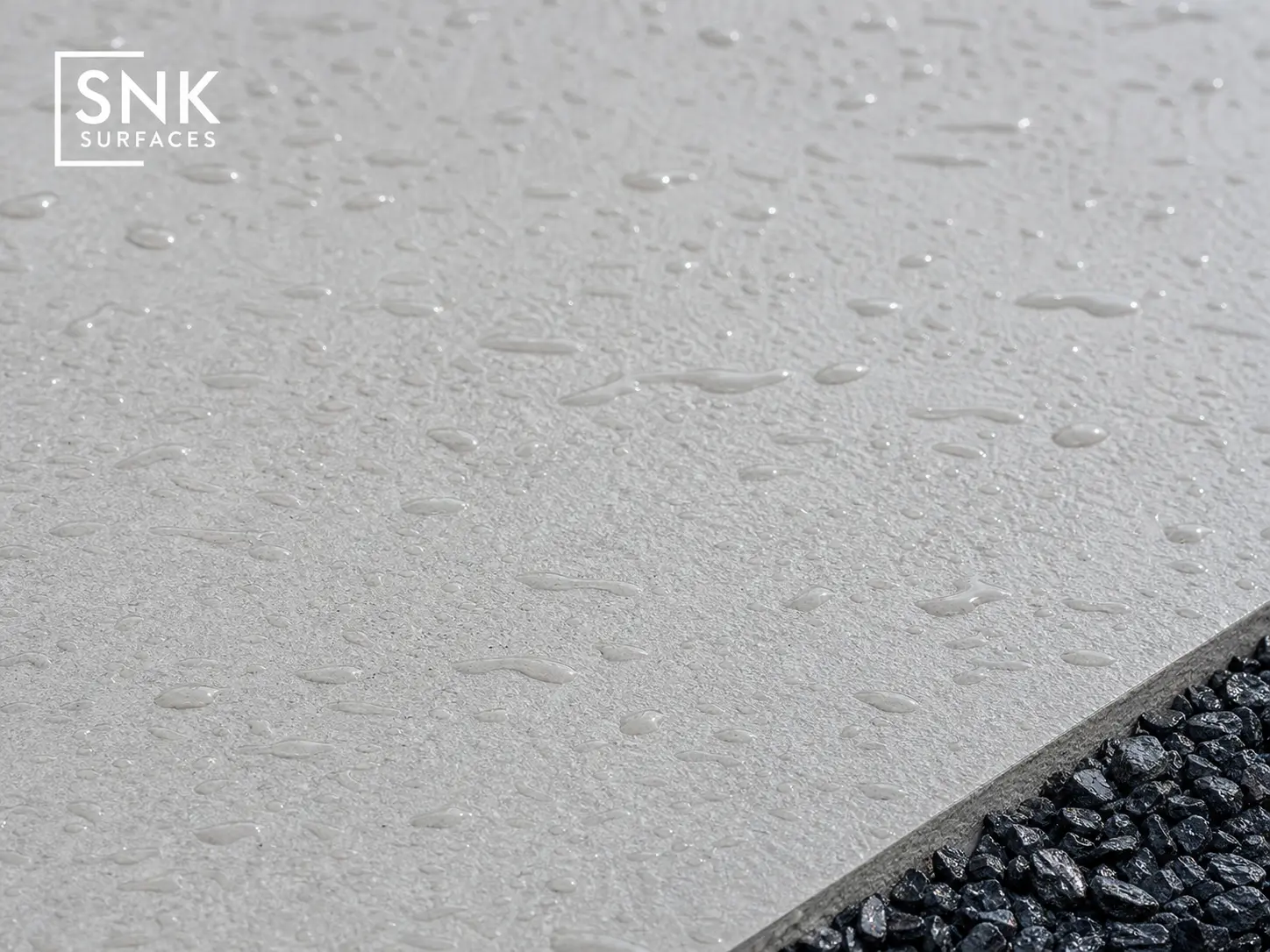
To verify safety on site, check the slip test certificates. Outdoor paving should meet an R11 slip rating under the DIN 51130 ramp test standard. This means the tile has been tested on an incline with soapy water and proven to give safe footing. It also easily meets the HSE slip resistance guidance target of a Pendulum Test Value (PTV) of 36 or higher in wet conditions.
BS 7533 Installation Rules to Prevent Staining
The non porous structure of Quartz White Porcelain Paving makes it durable, but it changes how you install it on site. You cannot lay porcelain using the same methods as natural sandstone.
If you lay a porcelain tile directly onto a standard sand and cement mortar bed, it will not bond. Because porcelain absorbs no water, it cannot draw the mortar into its structure. After one winter frost, the tiles will pop loose.
To lay Quartz White Porcelain Paving correctly, follow the BSI BS 7533 paving standard:
- Rigid Sub Base: Excavate to a minimum depth of 150mm and compact MOT Type 1 aggregate in layers. Porcelain is strong under compression, but a flexing sub base will cause 20mm tiles to crack.
- Full Mortar Bed: Lay tiles on a continuous wet mortar bed of 4:1 sharp sand and cement. Do not use spot bedding.
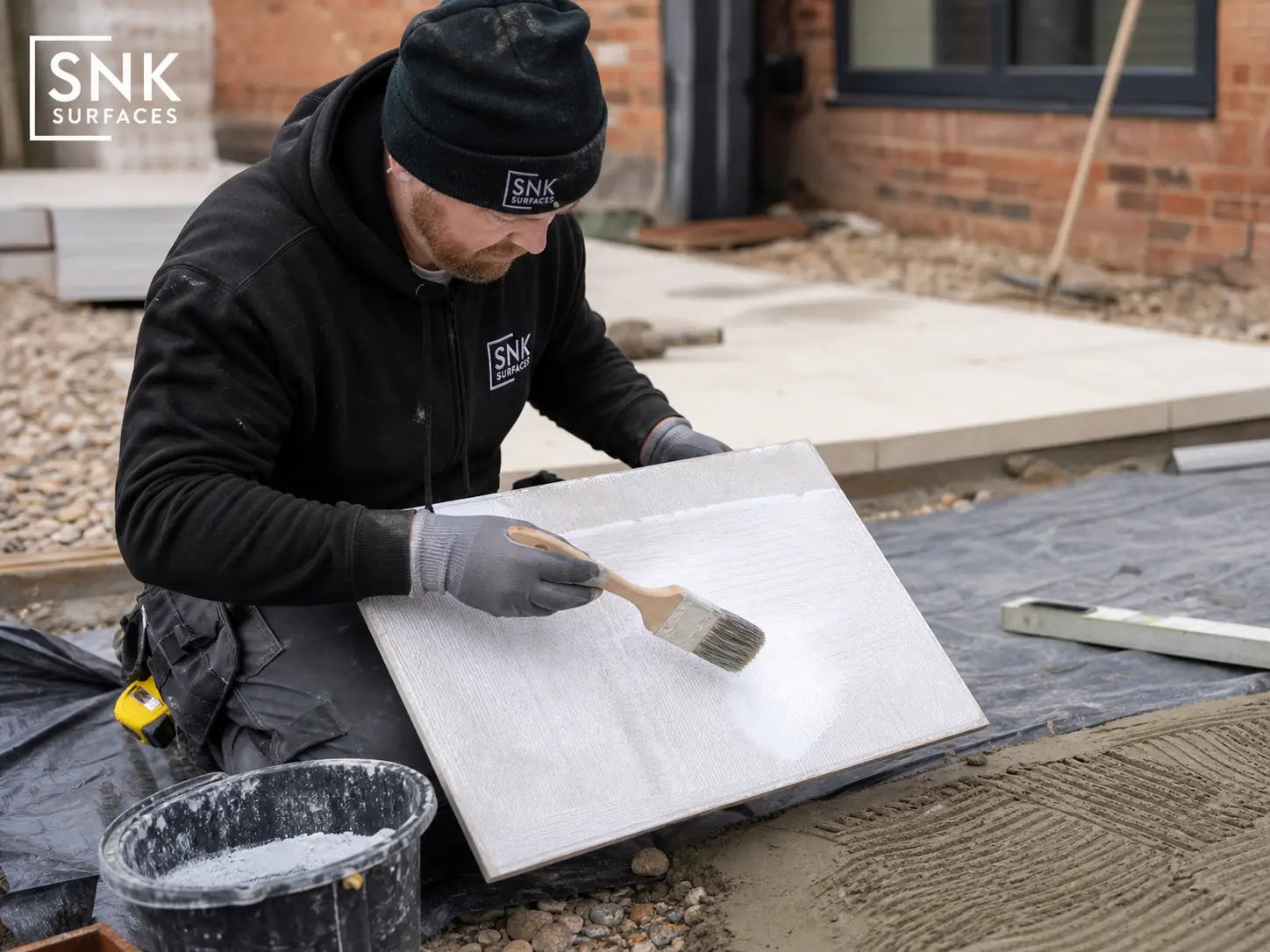
- SBR Slurry Primer: Paint a coat of polymer modified SBR slurry primer onto the back of every slab right before laying it. The primer creates the chemical bond needed to fix non porous porcelain to cement mortar.
- Diamond Blade Cutting: Use a wet saw fitted with a continuous rim diamond blade designed for hard ceramics. Standard masonry blades will chip the rectified edges.
- Clean Pointing: When laying bright Quartz White Porcelain Paving, use an exterior grade brush in resin or cementitious grout. Clean off excess grout as you go to avoid leaving a haze on the tile surface.
Quartz White Porcelain vs Light Sandstone
When helping a client decide between light natural stone and engineered porcelain, a simple side by side comparison makes the choice clear.
| Feature | Quartz White Porcelain Paving | Light Natural Sandstone |
|---|---|---|
| Material Type | Vitrified Ceramic | Sedimentary Rock |
| Water Absorption | Below 0.5% (Non porous) | 3% to 6% (Porous) |
| Stain Resistance | Excellent (Rejects oil, wine, leaves) | Poor (Requires regular sealing) |
| Algae Growth | Minimal (Spores cannot root) | High (Requires chemical treatment) |
| UV Colour Stability | Zero fading over time | Fades and lightens over 5 to 10 years |
| Slip Rating | R11 Rated (DIN 51130 certified) | Natural grip from riven surface |
| Sealing Required | Never | Every 2 to 3 years |
| Installation Method | Mortar bed + SBR primer required | Standard mortar bed |
If your client wants natural variation, you can explore light options like Fossil Mint Sandstone Paving. But if they want a clean white patio with low upkeep, Quartz White Porcelain Paving is the better choice. For a full breakdown between options, read our Porcelain vs Sandstone Paving Guide.
3 Step Spring Cleaning Protocol
One of the best selling points for Quartz White Porcelain Paving is how easy it is to keep clean. Homeowners do not need to buy chemical sealers or hire specialized cleaning teams.
Share this simple three step guide with your clients:
- Sweep: Use a stiff broom to sweep away autumn leaves, twigs, and loose dirt.
- Wash: Mix warm water with a mild household cleaner or neutral patio wash. Pour it over the paving and scrub gently with a stiff brush to loosen dirt.
- Rinse: Hose down the patio with clean water.
Avoid using high pressure power washers close to the surface. High pressure water jets can damage or strip the resin grout out of the joints over time.
Frequently Asked Questions
Does white porcelain paving get hot underfoot in summer?
No. White paving reflects solar radiation, meaning Quartz White Porcelain Paving stays cooler under bare feet during hot weather compared to dark charcoal or black paving slabs that absorb heat.
Do I ever need to seal Quartz White Porcelain Paving?
Never. The vitrification process seals the internal structure during manufacturing. Applying a topical sealer to porcelain will ruin the finish, leaving a cloudy, sticky film on the non porous tile surface.
Can Quartz White Porcelain Paving scratch easily?
Vitrified porcelain is tough and scratch resistant. It scores a high hardness rating on the Mohs scale, making it harder than most natural stones. Dragging standard garden furniture across the patio will not easily mark the surface.
Why is porcelain installation slightly more expensive than sandstone?
Laying porcelain requires specialized diamond cutting blades, SBR slurry primers, and careful sub base preparation. While the initial installation labor takes a bit more time, the homeowner saves money over time because there are no costs for sealers or chemical algae treatments.
What other light porcelain options are available?
If you want a soft, light tone with subtle marble like veining, consider Himalayan White Porcelain Paving as an alternative for modern terraces and roof gardens.
The Bottom Line
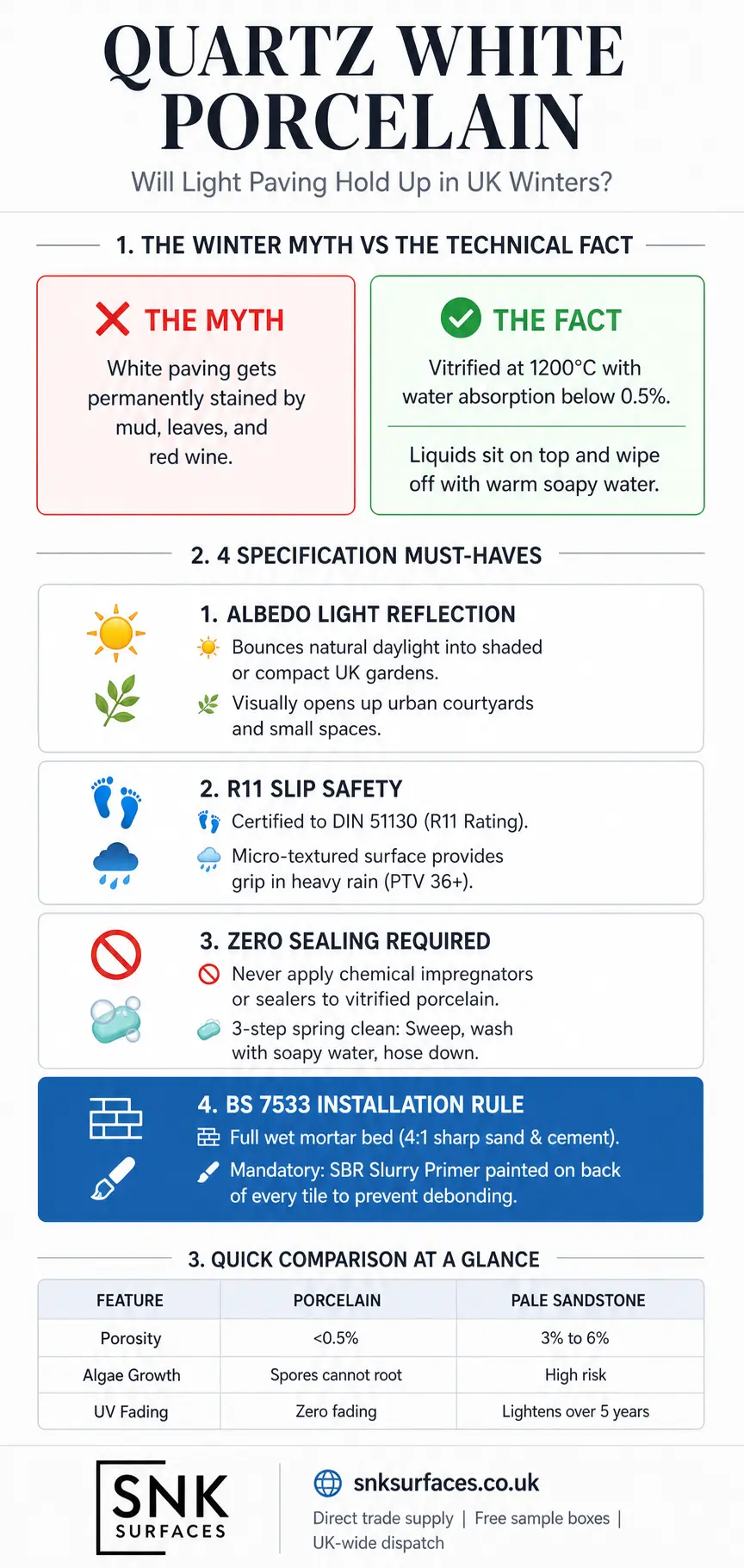
Quartz White Porcelain Paving is a reliable choice for bright, modern garden spaces in the UK. The non porous structure resists algae, rejects spills, and copes with freeze thaw winter weather without staining.
Follow the BS 7533 installation guidelines, apply an SBR primer to every slab, and keep joint lines clean during laying. Doing this ensures a low maintenance outdoor space that stays bright for decades.
Ready to specify Quartz White Porcelain?
We supply Quartz White Porcelain Paving direct from our manufacturing facilities to your site.
Contact Our Trade Team