
Trade Guide • 2026
Sagar Black vs Brazilian Black Paving UK Guide
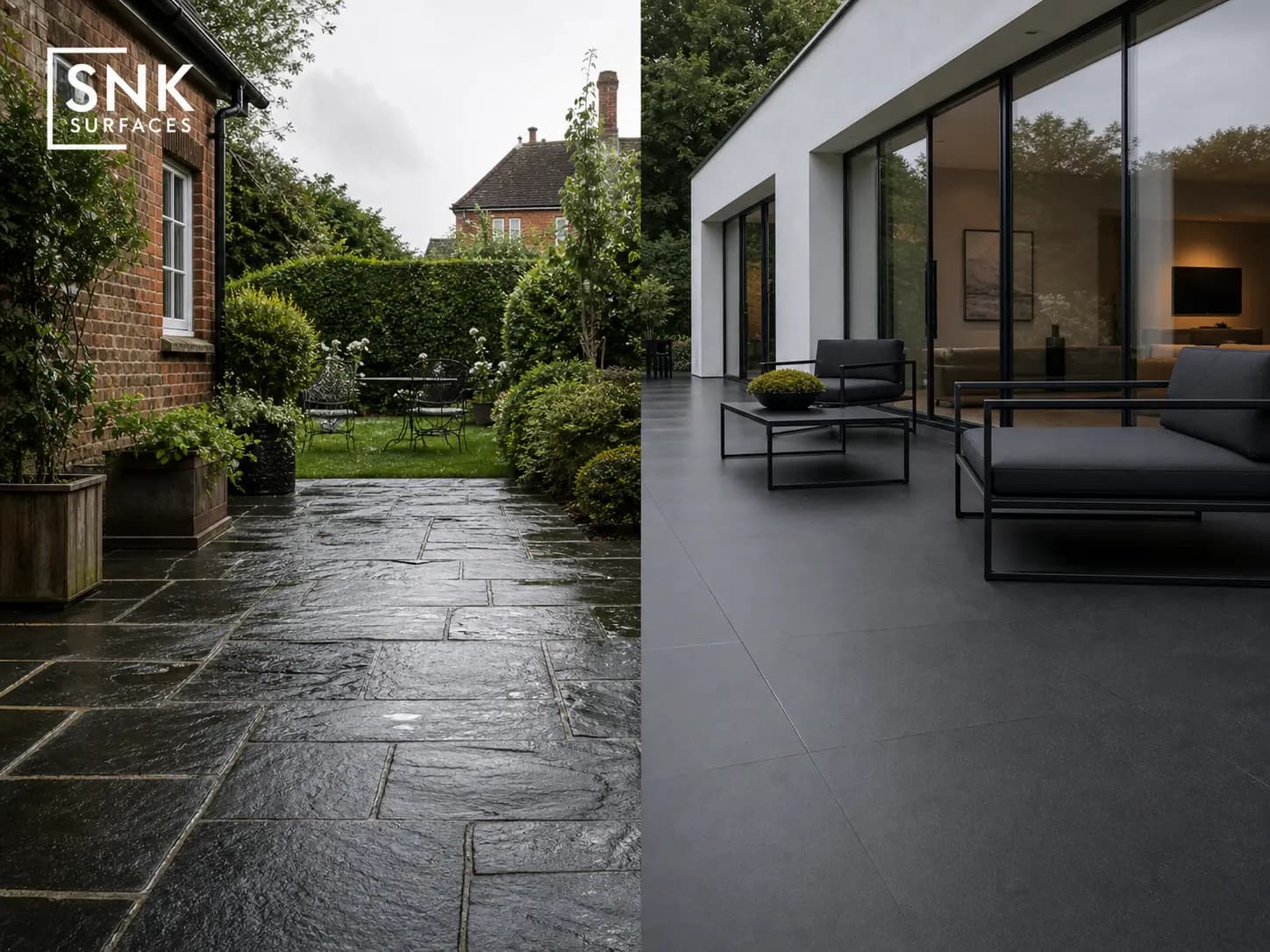
Dark paving is everywhere in UK gardens right now. The deep tones make green lawns pop and give modern homes a sharp, clean look.
But if you are choosing between Sagar Black Sandstone and Brazilian Black Porcelain, the decision is not as simple as picking the one you prefer visually. These two materials behave very differently once they are laid on site. One is a natural rock pulled from Indian quarries. The other is an engineered ceramic baked at over 1200 degrees.
They age differently. They drain differently. They need very different levels of care over the years. This guide breaks down the real differences so you can spec the right material first time.
Quick Answer
Short on time? Here is the short version.
- Sagar Black Sandstone is the one to pick if you want natural colour variation and a traditional riven texture. It grips well underfoot and suits period homes. But it is porous, so it needs sealing every couple of years.
- Brazilian Black Porcelain is the better choice if you want a uniform dark finish with tight grout lines and almost zero upkeep. It does not fade, it does not stain, and it never needs sealing.
The Natural Choice: Sagar Black Sandstone
Sagar Black Sandstone is a natural sedimentary stone quarried in India. It has been used on UK patios and driveways for decades. It remains one of the most popular dark paving options in the trade.
The first thing you notice is the colour. It is never just flat black. You get deep charcoal tones mixed with dark greys and occasional hints of gold and brown. Every slab looks slightly different because it is a natural product. That variation is exactly what gives a sandstone patio its character.
The surface is usually riven. This means it has been split along the natural layers of the stone. The result is a textured, slightly uneven finish that provides good grip in wet weather. For UK conditions, that natural texture is a genuine safety benefit.
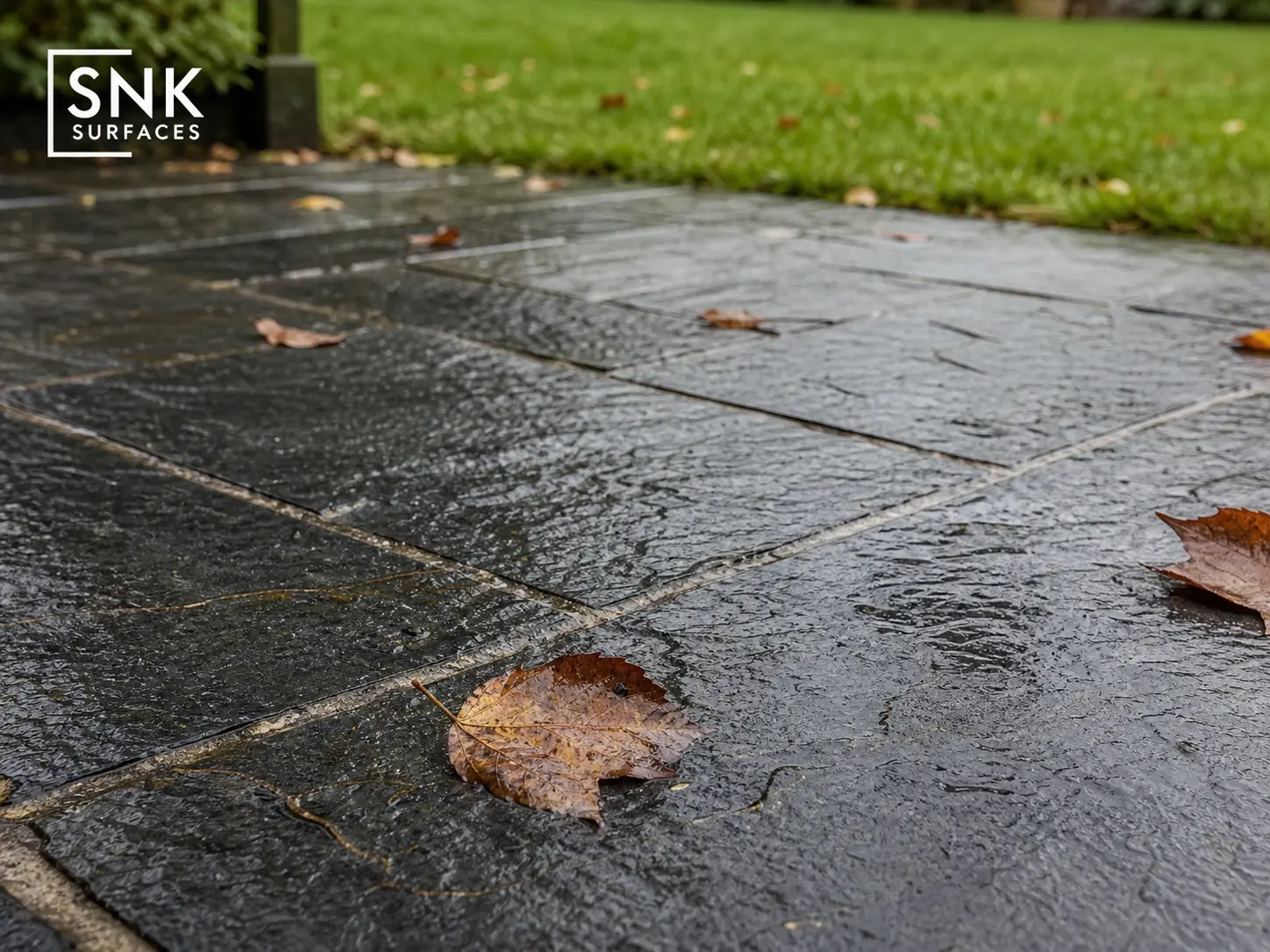
From an installation point of view, Sagar Black Sandstone is straightforward to work with. The 22mm calibrated thickness beds well into a standard mortar mix. It cuts cleanly with a standard masonry blade. Because the stone is porous, it bonds naturally to the mortar bed without needing a chemical primer.
The downside is that same porosity. Water, oil, and organic matter can soak into the surface if it is left unsealed. We recommend using a breathable impregnating sealer to protect the stone from staining. Lithofin publishes useful guidance on choosing the right sealer for different stone types. Plan to reseal every two to three years depending on exposure.
Over time, the sandstone will lighten slightly in direct sunlight. The deep charcoal tones soften into a lighter grey. Some clients love this weathered look. Others do not. If your client wants the patio to stay jet black forever, this is not the right material.
The Engineered Choice: Brazilian Black Porcelain
Brazilian Black Porcelain sits at the opposite end of the spectrum. It is an engineered tile designed to mimic the look of dark natural slate without any of the inconsistencies.
The colour is uniform across every tile. The surface texture is consistent. The edges are machine-cut to within a millimetre of each other, which the industry calls rectified edges. This precision means your installer can lay the tiles with 3mm grout joints for a very clean, modern finish.
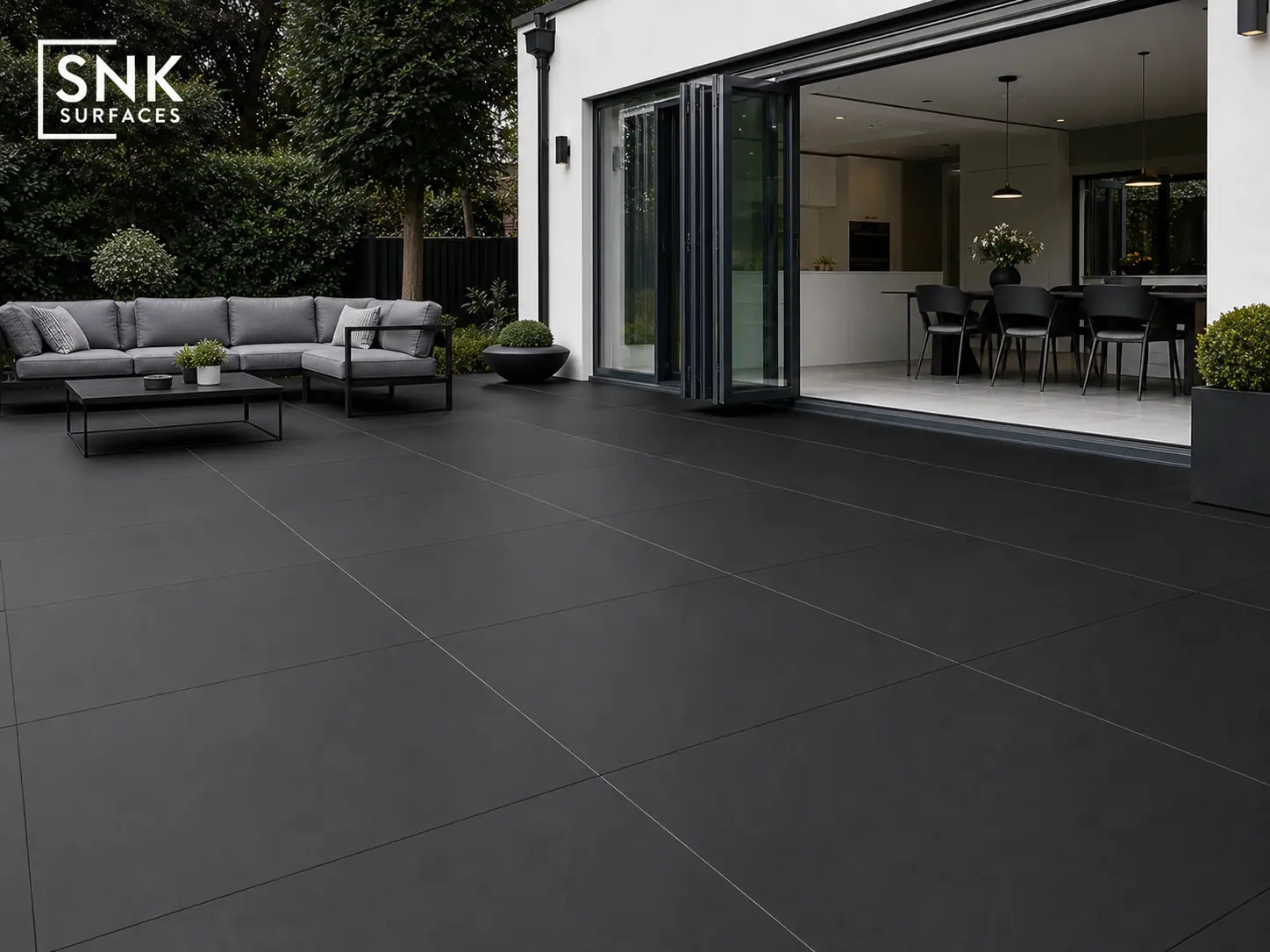
The big advantage of Brazilian Black Porcelain is its density. The vitrification process fires the clay at extreme temperatures until it becomes almost glass-like. Water absorption drops below 0.5 percent. That makes it fully frost-proof for UK winters and virtually impossible to stain.
Spill red wine on it and it sits on the surface. Leave wet leaves on it all autumn and they wipe straight off. There is no sealing required. Ever.
The installation is where the porcelain gets trickier. Because the tile absorbs almost no water, standard mortar will not stick to the back of it. Your installer must apply an SBR slurry primer to every tile before laying it. Skip this step and the tiles will debond within a year or two. The BSI BS 7533 standard covers the correct installation method for external porcelain paving in detail.
You will also need diamond-tipped blades to cut the tiles on site. Standard masonry blades will chip the edges.
Head to Head Comparison
Aesthetics and texture
If the project is a period home, a cottage, or a traditional garden, Sagar Black Sandstone fits better. The natural variation and riven texture blend into older properties without looking out of place.
If the project is a new build, a contemporary extension, or a minimalist garden, Brazilian Black Porcelain is the stronger choice. The uniform colour and sharp rectified edges give a clean architectural look that suits modern design.
Durability and fading
Both materials are tough enough for heavy foot traffic. Both will last decades if installed correctly. The difference is in how they age.
The sandstone will gradually lighten over 10 to 15 years of sun exposure. The change is slow and subtle, but it is noticeable if you compare the patio to an unused slab from the same batch.
The porcelain will not fade at all. The colour is fired into the ceramic body at over 1200 degrees. UV exposure has no effect on it. The patio will look the same in 20 years as it does on day one.
Slip resistance
This matters a lot for UK projects given how much rain we get. The HSE slip resistance guidance recommends a minimum pendulum test value of 36 for external pedestrian areas.
Sagar Black Sandstone gets its grip from the natural riven surface. The texture is uneven and provides good traction even when wet.
Brazilian Black Porcelain should carry an R11 slip rating for external use. Always ask your supplier for the DIN 51130 test certificate to verify the claim. An R11 rating means the tile passed the ramp test at a 19 to 27 degree incline with soapy water.
Maintenance
The sandstone needs more ongoing attention. Seal it every two to three years. Clean up spills quickly. Avoid blasting the riven surface with a high-pressure washer because it can erode the face of the stone over time.
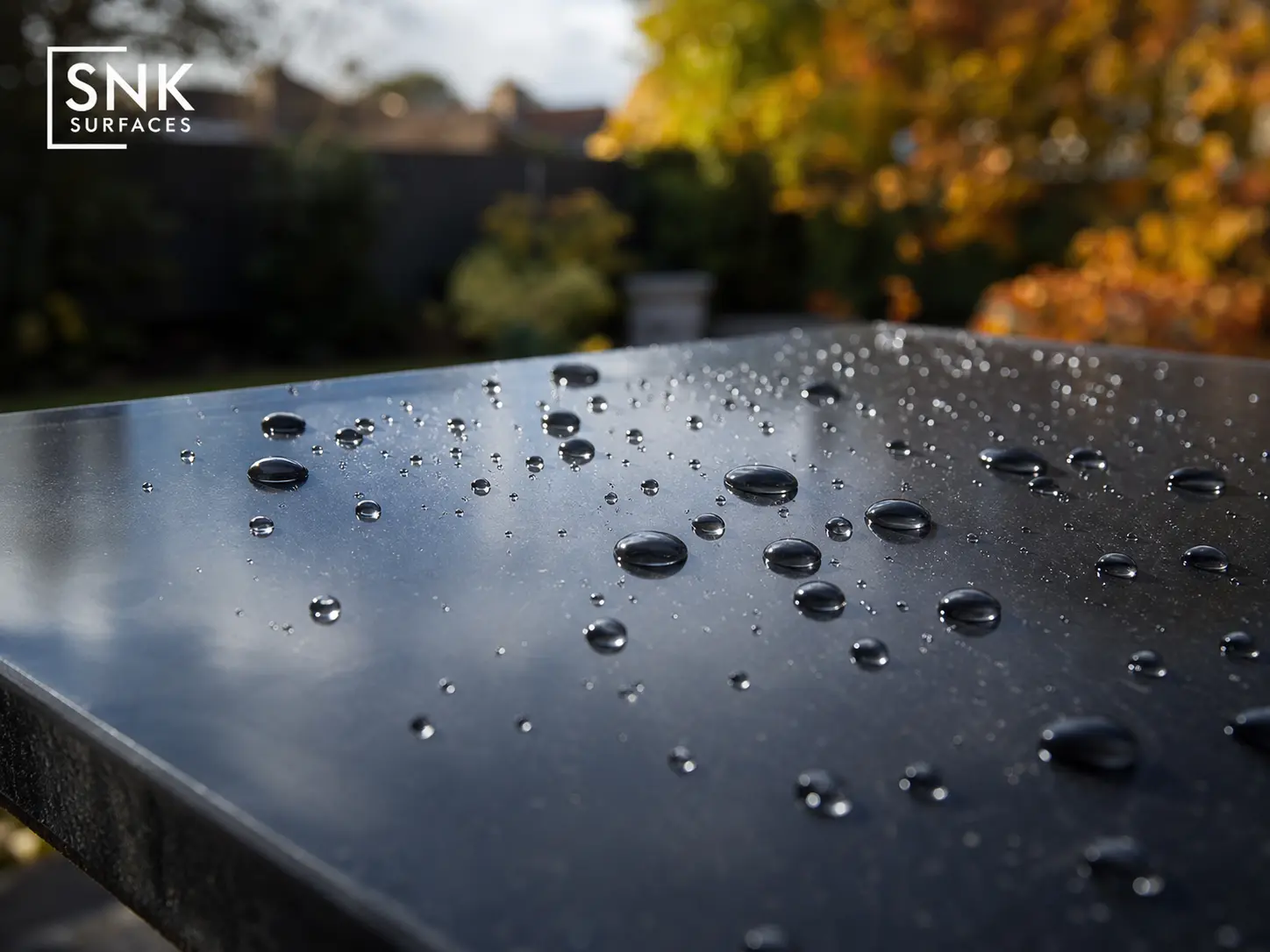
The porcelain is about as low maintenance as paving gets. A bucket of soapy water and a stiff brush once or twice a year is all it needs. No sealing. No special cleaners. No worry about stains.
Cost and Long-Term Value
The purchase price of Sagar Black Sandstone is usually slightly lower per square metre than Brazilian Black Porcelain. But the purchase price is only part of the picture.
Factor in the cost of sealant every few years for the sandstone. Factor in the extra labour time for the SBR primer on the porcelain. Factor in the diamond blades for cutting the porcelain on site.
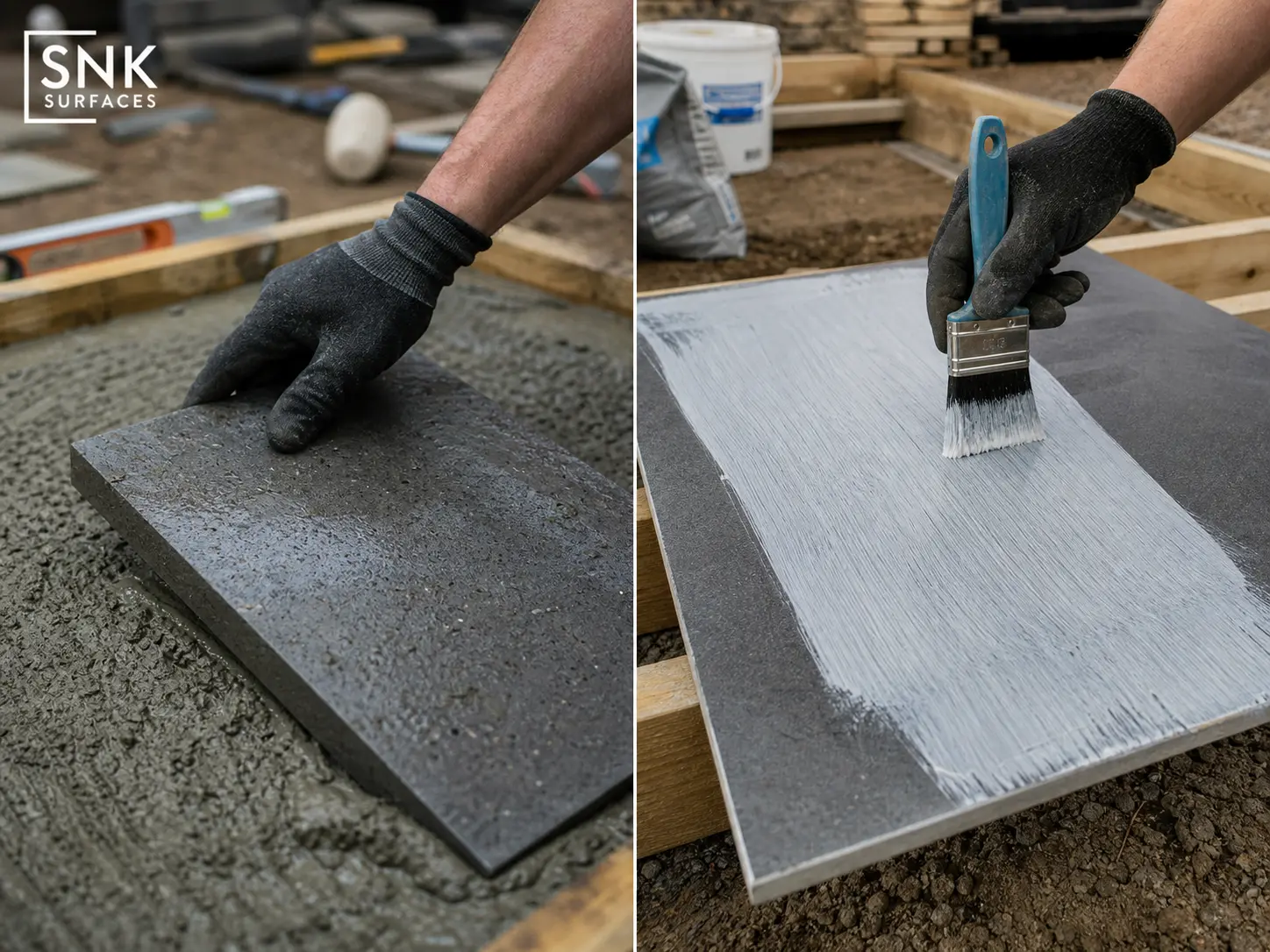
Over a 10-year period, the total cost of ownership is very similar for both materials. The sandstone costs less upfront but more to maintain. The porcelain costs more upfront but almost nothing to maintain.
Buying direct from a manufacturer like SNK Surfaces keeps the upfront cost down for both options. You cut out the importers and distributors that add margin at every stage of the supply chain.
Quick Comparison Table
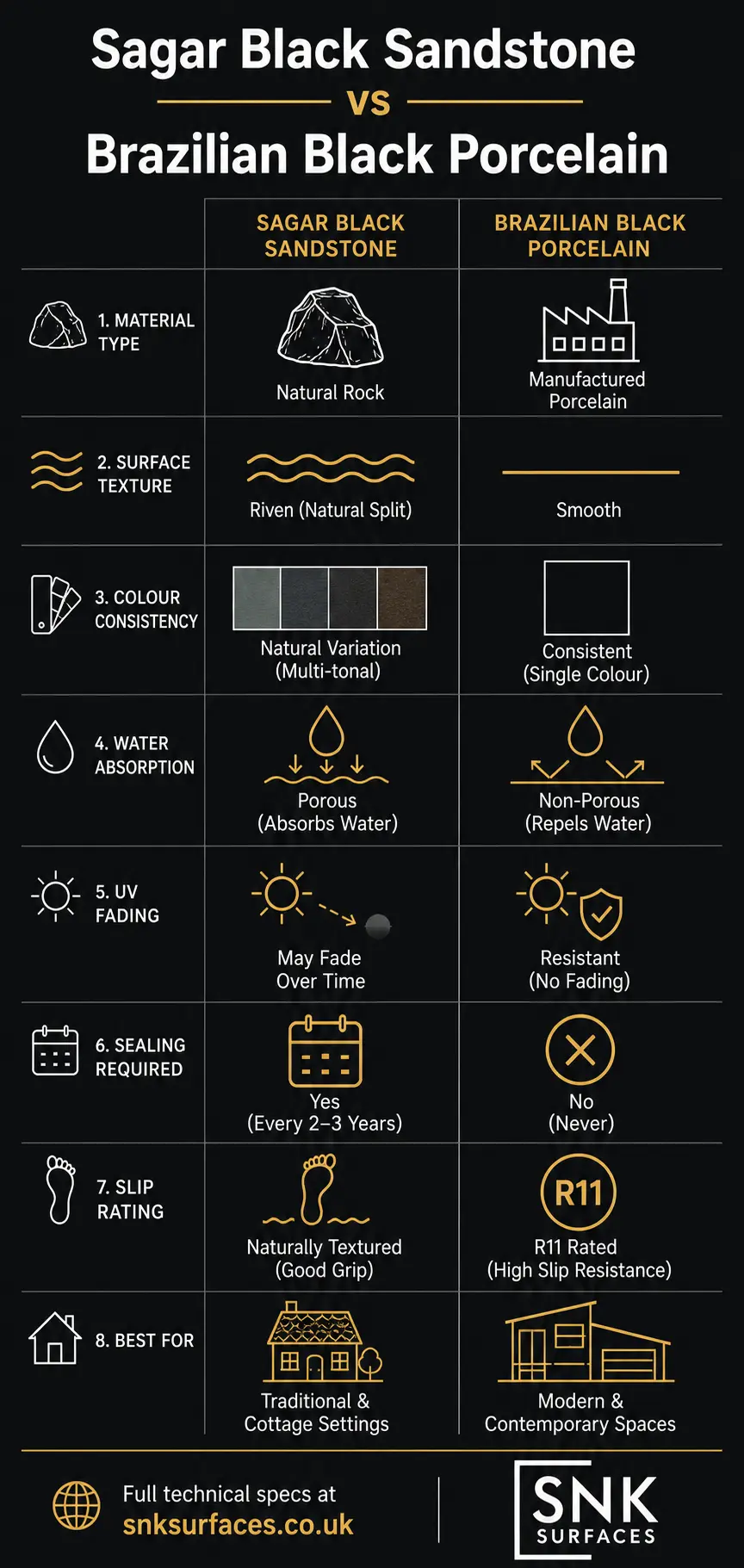
| Feature | Sagar Black Sandstone | Brazilian Black Porcelain |
|---|---|---|
| Material | Natural sedimentary rock | Vitrified ceramic |
| Surface | Natural riven texture | Engineered slate effect |
| Edges | Hand-cut, calibrated | Machine rectified |
| Colour | Varied charcoal, grey, gold | Uniform dark black |
| Fading | Lightens slightly over time | No fading |
| Porosity | Porous, needs sealing | Below 0.5%, no sealing |
| Slip rating | Natural grip from riven face | R11 rated (verify certificate) |
| Maintenance | Seal every 2 to 3 years | Wash down only |
| Best for | Traditional gardens, period homes | Modern builds, contemporary terraces |
The Verdict
There is no single winner here. The right choice depends on the project, the client, and the look you are trying to achieve.
Go with Sagar Black Sandstone if the project calls for natural character and a traditional feel. It is a proven material that ages gracefully and suits older properties. Just make sure your client knows it needs occasional sealing.
Go with Brazilian Black Porcelain if the brief is modern, clean, and low maintenance. It will not fade, it will not stain, and it will look the same in 20 years. Just make sure your installer uses an SBR primer and follows the BS 7533 installation guidelines.
You can browse similar dark paving options on our site, including County Anthracite Porcelain and Kota Black Limestone. If you are still weighing up materials, our porcelain vs sandstone paving guide covers the broader technical differences in more detail.
Need samples? Get in touch and we will ship them out to your site.
Frequently Asked Questions
Can I mix Sagar Black Sandstone and Brazilian Black Porcelain on the same patio?
Yes, but it takes careful planning. The two materials have different thicknesses and different installation methods. The sandstone is usually 22mm and the porcelain is 20mm, so your installer will need to adjust the mortar bed depth to keep the finished surface level. The visual contrast between the natural riven stone and the smooth porcelain can look very striking when done well. We recommend using the sandstone as a border or feature band and the porcelain for the main field.
Is Brazilian Black Porcelain slippery when wet?
Not if you buy the right grade. External porcelain paving should carry an R11 slip rating, which means it passed the DIN 51130 ramp test at a 19 to 27 degree angle with soapy water. Always ask your supplier for the test certificate. A smooth, polished porcelain tile rated R9 or R10 is dangerous outdoors and should never be used on an exposed UK patio.
Does Sagar Black Sandstone fade in the UK sun?
It lightens gradually over 10 to 15 years. The deep charcoal tones soften into a lighter grey, especially on south-facing patios that get full sun all day. This is a natural process and it does not affect the structural integrity of the stone. Many clients actually prefer the weathered look. If you want the colour to stay as dark as possible, apply a UV-resistant impregnating sealer and reapply it every two to three years.
Can I use a pressure washer on Sagar Black Sandstone?
You can, but keep the pressure low. A standard domestic pressure washer on a wide fan setting is fine for removing dirt and algae. Do not use a turbo nozzle or hold the lance close to the surface. The riven face of the sandstone is relatively soft compared to porcelain, and high-pressure jets can erode the texture over time. Once the riven surface is damaged, it cannot be restored.
Which material is better for a UK driveway?
Sagar Black Sandstone is the safer choice for driveways if you go with a thicker 30mm or 40mm sett or cobble format. The natural riven texture provides excellent grip for vehicle tyres in wet weather. Standard 22mm sandstone slabs are not thick enough for regular car traffic. Brazilian Black Porcelain can work on driveways if you use a 20mm or 30mm structural grade tile laid on a reinforced concrete base, but the smooth surface can be slippery for tyres on steep gradients. For driveways, we generally recommend natural stone setts or our Mint Sandstone Setts for a more traditional look.
How long does delivery take for UK orders?
We ship directly from our own facilities in India to our UK warehouse. Standard lead time is 3 to 4 weeks from order confirmation. If the product is already in stock at our UK warehouse, we can usually dispatch within 2 to 3 working days. Contact our team for current stock levels and delivery times to your area.
Ready to specify dark paving for your next project?
Browse our complete range of Sagar Black Sandstone and Brazilian Black Porcelain or request a free trade sample box delivered to your site.
SNK Surfaces is a direct manufacturer and UK supplier of premium natural sandstone and outdoor porcelain paving. Quarry direct pricing, UK stocked, and delivered nationwide to trade and retail.