
UK & Ireland Troubleshooting Guide
Why Do Paving Slabs Crack? UK & Ireland Guide
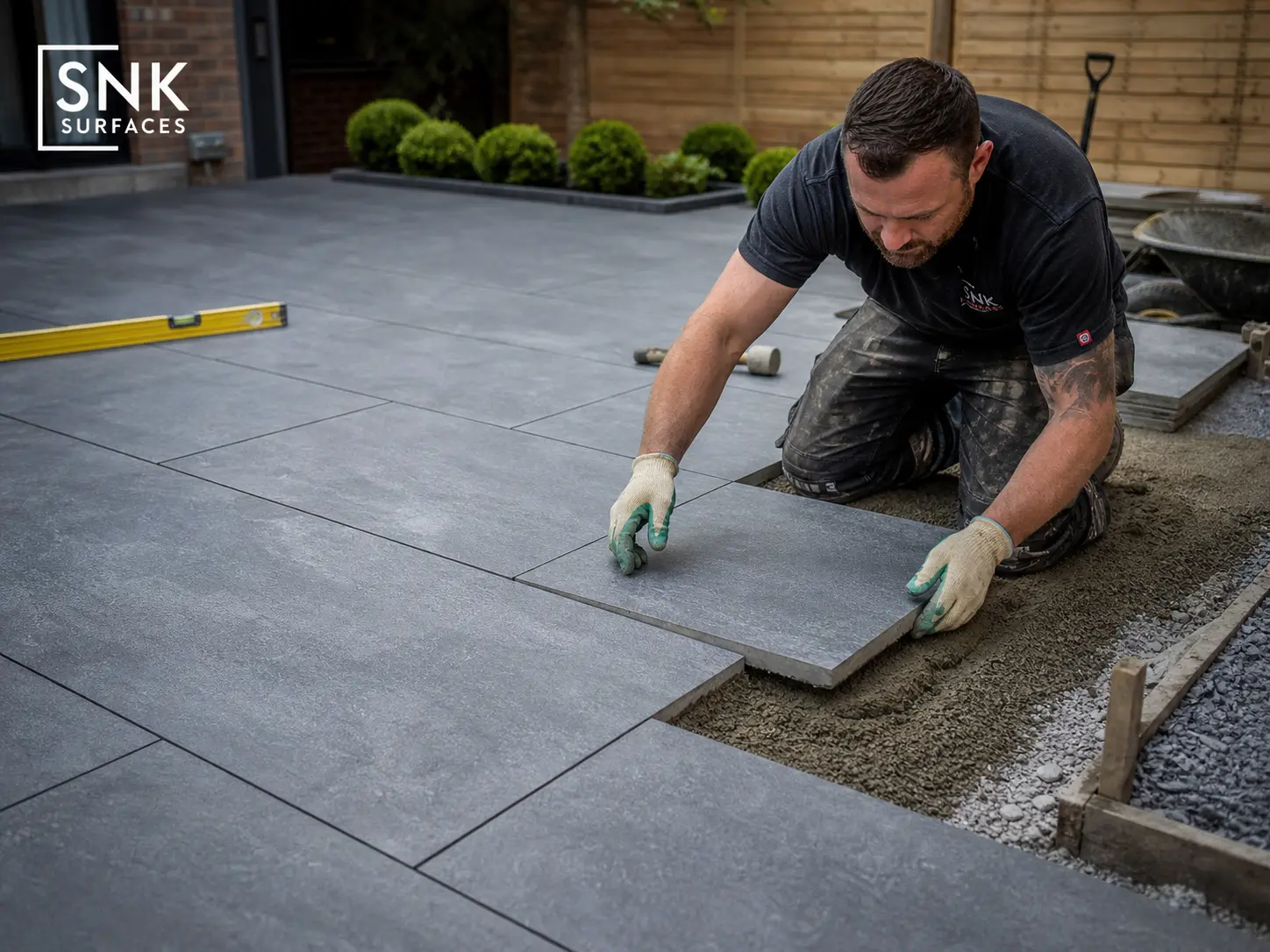
The Real Cost of Patio Failure
Ripping out a failed 50 square metre patio is a total nightmare. For a homeowner, fixing cracked slabs costs thousands of pounds out of pocket. For a landscaping contractor, getting a callback destroys profit margins.
The damp weather in the UK and Ireland aggressively tests external paving. Frequent freeze-thaw cycles put massive stress on garden patios. If water finds a way to sit under your tiles, the cold winter weather will eventually break them.
The material itself is almost never to blame. High-quality 20mm outdoor porcelain is incredibly strong. Calibrated natural stone is also built to last a lifetime. To understand why paving slabs crack, we have to look directly at how they were laid.
This guide explains exactly how different materials react to stress. It also outlines the strict rules you must follow to build a patio that lasts.
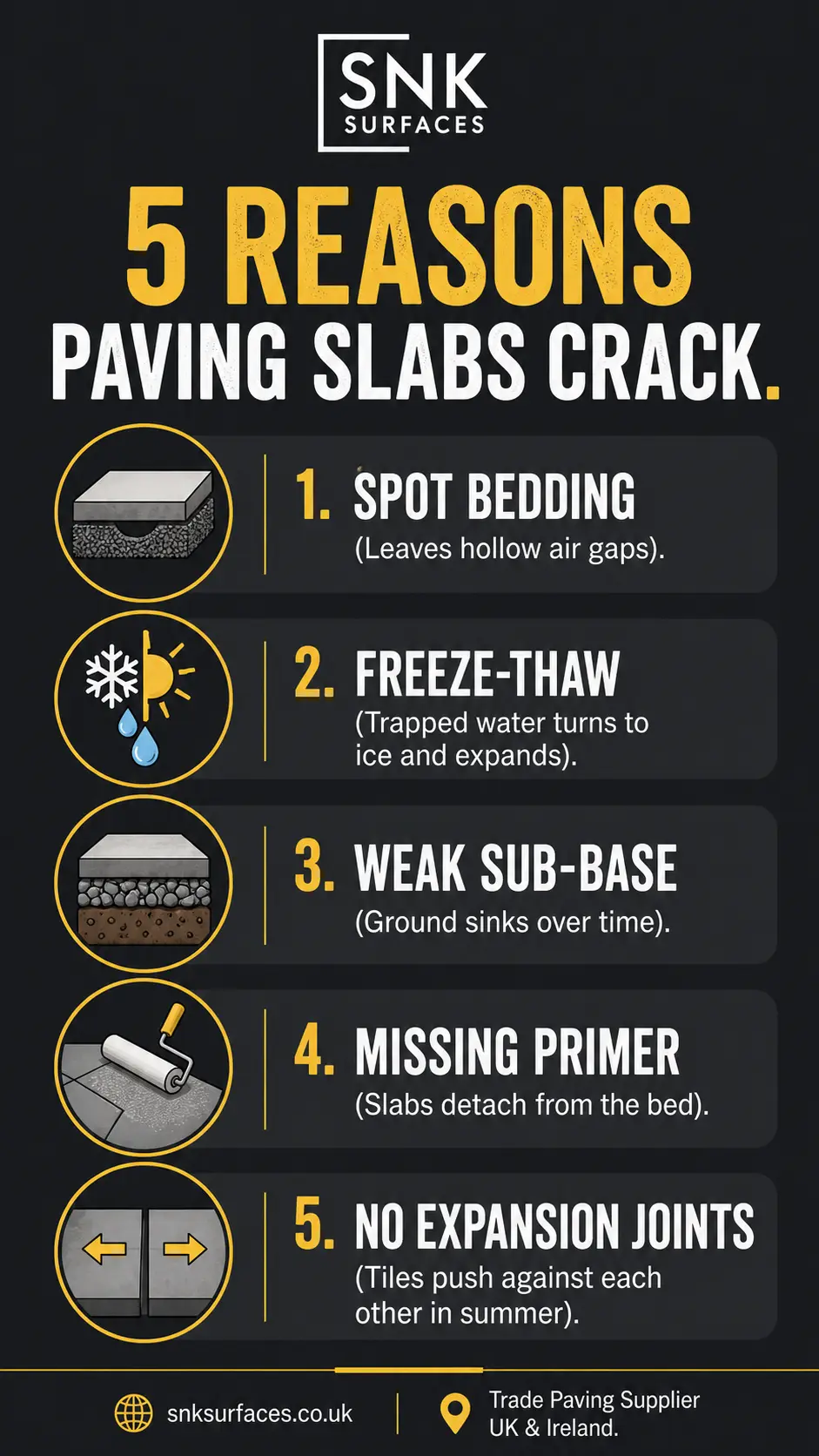
Root Cause 1: Spot Bedding and Void Spaces
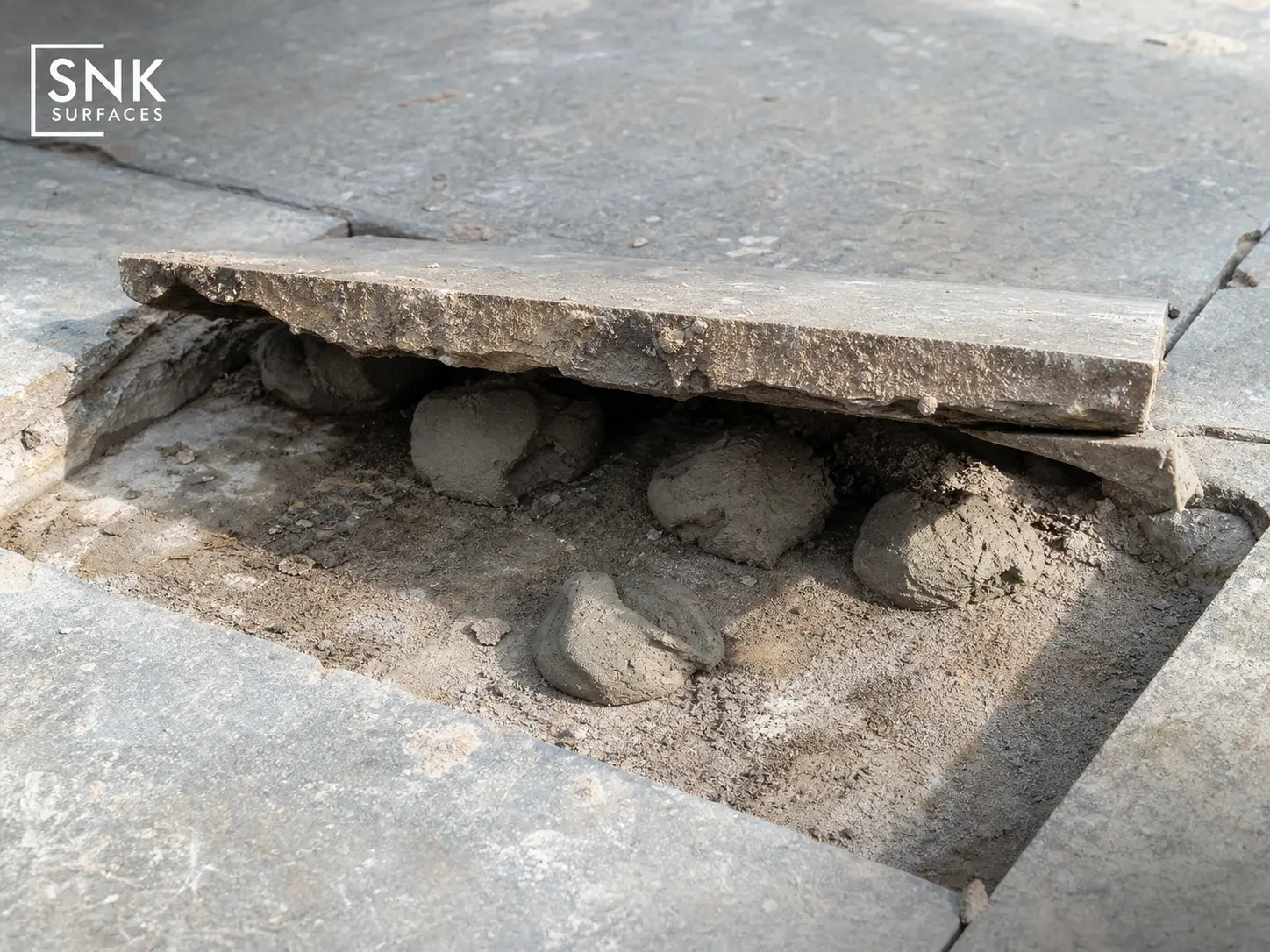
The top reason for broken patios is a terrible installation habit called spot bedding. Many old-school builders call this the dot and dab method.
Instead of laying the stone on a flat layer of mortar, the builder places five small dabs of cement underneath. They do this to save time and materials. However, this creates a massive structural flaw.
The Science of Frost Heave
Spot bedding leaves hollow air pockets underneath the stone. Rainwater easily flows down the grout joints and collects in these empty spaces. On a freezing winter night, that trapped water turns into ice.
Water expands by about 9% when it freezes. This expanding ice pushes upward against the bottom of the slab. This upward pressure is called frost heave. It will easily snap a 20mm tile in half.
Point Loading Tension
Spot bedding also ruins the physical strength of the patio. Imagine placing a heavy garden table leg directly over a hollow air pocket. The stone has no cement support underneath it. The heavy load bends the stone into the empty space.
This immense tension explains why paving slabs crack right down the middle. Heavy foot traffic over these hollow spots causes tension cracks across all types of stone.
Root Cause 2: Unstable Sub-Base Construction
A patio is only as strong as the ground beneath it. The second most common reason for failure is an unstable sub-base layer.
To build a patio properly, you must dig deep into the soil. You then fill the hole with crushed stone aggregate known as MOT Type 1. If a contractor uses too little aggregate, the patio will sink.
Ground movement is a serious issue across the UK and Ireland. Clay soils absorb water and swell up during wet winters. They then dry out and shrink during hot summers. If your sub-base is too thin, the shifting clay beneath it will pull the patio apart. One side of your patio will sink lower than the other. This pulls the grout joints apart and causes structural slab cracking.
Root Cause 3: Freeze-Thaw Expansion
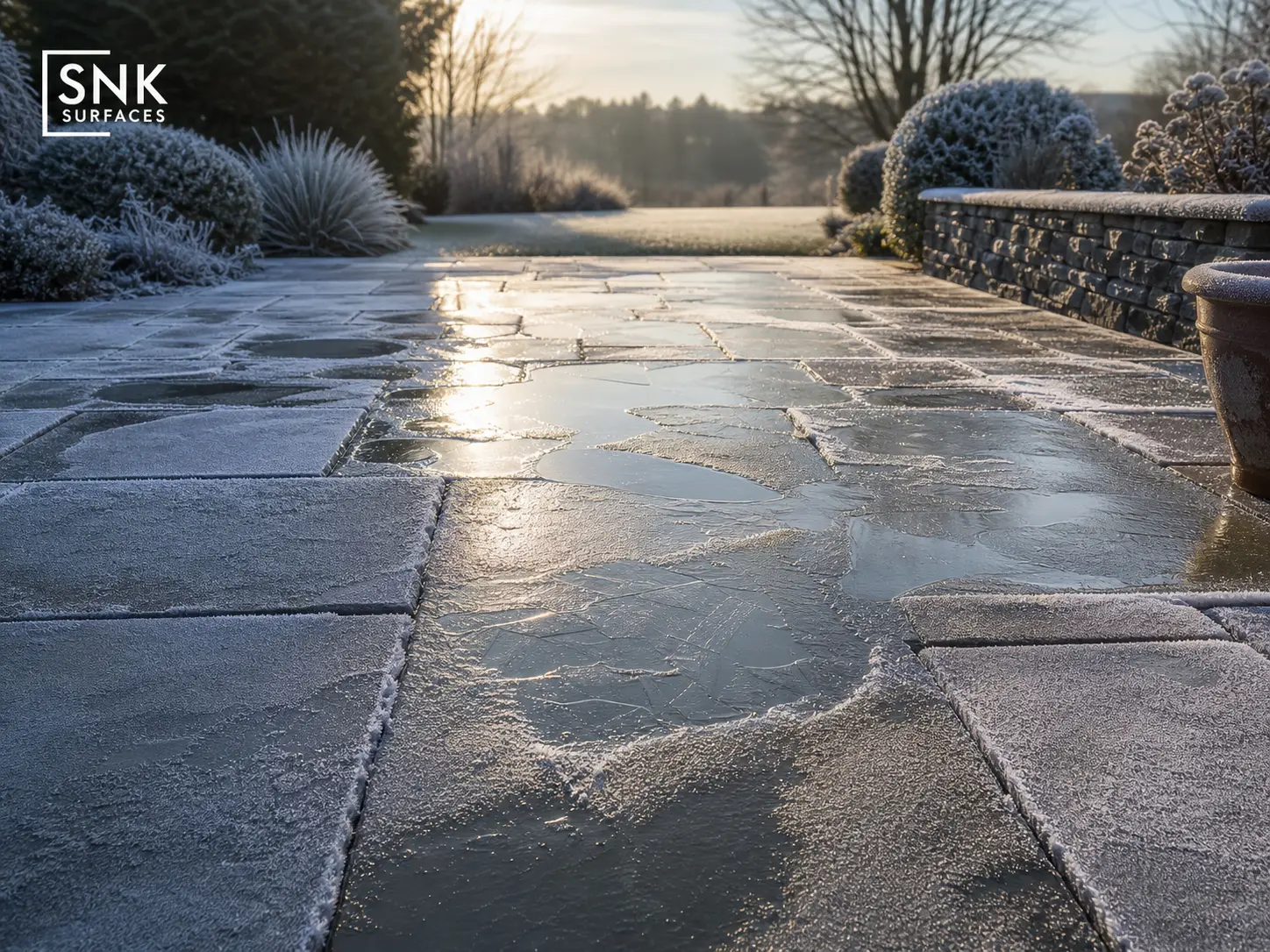
The third major reason for broken slabs is high water absorption.
The building industry uses strict tests to measure how materials handle cold weather. Experts refer to the BSI Group standards for water absorption and frost resistance. If you buy cheap stone, it acts like a sponge. It absorbs excessive amounts of water during heavy rain.
When that trapped water freezes inside the tiny pores of the stone, it expands. This causes the stone to blow apart from the inside.
Material Comparison
You must choose the right materials for wet climates.
- Vitrified Outdoor Porcelain: High-quality tiles like our County Anthracite porcelain paving have an absorption rate of less than 0.05%. Water simply cannot get inside the tile. This makes it practically immune to frost expansion.
- Natural Sandstone: Premium stones like our Autumn Brown sandstone paving perform brilliantly when laid correctly. They require a full mortar bed and proper surface drainage to ensure water runs off into the garden.
Root Cause 4: Missing Expansion Joints
Many people want a large outdoor living area without any visible joints. However, large areas laid without expansion gaps are a disaster waiting to happen.
Paving slabs expand when they bake in direct summer sun. They then contract when the weather turns cold. This movement is microscopic but adds up across a large patio.
If your contractor installs the patio tightly against your brick walls, the tiles have no room to move. As the slabs expand in the heat, they push violently against each other. This pressure snaps the corners off the slabs.
How Different Materials Fail
Understanding how different materials break helps you diagnose the problem. Indian sandstone acts very differently from vitrified porcelain.
Vitrified Porcelain (20mm)
Outdoor porcelain is fired in a kiln at 1,200 degrees Celsius. It is denser than natural granite. The DIN standard testing proves its incredible flexural strength. It does not crack from surface pressure unless it sits on a hollow bed. If you see broken porcelain, you can be certain the contractor used spot bedding. You can read more in our Quartz White maintenance guide.
Indian Sandstone Slabs
Sandstone is a sedimentary rock built in natural layers. Because of this riven structure, sandstone cracking often presents as surface flaking. You might see hairline fractures if water gets trapped between the natural stone layers.
The BS 7533 Prevention Checklist
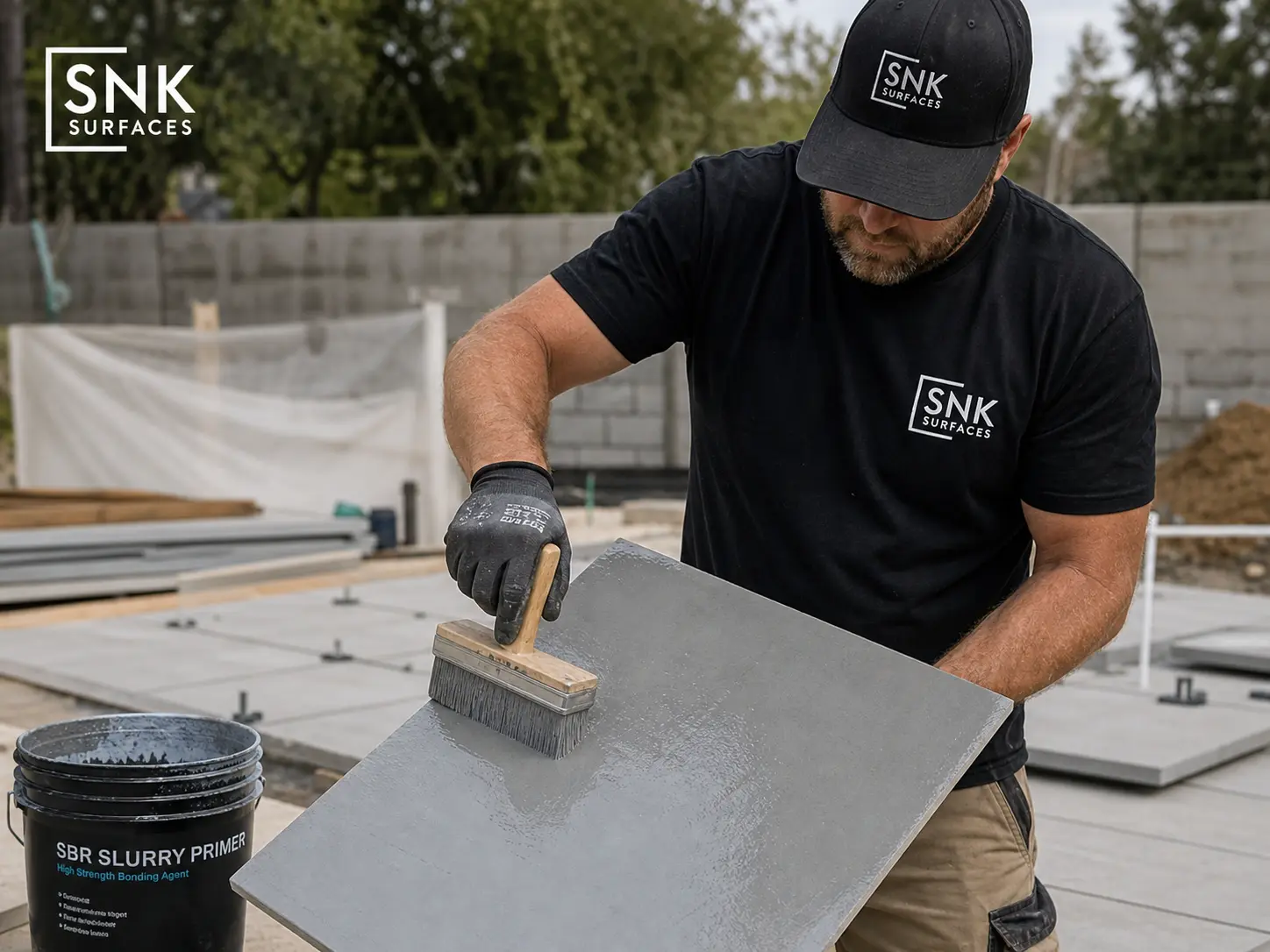
To stop patios from breaking, you must follow the official UK rules. The British Standard BS 7533 outlines the exact code of practice for laying external paving. Your contractor must follow this strict checklist. Note that handling heavy slabs requires care to meet HSE safety guidelines on site.
- Step 1: Excavation. You must dig out the topsoil to a minimum depth of 150mm below the finished ground level.
- Step 2: Sub-Base Compaction. Fill the area with 100mm of MOT Type 1 aggregate. Compact it in layers using a heavy vibrating plate.
- Step 3: The Full Mortar Bed. Lay a continuous 30mm to 50mm wet mortar bed. The industry standard mix is four parts sharp sand to one part cement. Never use spot bedding.
- Step 4: The SBR Slurry Primer. Coat the reverse face of every single slab with a polymer-modified SBR slurry primer. This chemical glue stops the slab from popping loose. This is highly important for natural stones. Read our Sagar Black trade guide for more details.
- Step 5: Jointing. Keep a minimum 3mm to 5mm joint between every slab. Fill these joints with a high-quality exterior jointing compound.
Can Cracked Paving Slabs Be Repaired?
If you are dealing with a broken patio, you might be searching for repair solutions.
Hairline Surface Cracks: You can sometimes fill a tiny surface scratch on natural stone using a matching epoxy resin. This stops water getting inside. You should also consider applying a professional sealant from Lithofin to protect the stone surface.
Structural Fractures: If a slab has completely snapped, you cannot glue it back together. You must carefully chisel out the grout and lift the broken pieces out.
However, replacing a single slab is difficult. When you lift the broken pieces, you will likely discover a hollow spot underneath. You must chisel out the old mortar and pour a fresh full wet bed. You then apply SBR primer to a new slab and tap it into place.
Frequently Asked Questions
Does outdoor porcelain paving crack easily?
No. High-quality 20mm outdoor porcelain is incredibly strong and dense. It will only break if it is laid incorrectly on a hollow mortar bed.
Can you repair a cracked Indian sandstone paving slab?
You can repair minor surface scratches with resin fillers. If the slab has completely snapped, you must remove the old mortar and lay a brand new slab on a full wet bed.
Why did my new patio break after the first frost?
Water became trapped in hollow air spaces under the stone. When the winter frost arrived, the water turned to ice. It expanded and pushed upward with enough force to snap the stones.
Is SBR slurry primer necessary for porcelain?
Yes. Porcelain absorbs zero water. It will not stick to a standard sand and cement mix on its own. You must use an SBR slurry primer to chemically bond the tile to the mortar.
Does SNK Surfaces deliver across the UK and Ireland?
Yes. We supply premium porcelain and natural sandstone directly to trade and public customers. We offer fast pallet shipping across the UK, Northern Ireland, and the Republic of Ireland.
Start Your Project With Confidence
Now you know exactly how to prevent patio failure. Ensure your contractor follows the BS 7533 guidelines and always demands a full wet mortar bed. Do not settle for cheap materials. The success of your garden starts with the density and quality of the stone you choose.
For Homeowners: Order free 20mm porcelain and natural sandstone samples direct from SNK Surfaces Limited today. Feel the premium quality before you buy.
For Trade Contractors: Register for a direct trade account with us online. Secure trade pricing and reliable pallet shipping to your sites across the UK and Ireland.