
Trade Guide • 2026
Sagar Black Sandstone Paving UK: What to Know Before You Order
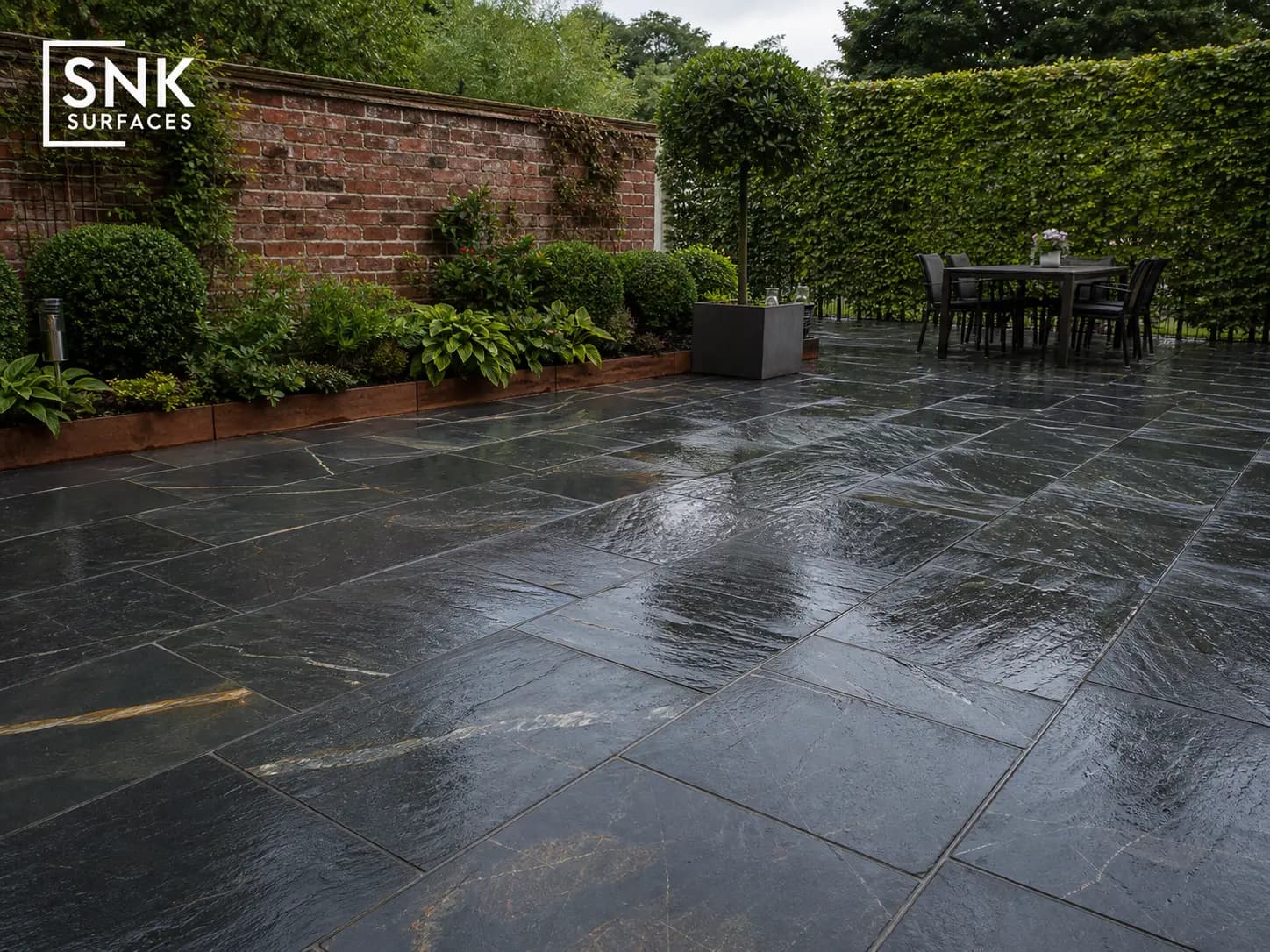
Sagar Black Sandstone is a dark natural sandstone quarried in India. It is one of the most popular dark paving choices for UK patios, driveways and garden paths. If you are a contractor or specifier looking for a reliable dark stone with natural character, this is the product to know.
This guide covers everything you need to spec Sagar Black Sandstone Paving correctly on UK projects. We will walk through the colour profile, calibration, slip ratings, BS 7533 installation, and long-term maintenance. No fluff. Just the facts you need to quote accurately and install with confidence.
What Is Sagar Black Sandstone?
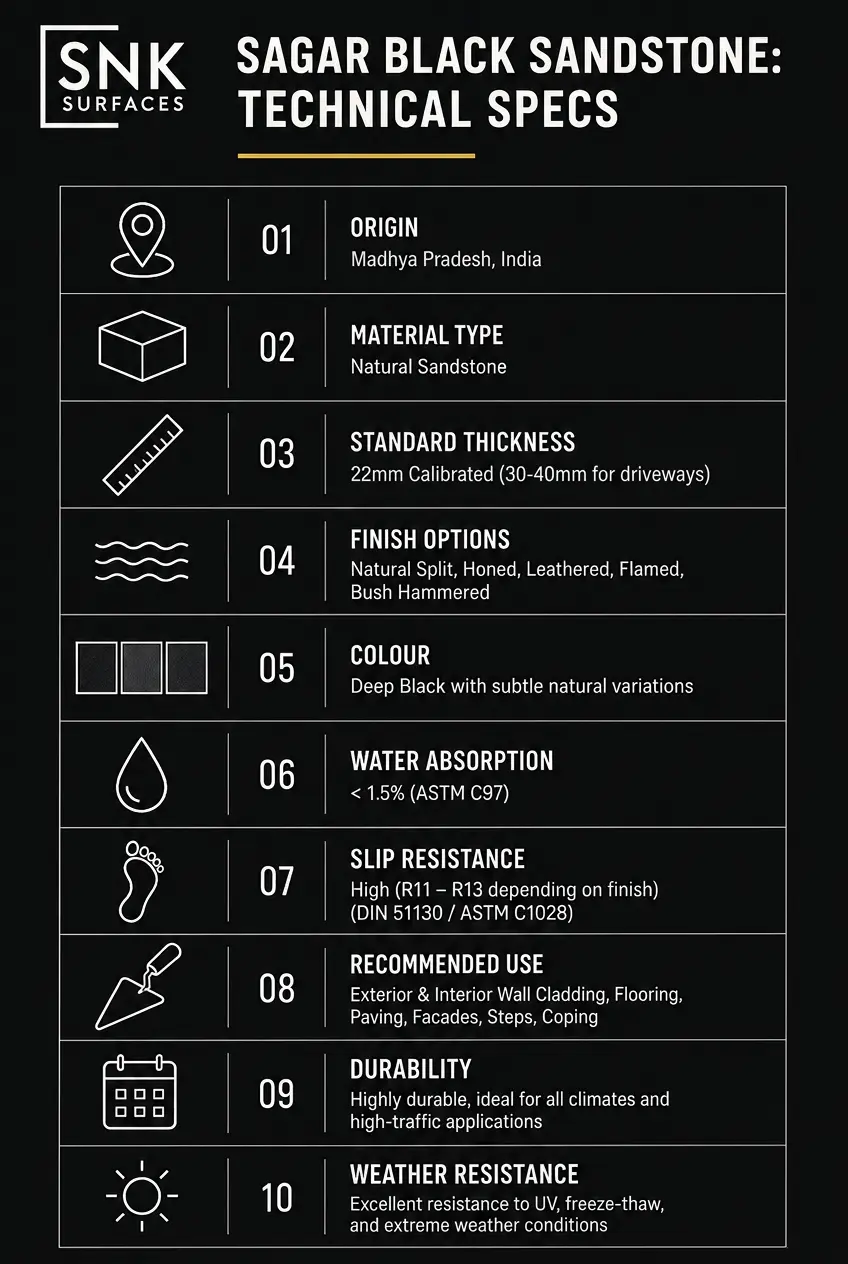
Sagar Black Sandstone is a sedimentary rock extracted from quarries in the Sagar region of Madhya Pradesh, India. It has been exported to the UK for over two decades and is widely used on residential patios, commercial courtyards, and public pathways.
The first thing to understand is the colour. Sagar Black Sandstone is not flat black. The base tone is deep charcoal, but you will also see dark greys, muted browns, and occasional veins of warm gold and beige running through the surface. Every slab looks slightly different because it is a natural product. That variation is the main reason clients choose it over manufactured alternatives.
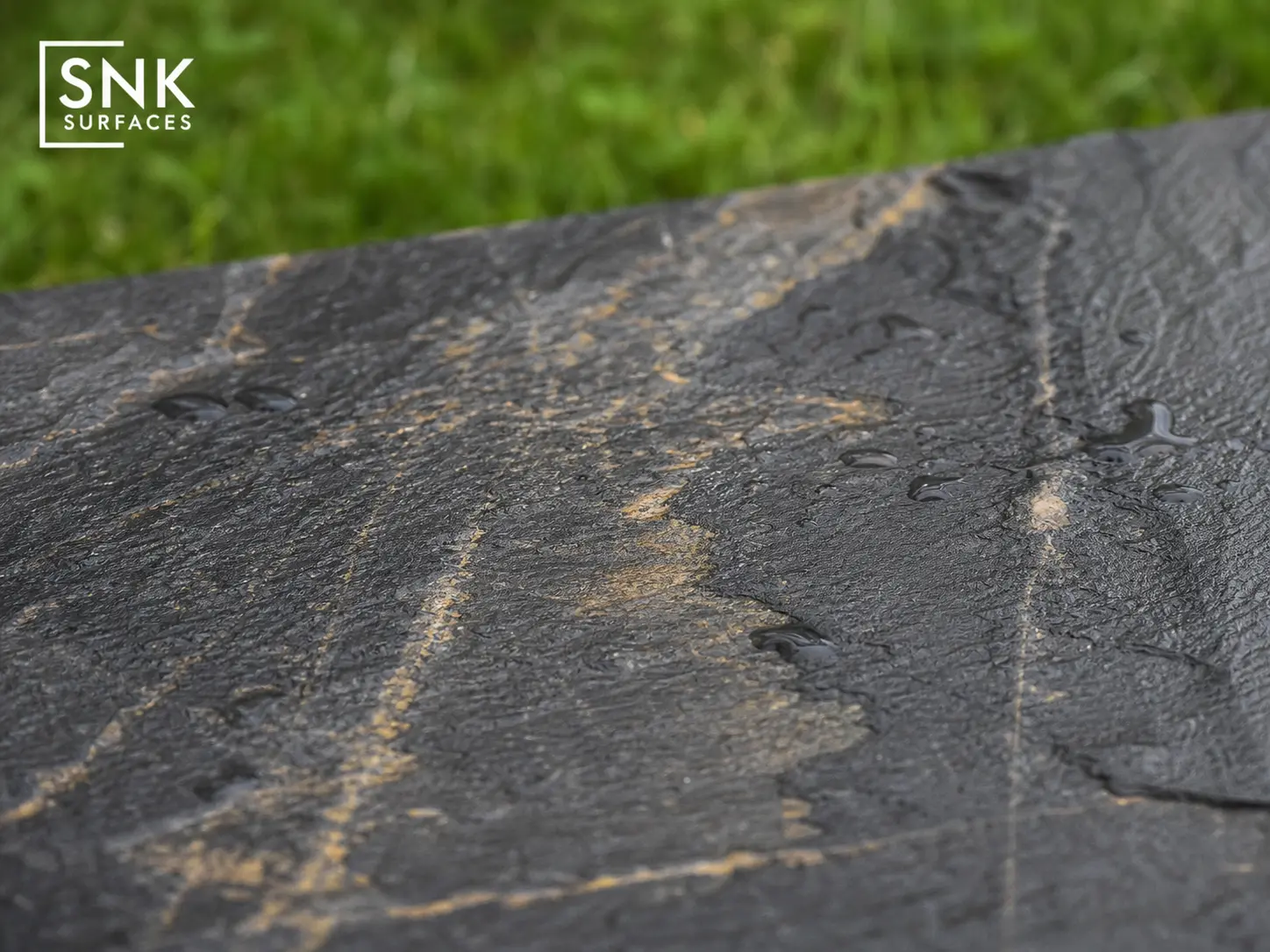
The surface is usually supplied with a natural riven finish. This means the stone has been split along its natural geological layers during production. The result is a textured, slightly uneven face that provides good grip underfoot. For UK weather, that natural texture is a genuine safety advantage.
If your client wants a softer, more aged look, a tumbled finish is also available. Tumbling rounds off the sharp edges and mutes the surface texture. It works well on heritage projects and cottage gardens where you want the paving to look like it has been there for decades.
Why 22mm Calibration Matters
Thickness is one of the most important specs to check when ordering Sagar Black Sandstone Paving. In the past, a lot of Indian sandstone arrived in the UK uncalibrated. That meant slab thickness could vary from 15mm to 35mm within the same pallet. Laying uncalibrated stone is slow and frustrating because you have to adjust the mortar bed for every single slab.
Today, quality Sagar Black Sandstone is machine-calibrated to a uniform 22mm thickness. The underside of each slab is cut flat so every piece in the crate is the same depth. This makes installation significantly faster because your mortar bed stays consistent across the entire patio.
For pedestrian patios and garden paths, 22mm is the standard thickness. It handles foot traffic, garden furniture, and UK frost cycles without cracking. If your project involves a driveway with regular car traffic, you need to step up to 30mm or 40mm blocks. But for standard garden work, 22mm calibrated is the right call.
Slip Resistance for UK Conditions
The UK gets a lot of rain. Slip resistance is not optional. It is a safety requirement.
The HSE slip resistance guidance recommends a minimum Pendulum Test Value of 36 for external pedestrian areas. Anything below 36 is considered a slip risk in wet conditions.
The natural riven surface of Sagar Black Sandstone performs well here. The textured face provides good traction even when the stone is wet. As long as the patio is kept clean and free of heavy algae buildup, riven sandstone comfortably exceeds the PTV 36 threshold. This makes it a safe specification for family gardens, school courtyards, and public walkways.
If your client asks about slip ratings, explain that the riven texture does the work. There is no artificial coating or applied grit. The grip comes from the natural geology of the stone.
How to Install Sagar Black Sandstone to BS 7533
Getting the installation right is what separates a patio that lasts 20 years from one that fails after two winters. The BSI BS 7533 standard sets out the correct method for installing natural stone paving in the UK. Here is the process we recommend.
Sub-base preparation
Excavate the site to a minimum depth of 150mm. Lay MOT Type 1 aggregate and compact it in 50mm layers using a vibrating plate compactor. A weak sub-base is the number one cause of sinking and cracking in UK patios. Do not rush this stage.
Mortar bed
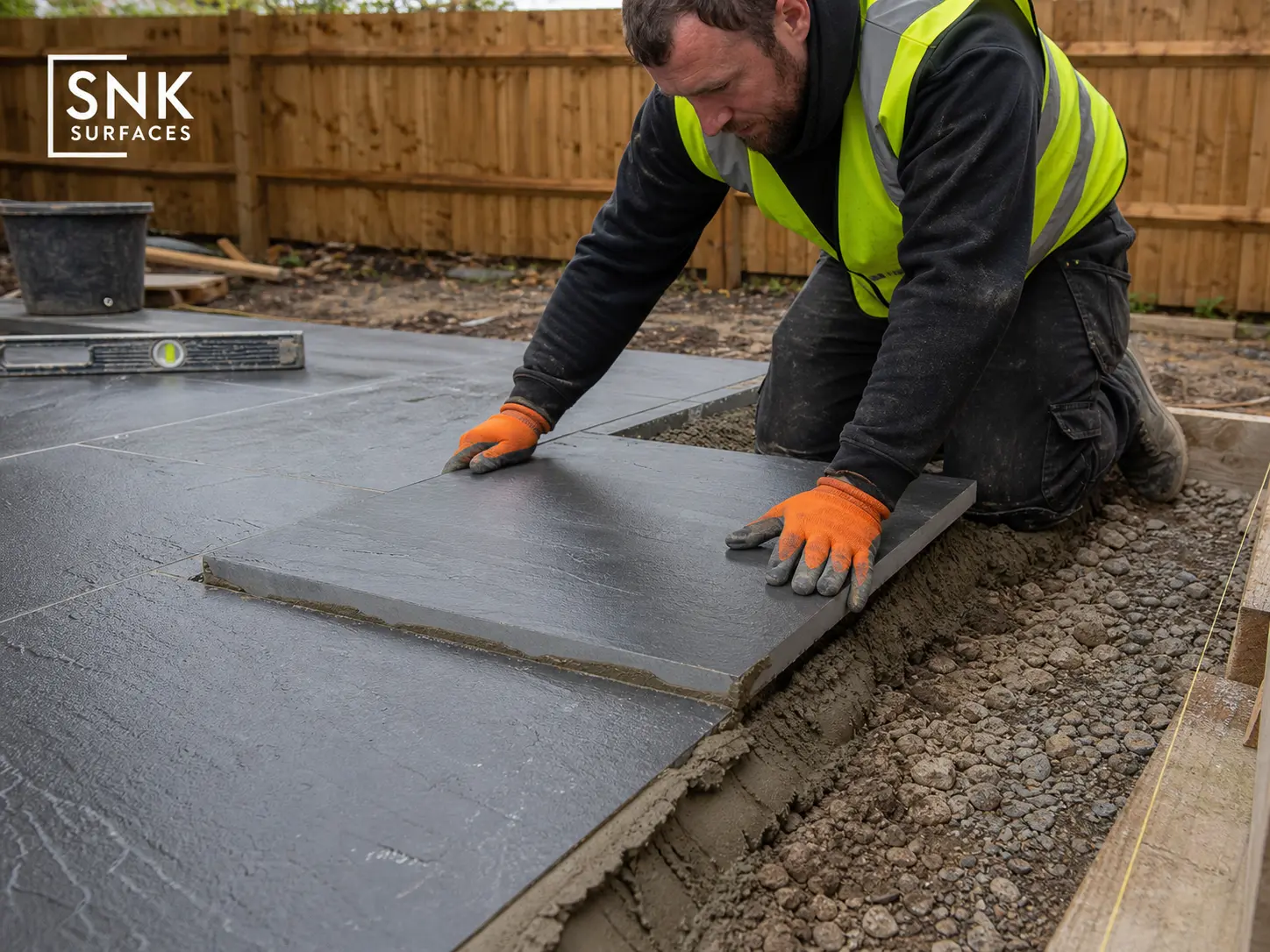
Use a full wet mortar bed of 4:1 sharp sand and cement, laid 30mm to 40mm thick. Do not use spot bedding or dot-and-dab. Spot bedding leaves voids under the stone where water collects. In winter, that water freezes, expands, and pushes the slab off the mortar. Every slab must be fully supported across its entire underside.
SBR slurry primer
Paint a coat of polymer-modified SBR primer onto the back of each slab just before you lay it. Sandstone is porous, so it bonds to mortar better than porcelain does. But the SBR primer creates a stronger chemical bond and acts as a barrier against efflorescence. Efflorescence is the white salt staining that can migrate from the cement through the stone. The primer stops it.
Jointing and drainage
Leave 10mm to 15mm joints between slabs to suit the hand-cut edges. Fill with a sand and cement pointing mix or a brush-in resin compound. Build a minimum 1:60 fall into the mortar bed so rainwater drains away from the house and into a suitable drainage channel.
Where to Use Sagar Black Sandstone
Sagar Black Sandstone Paving works across a wide range of UK project types. The dark tones and natural texture give it more design flexibility than most people realise.
Period homes and cottage gardens
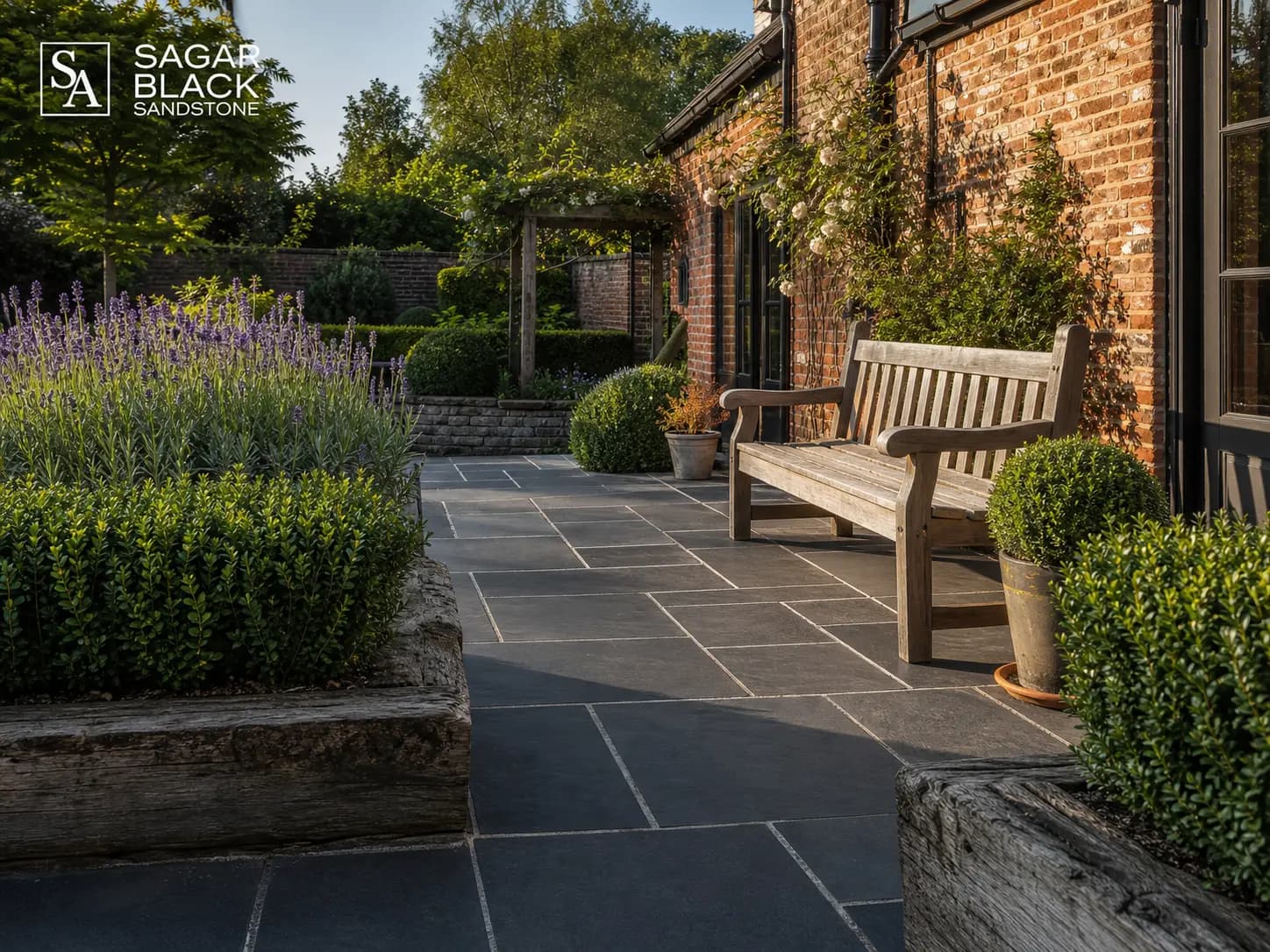
The charcoal tones contrast beautifully with red brick, flint, and aged timber. Mixed-size patio packs work best here. A patio pack contains four different slab sizes laid in a random staggered pattern. The irregular layout breaks up the grid lines and gives the patio a relaxed, organic feel that suits older properties.
Modern new builds
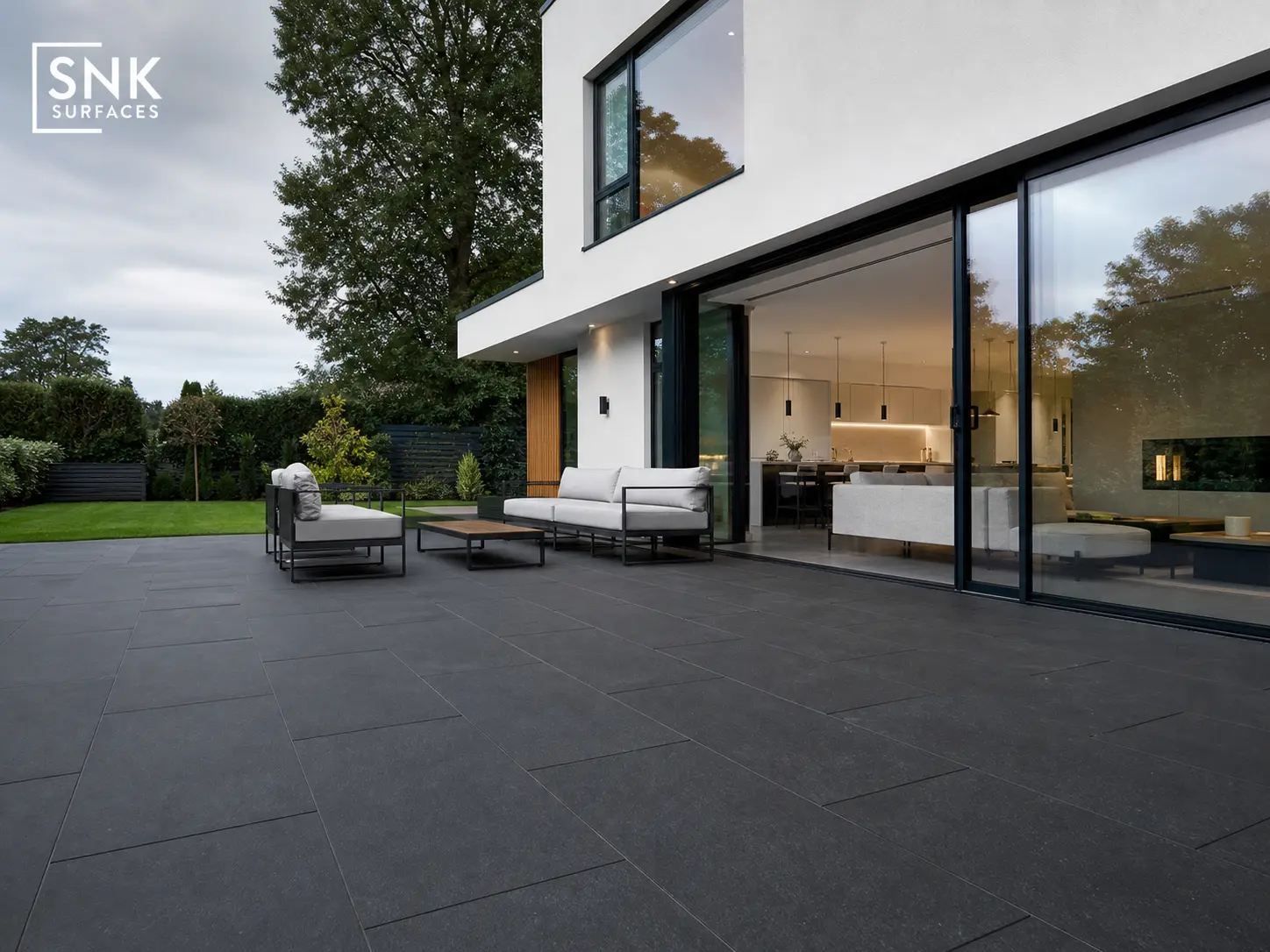
For contemporary homes with white render and aluminium bi-fold doors, Sagar Black Sandstone provides a strong visual anchor. Use large format 900x600mm slabs laid in a brick bond pattern. The bigger slabs reduce the number of grout lines and create a cleaner, more architectural finish.
Commercial and public spaces
The durability and slip resistance of Sagar Black Sandstone make it suitable for office courtyards, hotel terraces, and public pathways. The natural colour variation hides dirt and foot traffic marks better than uniform materials, which reduces the visible maintenance burden for facilities teams.
Sagar Black Sandstone vs Brazilian Black Porcelain
Clients often ask whether they should choose natural stone or porcelain for a dark patio. It is a fair question, and the answer depends on what matters most to them.
| Feature | Sagar Black Sandstone | Brazilian Black Porcelain |
|---|---|---|
| Material | Natural sedimentary rock | Vitrified ceramic |
| Colour | Varied charcoal, grey, gold | Uniform dark black |
| Surface | Natural riven texture | Engineered slate effect |
| Porosity | Porous, needs sealing | Below 0.5%, no sealing |
| UV fading | Lightens gradually over 10-15 years | No fading |
| Slip resistance | Natural grip from riven face | R11 rated (check certificate) |
| Maintenance | Seal every 2-3 years | Wash down only |
| Installation | Standard mortar, SBR recommended | SBR primer essential |
| Best for | Traditional gardens, period homes | Modern builds, low-maintenance briefs |
If your client values natural character and does not mind occasional sealing, Sagar Black Sandstone is the right choice. If they want a uniform dark finish with zero upkeep, point them toward Brazilians Black Porcelain. We published a full head-to-head comparison in our Sagar Black vs Brazilian Black paving guide if you want to share the detail with your client.
Long-Term Maintenance and Sealing
The most important conversation to have after installation is about maintenance. Sagar Black Sandstone is a porous natural rock. It will absorb liquids if left unsealed. Red wine, barbecue grease, and wet autumn leaves can all leave permanent stains on untreated stone.
Wait four to six weeks after installation to let any efflorescence wash out naturally. Then apply a breathable impregnating sealer. Lithofin produces professional-grade sealers that work well on Indian sandstone. An impregnating sealer sinks into the pores and creates an invisible barrier against water and oil while still letting the stone breathe.
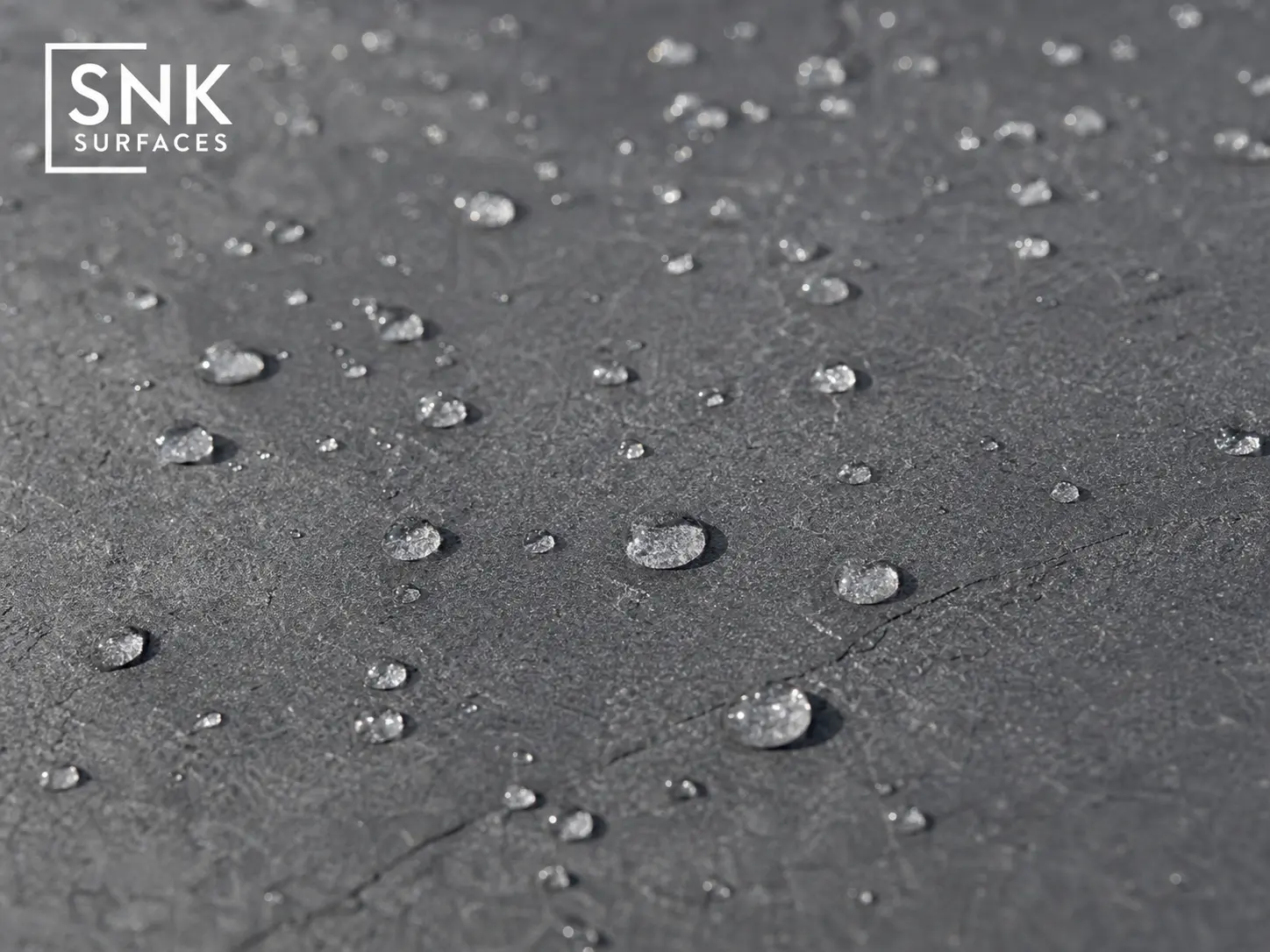
Plan to reseal every two to three years depending on exposure. South-facing patios in full sun will need resealing more often than shaded north-facing areas.
For day-to-day cleaning, warm soapy water and a stiff brush is all you need. Be careful with pressure washers. A wide fan setting on low pressure is fine. A concentrated jet held close to the surface will erode the riven texture over time, and once that texture is gone, it cannot be restored.
One more thing to tell your client upfront. The deep charcoal colour will lighten gradually over 10 to 15 years of sun exposure. The stone will shift toward a softer dark grey. This is a natural process and it does not affect the structural integrity. Many clients actually prefer the weathered look. But if your client wants jet-black paving that never changes colour, porcelain is the better option.
The Bottom Line
Sagar Black Sandstone Paving is a reliable, attractive, and cost-effective choice for UK dark paving projects. The natural colour variation, riven texture, and proven durability make it a strong specification for both residential and commercial work.
Stick to 22mm calibrated stone. Follow the BS 7533 installation guidelines. Use an SBR primer. Advise your client to seal the patio. Do those four things and the patio will last for decades.
We supply Sagar Black Sandstone direct from our own quarry facilities in India to our UK warehouse. No importers or distributors in the chain. You can browse the full range and order samples through our Sagar Black Sandstone product page. If you need a lighter grey alternative, take a look at our Kandla Grey Sandstone.
Need trade pricing or a sample box?
Get in touch with the SNK Surfaces team today and we will sort it out.
SNK Surfaces is a direct manufacturer and UK supplier of premium natural sandstone and outdoor porcelain paving. Quarry direct pricing, UK stocked, and delivered nationwide to trade and retail.
Frequently Asked Questions
Is Sagar Black Sandstone actually solid black?
No. It is a natural blend of deep charcoal, dark grey, and black tones with occasional warm gold and beige veining. Every slab looks slightly different. That natural variation is what gives the stone its character and what separates it from manufactured alternatives.
What thickness do I need for a UK patio?
Specify 22mm calibrated Sagar Black Sandstone for pedestrian patios and garden paths. This is the standard thickness for foot traffic and garden furniture. For driveways with regular car traffic, you need 30mm or 40mm blocks.
Do I need to use an SBR primer on sandstone?
Sandstone bonds to mortar better than porcelain because it is porous. But we still recommend using an SBR slurry primer on the back of every slab. It creates a stronger chemical bond and prevents efflorescence salts from staining the surface. It takes five minutes per slab and prevents callbacks.
Will the colour fade over time?
Yes. The deep charcoal tones will gradually lighten to a softer dark grey over 10 to 15 years of sun exposure. This is a natural geological process. It does not affect the strength or durability of the stone. If your client wants a dark colour that never changes, specify black porcelain instead.
How often should I seal a Sagar Black Sandstone patio?
Apply a breathable impregnating sealer four to six weeks after installation. Then reseal every two to three years depending on sun exposure and weather conditions. South-facing patios may need resealing more frequently.
Is riven sandstone slippery when wet?
No. The natural riven texture provides good grip underfoot. When kept clean and free of heavy algae, Sagar Black Sandstone comfortably meets the HSE slip resistance guidelines for external pedestrian areas. It is a safe choice for family gardens and public spaces.
Can I use Sagar Black Sandstone on a driveway?
Standard 22mm slabs are not thick enough for regular car traffic. For driveways, specify 30mm or 40mm sandstone blocks or setts. The thicker stone handles the point loads from vehicle tyres without cracking.